

Freeze-Resistant Pipes: Can They Really Protect Your Outdoor Plumbing?
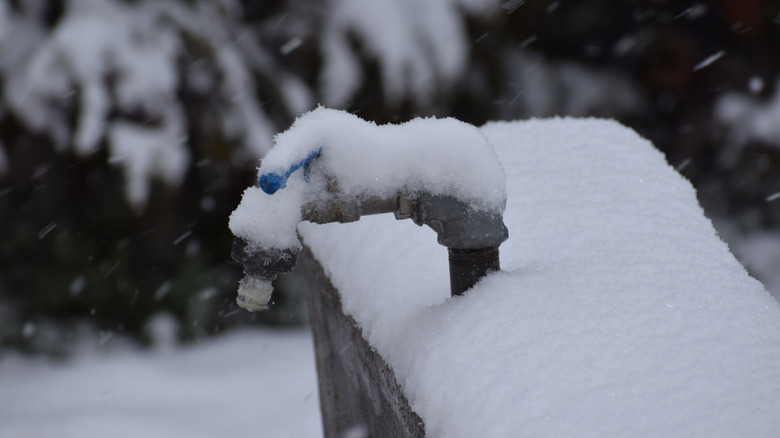
If you are among those who get tired of preparing your outdoor plumbing for winter weather every time a freeze is in the forecast, you may be considering upgrading to PEX freeze-resistant pipes. But, do they really protect your plumbing? The short answer is yes: Flexible, cross-linked polyethylene plastic tubing (PEX) can help protect plumbing during periods of freezing weather. However, they are not a singular solution. They also are not a good choice for all applications.
The first thing to understand about PEX pipes, which are also referred to as freeze-resistant pipes, is that they are just that: freeze-resistant, not freeze-proof. The reason PEX pipes are deemed freeze-resistant is two-fold. For one, the material's thermal conductivity is lower with many traditional pipe materials, such as copper. Therefore, it takes the water inside longer to reach its freezing point. Secondly, PEX is flexible and retains this flexibility at fairly cold temperatures. So, as any freezing water expands within the pipe, the PEX can expand with it rather than break.
That said, water in PEX pipes can still freeze, if temperatures drop low enough and for an extended period of time. Additionally, even though it has flexible properties, PEX still has a breaking point, quite literally, and pipes can burst, split, or crack in certain situations. PEX also tends to lose its flexibility over time. So, the best protection it offers is within the first few years following installation. Furthermore, various things, including improper installation, such bending the pipe at sharp angles, and chlorine within the water, can cause it to degrade. However, one of the biggest factors for rapid decline is exposure to UV radiation from direct sunlight, meaning it is not a good choice for exposed, above-ground outdoor plumbing.
PEX doesn't replace proper preparation
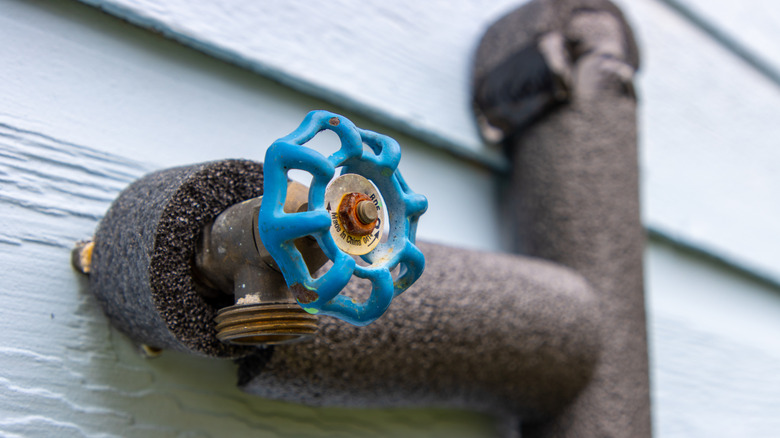
If you live in an area that sees frequent freezing temperatures, it may be worth upgrading susceptible pipes to PEX, and utilizing PEX pipes in new construction. However, you should not assume that just because you install PEX you will never have to insulate your outdoor pipes again. Rather, you should consider it more of added insurance or protection during periods of extreme cold weather, because PEX doesn't replace the need for proper preparation. Additionally, you should keep in mind that as far as outdoor plumbing goes, PEX is not intended to be exposed to direct sunlight. So, it is most suitable for underground use or in areas shielded from the sun such as garages, sheds, pump houses, or under counters in outdoor kitchens.
As far as protecting your PEX pipes during winter, if only a mild freeze is expected, you can likely weather the storm by simply dripping your faucets overnight. But if temperatures are expected to plummet well below freezing and remain there for an extended period, you will still need to take steps to prepare your PEX pipes to prevent them from icing up. Essentially, those steps are not different than what's required for other types of outdoor pipes. Foam sleeves are usually considered the best option for insulating the pipe itself. Also, keep in mind you will also still need to protect outdoor faucets from freezing weather, as the use of PEX pipes doesn't change the vulnerability of hose bibs and faucets to freezing temperatures.