

The Striking Perennial Plant That'll Add Interesting Patterns To Your Shady Garden
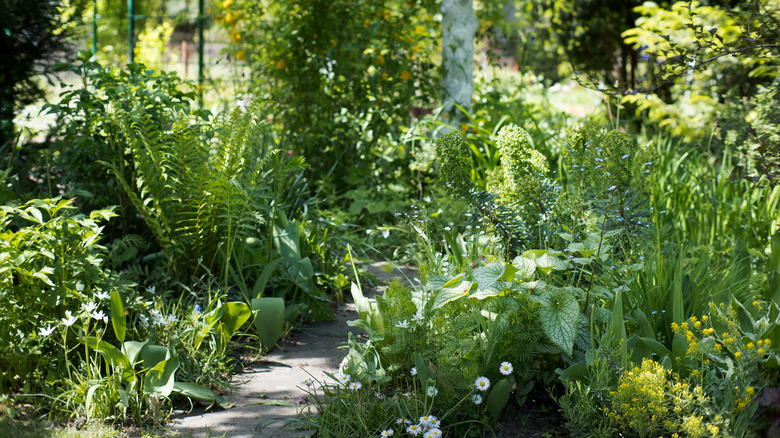
Planting something new in your garden can be tricky. Between deciding what you want to plant, where you want to plant it, how well it will grow in your yard, and how it will look next to the plants around, there is a lot to consider when it comes to making additions. As such, the shaded parts of your garden, tucked away in the corner or up against your home, can often go overlooked due the difficulty to find the right plants to fit and also grow well in the shade. In warm climates, where they can be grown as perennials, the darker corners of your garden may end up being your favorite spot once you have planted cane begonias.
Cane begonias, also widely known as angel wing begonias for some variety's leaf shapes, is a type of begonia with approximately 81 different species to choose from. With common types including the 'Looking Glass' and the 'Gryphon,' cane begonias are a diverse group of species that can have a variety of flower colors, including pink, red, and white, and a range of leaf shapes and patterns. Most known for their spotted leaves, these flowers are native to the Brazilian rainforest where they grow in the shade of the canopy. As such, these beautiful plants will make the perfect newcomer to your shady garden. In addition to their beauty, you can lure hummingbirds to your yard with a must-try garden combination that includes begonias.
If you don't have a very shady garden, but want a home for cane begonias anyway, you can create a natural shade and privacy in your backyard with a tree canopy. If planting trees might not work out great for your garden, you can also protect your shade-loving plants from the harsh sun with this fun DIY.
Growing and caring for cane begonias
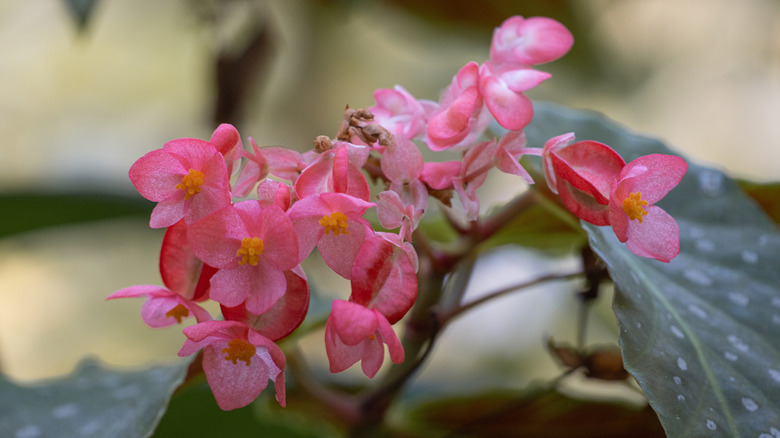
Cane begonias are a relatively easy plant to grow and care for. They're considered tender perennials in warm, frost-free climates (typically USDA Zones 9-11), while gardeners in cooler regions will often grow them as annuals or overwinter them indoors. They grow well in the shade, preferring partial shade or filtered light. While they should not be in direct sunlight, it is also important to note that they still need sunlight or they will not flower. Plant your cane begonias in well draining, but still moist soil. If you use a heavier soil, you should plant your begonias in a terracotta pot to prevent root rot. For planting multiple cane begonias, space them 6-8 inches apart, or 10-12 inches apart for a larger variety.
Once you have planted your cane begonias, you should water them throughout the planting process and consistently afterward, just to keep the soil moist at all times but ensuring not to overwater them. Once your cane begonias get tall enough, you should stake them for support as they have a shallow root system that makes them susceptible to breaking. During the growing season, you should feed your cane begonias every few weeks with a balanced fertilizer.
If your cane begonia isn't flowering, you may need to move them to place with more light. If the leaves are browning slightly, it may mean your plant doesn't have enough water or humidity, which means you should either water them more or move them to a more humid or moist location in your garden. Cane begonias can grow to be quite tall and colorful, so once they're happy and healthy the shady area in your garden should be breathing with new light.