

This Simple Mulching Method Helps Lavender Plants Survive Winter Frost
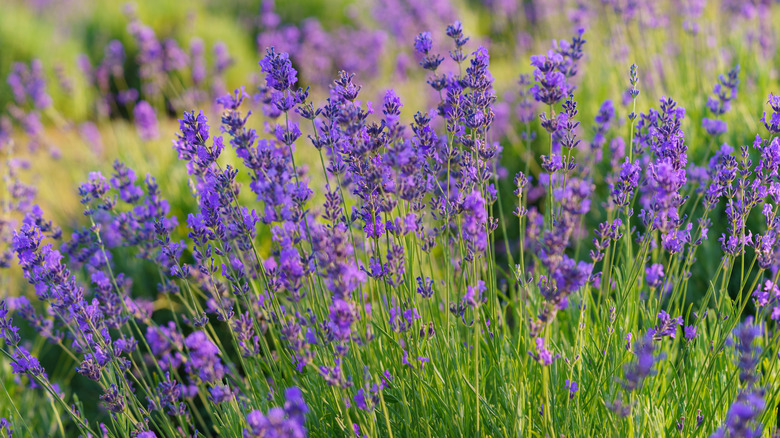
If you're an avid home gardener, you've probably spent your fair share of harsh winters wondering how to protect your plants from snow damage. Some perennials can be potted and transferred indoors, while others go dormant, springing right back to life when the summer comes around. But some, like lavender, require extra attention, especially when frosts hit. In the case of lavender, the best thing you can do during the winter months is add a layer of fresh, insulating mulch to the top soil. Doing so should help to encourage a dry, well-drained soil, which lavender plants need in order to survive. This is best achieved with coarse, inorganic mulches, such as pea gravel, oyster shells, or even eggshells repurposed to feed lavender. It's especially important for Spanish lavender (Lavendula stoechas), adapted to a Mediterranean climate, but also for cooler-weather French lavender (Lavendula dentata).
The vibrant, purple-tinged plant blooms brightest when kept in warm, dry soil, which can be difficult to maintain in parts of the country that receive snow or freezing rain. While there's not usually much you can do to regulate soil temperatures during the dog days of winter, a high-quality mulch can ease the burden of soggy soil, by retaining some of the moisture and protecting the plant roots from feeling the brunt of the cold frost. When employed properly, mulch also offers protection against weeds, and limestone gravel in particular can provide a bit of alkalinity to the soil, which both Spanish and French lavender prefer. Before you barrel ahead with any old bag of mulch, be sure to consider your plant's specific needs. There are a number of details which should be observed to ensure you're giving your lavender plants the best fighting chance against the cold.
Best practices for mulching your lavender garden
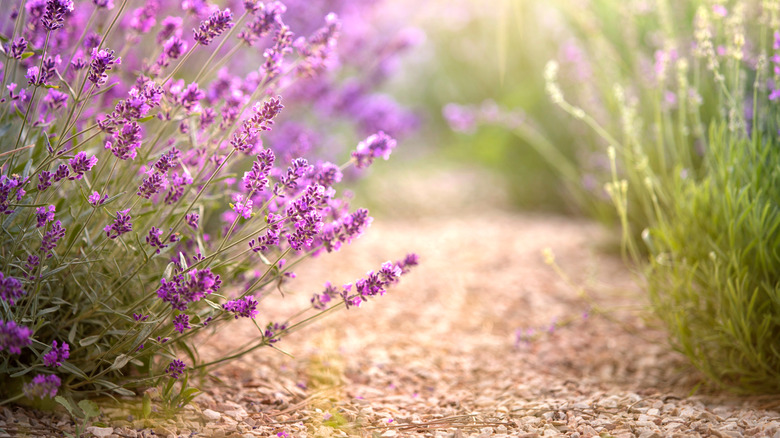
Most gardeners are already well versed in laying down a layer of mulch in the spring, or refreshing a mulch layer as needed. For those new to winter mulching, there's a little more to it. With lavender it's generally best to avoid organic mulches like wood chips, compost, leaves, or grass. These introduce too much moisture to the soil, which can lead to root rot. Coarse, Mediterranean-style gravels are instead preferred, such as crushed limestone rocks, nut shells, oyster shells, or even pine needles, in certain environments. Straw is the one sort of exception: Straw mulch should usually be avoided, unless you live in a particularly arid region. Wet straw can be considered a death sentence to lavender roots, so be sure to only resort to using it if you're located in USDA hardiness zone 9 or above and have well-draining sandy or rocky soil.
You'll want to set down gravel or other mulch in a light layer around the base of your lavender roots. Avoid covering the crown of the plants, both to prevent issues with moisture, and to allow airflow to the soil and roots throughout the winter season. Don't get too antsy: You don't need to automatically apply winter mulch as soon as the temperatures drop below beach weather or the calendar page flips. Lavender needs to go dormant, and insulating them too soon can get confusing. Instead, wait for the first frost advisory or freeze warning of the season, and apply once the leaves have gone fully dormant.