

The Ice Melt Alternative That May Be Doing More Harm Than Good
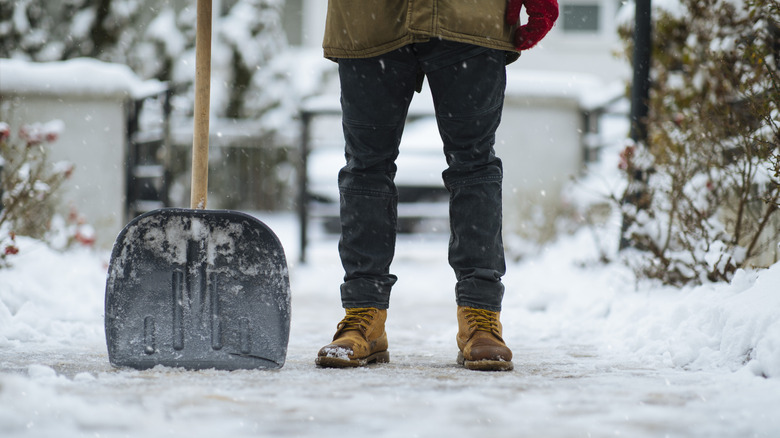
When snow gets packed down, or temperatures drop suddenly, the driveway that was fairly passable yesterday may be an ice rink today. You could throw down some rock salt or other ice-melt, but maybe all you want is traction. Besides, rock salt may not be a good idea on concrete, as it can lead to problems down the road. One option for better driving or walking is to lay down cinders made from either coal ash or volcanic scoria. It's sometimes used as an alternative to sand, gravel, or salt. And while cities such as Vail, Colorado and Columbia, Missouri treat roads with cinders in winter, the solution has plenty of drawbacks.
The cinders used for winter traction are often made from granular byproducts of the coal industry, sometimes called bottom ash. It's an affordable option, particularly in coal country, that also shows up in bricks. It's also a way to decrease the waste or slag piles that build up around coal processing sites. The big issues with this kind of cinder gravel are that it's messy and unattractive, requires cleanup later on, and could potentially cause unwanted substances such as heavy metals to soak into the ground.
In regions like Vail or Flagstaff, Arizona, cinders are harvested from local deposits of volcanic scoria, and also used as road traction. Though it's a natural material (essentially jagged, porous lava rock), this version has its own issues. the rough sand or gravel can scratch cars and crack windshields when driving behind a snowplow or the vehicle that spreads cinders. It also gets ground down over time into a fairly abrasive dust. In either case, it's a lot like the rock salt vs. sand debate: Like sand, scoria cinders do not dissolve or go away on their own, and you don't want them washing into drainage systems.
The problems with cinders
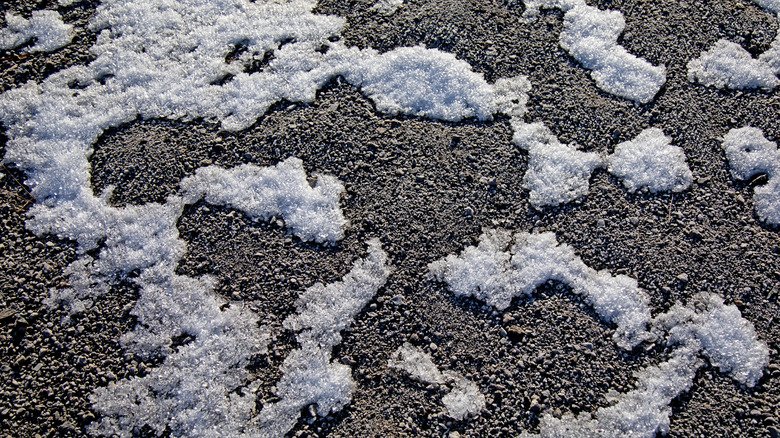
Cinders provide traction on slick surfaces such as roads or your driveway, and though its not technically an ice melt, the dark color absorbs the sun's heat, which might have a slight melting effect on snow and ice. Once things do melt, those cinders have to go somewhere. If it's wet enough, they could end up in storm drains in the street, possibly causing clogs or entering the water system. When it comes to bottom ash cinders, especially, you don't want that.
Closer to home, coal-byproduct cinders contain toxins and heavy metals that could end up in the soil around your driveway, walkways, and anywhere else you apply them. If you have a vegetable garden, those materials might end up in the foods you grow. Interestingly enough, some of those very toxins could be removed by the plants themeselves, through a process called phytoremediation. Since, unlike cities, you're not using cinder ash in large quantities, plants can help out. Certain sunflowers may help remove toxins from soil, so come late spring, plan on adding them around your garden.
Cinders are also problematic in that they can be tracked indoors, so using them along the walkways leading to your home may not be a great choice. Coal cinders are dark and messy, and can stain carpets and sidewalks. Volcanic cinders can get ground down into abrasive sand and dust that could scratch floors. In larger quantities, that dust can affect air quality, though this is more of a concern in areas with substantial car traffic, such as a parking lot or street. On the plus side, unlike the coal byproduct, volcanic dust is a great soil amendment, containing magnesium, phosphorous, and potassium. Consider tilling it into your garden or flowerbeds after the snow melts away.