

Plumbers Warn: Do This Before A Freeze To Protect Your Outdoor Plumbing Pipes
We may receive a commission on purchases made from links.
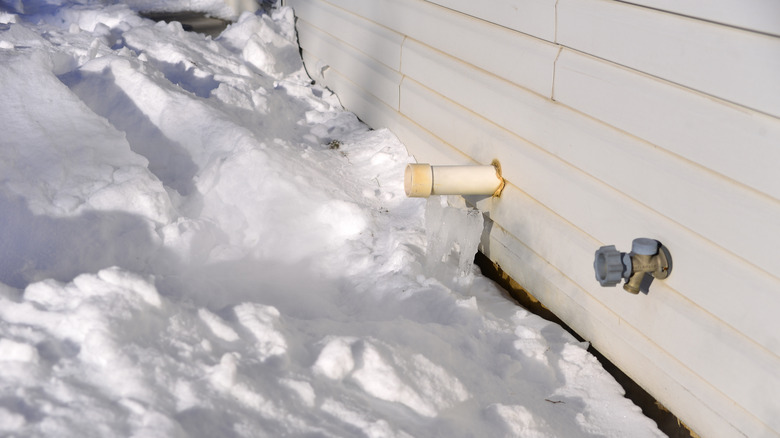
While many homeowners have already prepared their outdoor plumbing for winter, unseasonably low temperatures and heavy storms are rolling across America. If cold advisories are in your area, plumbers suggest getting ahead of plunging temperatures by protecting your outdoor plumbing before it freezes. If you thought insulation was only for the pipes inside your house's walls, think again: Insulating exposed pipes outside not only protect those outlets, but can prevent damage in your house.
Fortunately, if you plan ahead, wrapping exposed pipes in foam or other insulation is pretty straightforward. Locate all outdoor faucets, exposed waterlines, spigots, hose bibs, water features, and sprinkler systems. Don't forget to check for exposed pipes under porches and decks, as well as in unconditioned garages, crawlspaces, basements, and attics. While there are a number of insulating products available, foam tubes — split longways to open and wrap around pipes — are probably the easiest. The open seam can be sealed closed using foil insulation tape or duct tape, but this should completely cover any seams or where two tubes meet. If the stores are all out of pipe wrap, you can improvise using pool noodles.
You will also want to remove all attached hoses from spigots. Drain any water that might remain in fixtures through a process called bleeding: Shut off the water supply, open a fixture, and let any water flow out of the line. If you have extensive buried irrigation, this might be a job for a landscaper who can professionally blow out your waterlines. Don't forget to take steps at the same time to protect your lawn from frost damage. Finally, secure rigid foam covers, like the Thermwell Frost King faucet cover, over any exposed spigots or bibs.
When to get creative protecting pipes
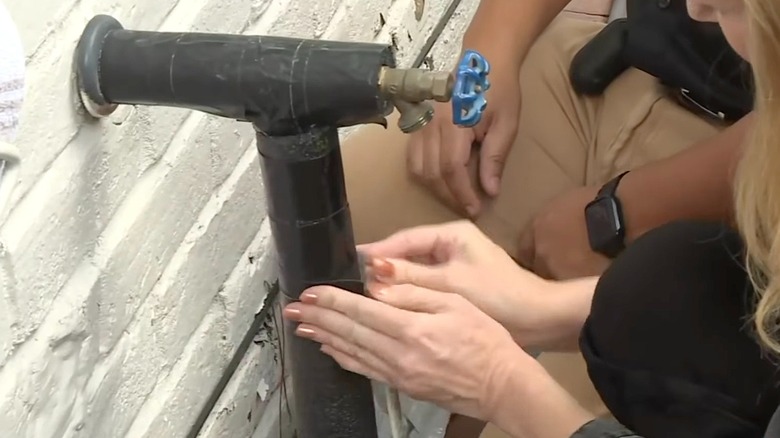
If freezing conditions are right around the corner, and the hardware stores are cleaned out, it's time to get creative. The goal is to get pipes and faucets wrapped, sealed, and waterproofed. Make do with anything insulative: fiberglass batt insulation, foam pool noodles, even old t-shirts, socks, or towels. Be sure to cover the material with a plastic bag and secure everything with waterproof duct tape or zip ties. Likewise, if you don't have foam covers, slip a wool sock over a spigot and wrap that in a kitchen sandwich bag sealed closed with rubber bands. Some Redditors feel that those foam spigot covers are only good down to about 25 degrees for a few hours. In which case you may want to consider something like Prier Products frost-free sillcock valve.
If insulation isn't sufficient for the forthcoming chill, try opening a fixture and letting it drip. Or attach a Freeze Miser faucet protector that kicks in when temperatures get below 37 degrees Fahrenheit, allowing a faucet to drip more as the temperature drops. In both options, the idea is that water movement prevents ice buildup inside the pipe. Keep an eye on it while you're riding out an Arctic blast — the drip might need to be increased to a steadier stream. Note that some people argue it's better to drip or run inside pipes rather than outside pipes where ice can build from the ground up with the dripping water. Water frozen inside pipes can make them burst, causing expensive property damage from flooding and subsequent repairs. So it's good insurance to get ahead of any potential issues. If snow is in your forecast, it will also help to use tips to make snow removal easier, clearing piled snow away from walls, spigots, and pipes.