

For A Healthier Garden Come Spring, Add This DIY Leaf Mold To Your Soil
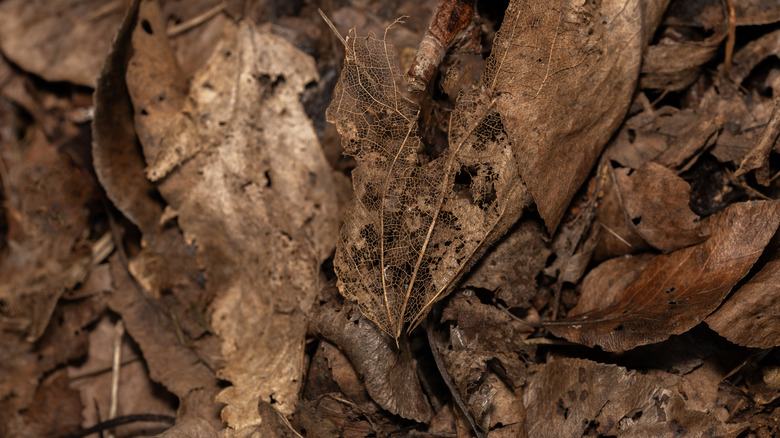
Not all garden soil is in perfect condition for the plants you'd like to grow in it: It may be light in nutrients, or your soil may need an NPK fertilizer to restore balance between sodium, phosphorous, and potassium. On the bright side, there's almost always a way you can improve it. Leaf mold is one of those absolutely free things that improves soil structure and allows better water retention, sometimes by twice as much compared with un-amended soil. If leaf mold sounds unappealing, it's not; it's essentially just composted deciduous leaves all on their own, minus other compost materials. Fallen leaves — collected and left to sit for 10 months to two years with a little moisture — will break down into a dark, crumbly material that's easy to mix into garden beds or potting soil. This leaf mold also serves as a beneficial mulch to protect newly planted plants.
To successfully make leaf mold that you can reuse wherever you'd like come spring, you need a means to contain the leaves. Chicken wire, hardware cloth, or even heavy-duty trash bags can serve as the bins for your leaf mold in the making. And then all you need is time, and to check in once in awhile.
All it takes is a container, moisture, and time
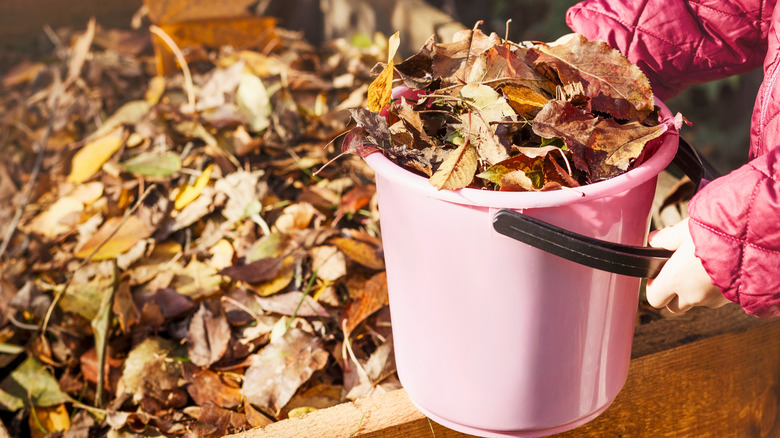
Leaf mold takes advantage of fallen leaves in any corner of the yard or garden. Decide how you'd like to house your leaf mold; you can make a 3-foot by 3-foot frame with stakes and mesh or chicken wire, or use a durable plastic trash bag with loads of holes poked in it for aeration. It may seem you're collecting a lot of leaves, but the material breaks down quite a bit as the leaves decompose. It takes several large trash bags worth of leaves to get one 5-gallon bucket of ready-to-use leaf mold. It's a good idea to leave some leaves on the ground each fall because they provide shelter for many insects.
Shredding isn't necessary, but it helps them break down faster. This Costco find that shreds leaves into mulch is one option. Going over the leaves with your mower (set to its highest setting — you don't want grass) is another. Shredded or not, keep the leaves in your bin or bag a little moist, and store the bins in a cool, somewhat damp area out of direct sunlight. Turning the pile or shaking the closed bag every couple weeks speeds things up a bit. You'll get usable surface mulch in a few months, but for the finest leaf mold to mix into the garden dirt or potting soil, you'll need to wait a couple years.
When it's ready, lightly till the finished leaf mold into your garden beds in spring to improve drainage or moisture retention (depending on the structure of the soil). Store any unused leaf mold in lidded buckets or storage tubs so it's ready to use when you need it. Then you'll be all set to start a new batch of leaf mold come fall.