

Using Rock Salt To Melt Ice On Concrete? Make Sure To Avoid This Common Mistake
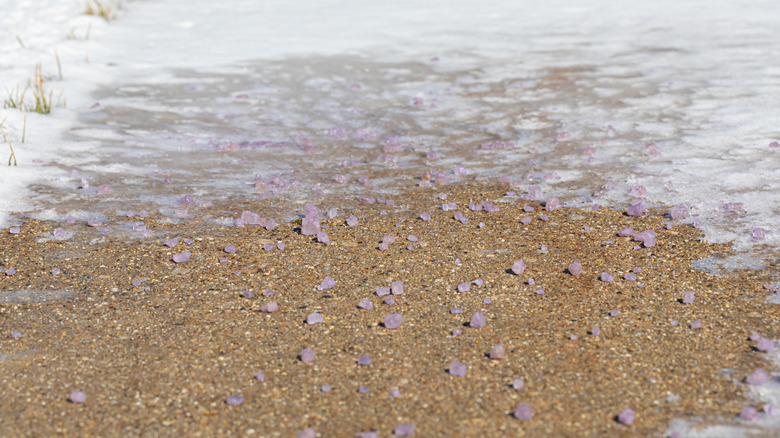
Rock salt is a popular ice-melting material; it's budget friendly and completely natural (though it may be treated or enhanced with dyes and other chemicals like magnesium chloride). It's also why some communities choose to use salt instead of sand on their roads, making them safer in winter. So it might make sense to grab a bag or bucket of rock salt and sprinkle it liberally over your concrete driveway and sidewalks to prevent them from icing over. However, one common mistake people make with rock salt is just leaving it on the pavement where it eventually seems to vanish.
But it's not actually vanishing: Concrete is porous, and the saltwater slurry created when rock salt mixes with melting snow and ice can soak into your driveway. The same properties which help salt melt ice — by lowering the freezing temperature of water — means it can draw moisture into the concrete, leading to expanding and contracting freeze-thaw cycles. This eventually causes damage such as cracks or flaking. Removing the salt, or the slushy mixture and icy chunks that have salt on them, rather than letting it linger on your sidewalk, is one way to help prevent such problems.
It's worth noting that rock salt loses its effectiveness the colder it gets. Below about 20 degrees Fahrenheit, it takes five times the amount of salt to melt the same amount of ice as at 30 degrees F, so the temptation is there to pour on even more salt, making cleanup tougher, and cracking even more of a risk. In fact, it's best to only use small amounts of salt. According to the Salt Smart Collective, the recommended amount is just 12 ounces of rock salt per 20 feet of the average driveway, or on about 10 average sidewalk pavers.
How to safely de-ice concrete
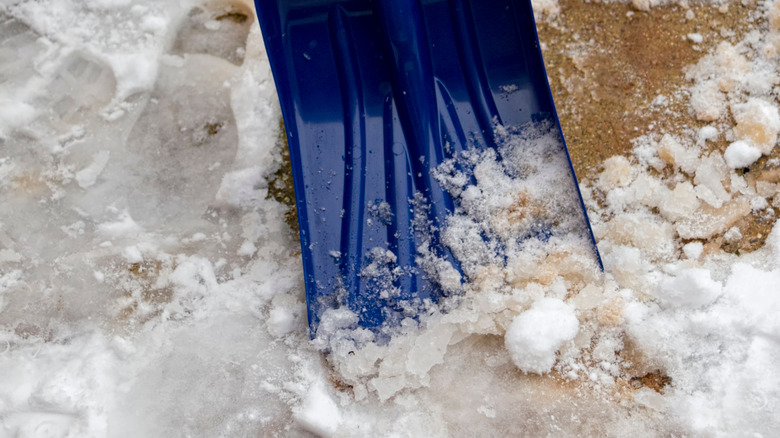
Once you've used rock salt and it's doing its job melting the ice-skating rink formerly known as your driveway, the best strategy is to clear the mushy ice as it starts to melt. Grab a flathead shovel, an ice chopper, or use a pitchfork to remove driveway ice once the salt loosens the mass enough to get underneath it. If the area is snowy or slushy, use a snow shovel instead — one of the best tools for snow removal — to scoop the salt-infused mixture off the concrete and place it atop a snow pile elsewhere.
Sweep any remaining salt granules off your steps, the sidewalk, and your driveway once things get above freezing. If there is a lot of salt leftover, use a dustpan to collect it so it won't run off with the next rain, harming plants or soaking into the soil.
Another option is to not use rock salt at all, and instead use an alternative de-icer that's safer for concrete, such as calcium chloride. Magnesium chloride is a safer de-icing material, and works at lower temperatures than rock salt. If what you're looking for is simply traction, consider using sand or grit instead, which will become part of your soil mix if it runs off into the lawn or flowerbed. Excessive sand can block drains, however, so shovel or sweep up any piles or deltas on the driveway when the ice is gone.