

Attract More Birds To Your Yard With The Help Of These Sunflower Varieties
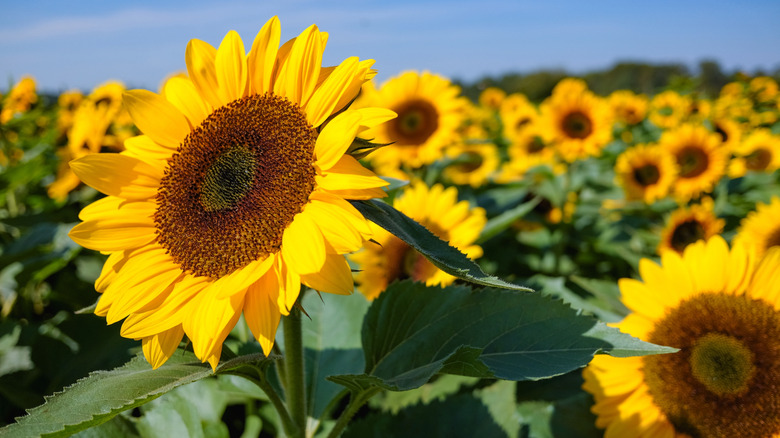
Birds gather where there is food, water, and safe shelter, so it stands to reason that if you want to see more birds in your yard you should provide them with those things. One of the most common ways to attract birds is by putting up a bird feeder, but if you want to save money on bird seed consider growing plants that birds like to eat. Sunflower seeds (Helianthus annuus) are rich in oils and fats that make them a vital food source for birds, and they're easy to grow. Plus, sunflowers can improve your soil quality, so they're a great garden addition all around.
Sunflowers with larger seed heads and richer, more oily seeds tend to be more attractive to birds. Larger seed heads typically have more seeds, while oily and high oelic seeds (called, conveniently enough, oilseed) offer more calories to keep birds fed. Any sunflowers will be better than having no sunflowers at all, but if you want to attract the most birds, plant varieties such as 'Russian mammoth', black oil, or 'super snack mix'. Black oil is one of the all-around best varieties to plant, because, true to its name, it's full of rich oil. It also has thinner shells and larger seeds which makes it incredibly appealing to birds. 'Russian mammoth,' 'super snack mix,' and 'royal hybrid' also produce lots of seeds, while 'super snack mix' has the added advantage of having some of the easiest-opening seeds among the various hybrids and cultivars.
Growing sunflowers for the best seeds
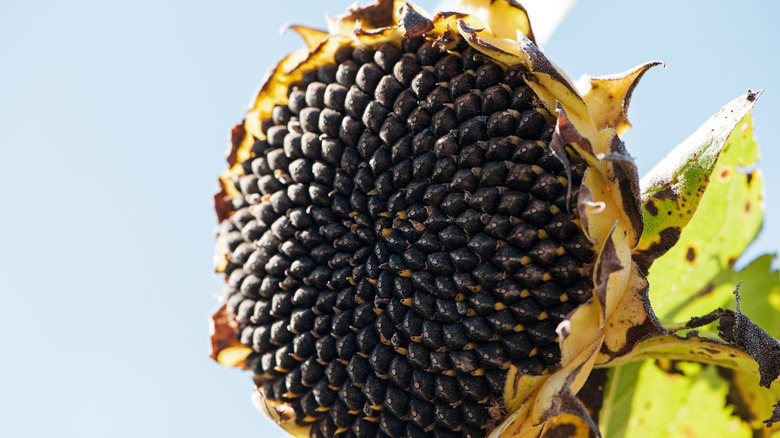
Sunflowers aren't difficult to grow, are low-maintenance, and are hardy in zones 3 through 10, but there are some extra-care steps you can take to ensure they produce a lot of healthy flowers and seeds. Your sunflowers should be planted in full sun and well-draining soil. They need rich soil to grow to their full heights. Larger varieties like 'Russian mammoth' — which can grow up to 12 feet tall with heads 1 to 2 feet in diameter — require even more nutrients, so avoid planting them in poor soil. Compost and slow-release fertilizer are your friends when planting sunflowers.
While you can grow a single sunflower plant on its own, more plants means more seeds for your birds to enjoy. Spacing will depend on the size of the variety you choose: 'Russian mammoths,' for example should be spaced about 4 feet apart. If you're planting them near other sunflowers or other plants, they may compete for nutrients and struggle to thrive. Keep a close eye on weeds for the same reason.
Finally, while pruning sunflowers in fall is standard for many gardeners, you may want to skip it when growing them for seeds. Instead, leave the seed heads on the plant throughout fall and winter for the birds to eat. If you can't wait to prune them, you can either collect the seeds to use in your feeder or leave the seed heads on the ground for the birds to enjoy. Just be sure to let them grow long enough to fully develop first!