

Bird Food Mistakes To Avoid Making During The Winter Months
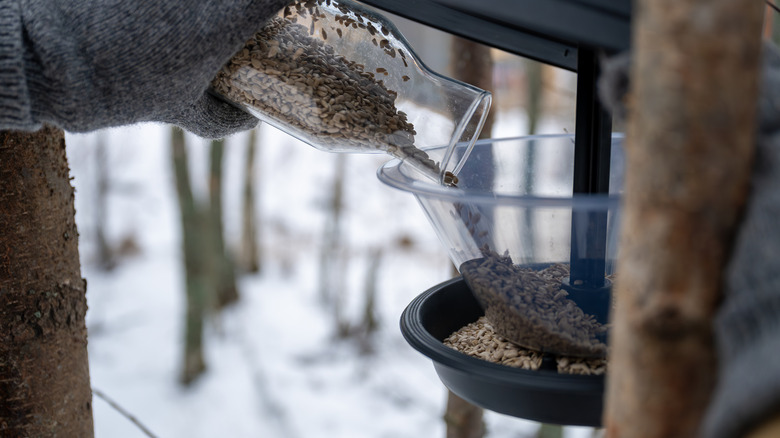
Aside from having berry-rich shrubs and spaces that provide shelter for backyard birds, offering food is another way to keep birds coming to your yard all winter long. Keeping your bird feeders full, or even offering a tray of tasty seeds for the birds, provides them the nourishment they need during a time when natural food sources can be harder to find. While feeding them just about anything they could eat may seem like a good idea in winter, it's not. As with a human diet, certain foods just aren't good for birds, even if they will eat it. Offering them certain food scraps such as bread doesn't help birds in the long run. Nor does offering them low-quality seed that most birds don't want to eat. In winter, every calorie counts for the birds just working to make it through, so "junk food" just doesn't cut it.
Failing to dump old or wet bird seed before refilling the feeder is another mistake that makes that birdseed less beneficial to birds. It's one reason to avoid overfilling a feeder in winter, when rain or snow can quickly ruin what you're offering. If you enjoy when your feathered friends visit in winter, it's worth spending the little extra effort to feed them in the right ways to keep them healthy and happy.
Empty calories are ignored, particularly in the winter
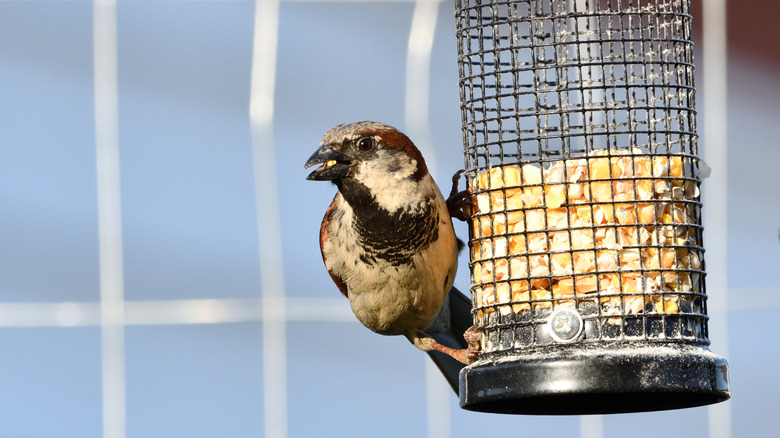
Foods that are fit for humans aren't necessarily good for birds. When you toss that old, stale bread or crusts from your sandwich out to the birds, there's a good chance they'll eat it, but it won't offer them any of the nutrients they need. Such foods are empty calories for birds, the way junk food is for humans. While it's bad any time of the year, having a full stomach with no nutrients in winter can be deadly. Some food additives can also be harmful to birds — even something as simple as the salt found on roasted, salted nuts. A bird's body doesn't excrete excess salt the way a human does, so those wonderfully salty snacks could cause harm. Likewise, many roasted nuts are cooked in oils that could be harmful to birds.
Birdseed blends may seem like a good idea, since a little variety in a diet seems nice. But low-quality birdseed blends include essentially throw-away, low-nutrition seeds — like red millet and cracked corn — that many backyard birds don't want to eat. When birds avoid these seeds to get to the good stuff, the unwanted bits fall to the ground, where they're likely to attract sparrows or starlings. That mess beneath the feeder could be attracting pests to your yard, such as raccoons and rodents.
If you want to give birds a healthy treat that's going to get eaten, opt for something fat- and protein-rich such as black oil sunflower seed or nyjer seeds. The calorie- and nutrient-dense seeds are just the ticket to get through a lean winter. In addition to dumping old or wet seed, remember to clean your feeders regularly, so those healthy seeds don't go to waste.