

Tornado Watch Vs Warning: What's The Difference And How To Prepare
We may receive a commission on purchases made from links.
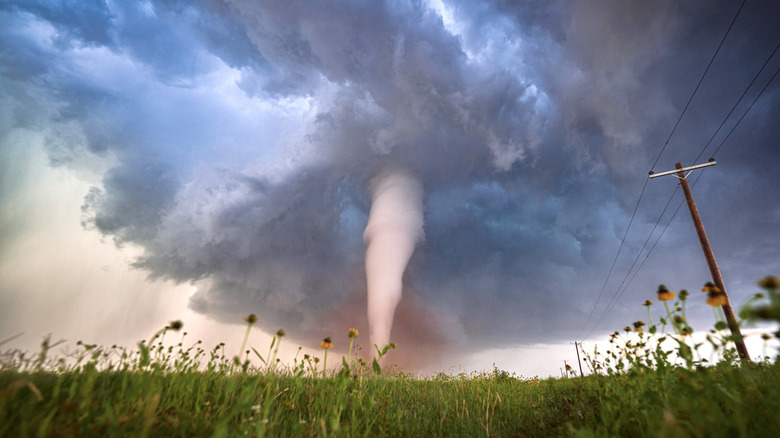
Most everyone is familiar with the often destructive, rapidly rotating, V-shaped column of air known as a tornado. Much is said about tornado season — which is considered to be late spring through mid-summer in the U.S. — and tornado alley, the tornado prone mid-section of the country. However, tornadoes can happen in all 12 months and in all 50 states. So, no matter where you live or travel in the U.S., you need to know how to stay safe during a tornado. That begins with knowing the difference between a tornado watch and warning, as well as how to prepare for such a weather event.
For starters, the National Weather Service issues a number of statements, advisories, watches, and warnings to keep the public aware of impending weather developments., such as issuing a winter storm watch versus a winter storm warning. Among those are tornado watches and warnings. A tornado watch is issued when the forecasters observe favorable weather conditions for tornado formation in a particular area. A tornado watch simply means it is possible for a tornado to develop in that general area. Watches can be issued to cover a rather broad area, even across multiple states.
Tornado warnings, on the other hand, are significantly more urgent — it means there is an active tornado in an area. This may be determined from live witness reports or detected by radar scans. A warning will provide information such as the tornado's last known location and direction of movement. Warnings are usually issued for a smaller, more specific area (usually at the county level) that is expected to be in the path of the tornado. A tornado emergency, which is the top-level alert, is issued when a strong, life-threatening tornado has actually touched down in an area.
Be prepared and aware
There several things to do in order to ensure you are prepared should a tornado form in your immediate area. First is to stay on top of weather forecasts. To that end, make sure you are getting alerts from the National Weather Service. Alerts are issued on radio and television. You can also set your computer and cell phone to receive weather alerts. Additionally, if there is a threat of severe weather, you should monitor an NOAA weather radio, such as the Raynic weather radio. Additionally, have an emergency preparedness kit in your home and vehicle and develop both a communication plan and plan of action, including where to shelter in your home.
The National Weather Service may issue more than one type of watch or warning at a time for a single area. Tornado warnings and watches, particularly, are often issued during high wind warnings (don't forget to prepare your garden), as well as severe thunderstorm and hurricane watches and warnings. When a tornado watch is issued, continue to monitor weather alerts, check your safety plan and supplies, and be ready to take immediate action if the situation escalates. Also keep an eye on the sky. If the sky is green or you see a funnel shape begin to dip below the clouds, be prepared to act.
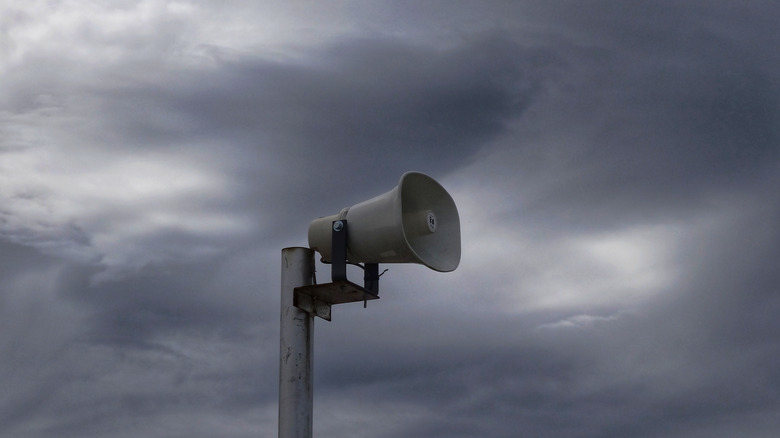
When a tornado warning or emergency is issued, or you hear a tornado siren, you should act immediately. Move to a room toward the interior of your home, workplace, or other building, away from any windows, if possible. Should you be in an RV, mobile home, or vehicle, take shelter in the closest sturdy building you can find. If you cannot reach a building, shelter in a ditch or other low area.