

How To DIY A Stylish Hanging Moss Planter For Your Outdoor Space
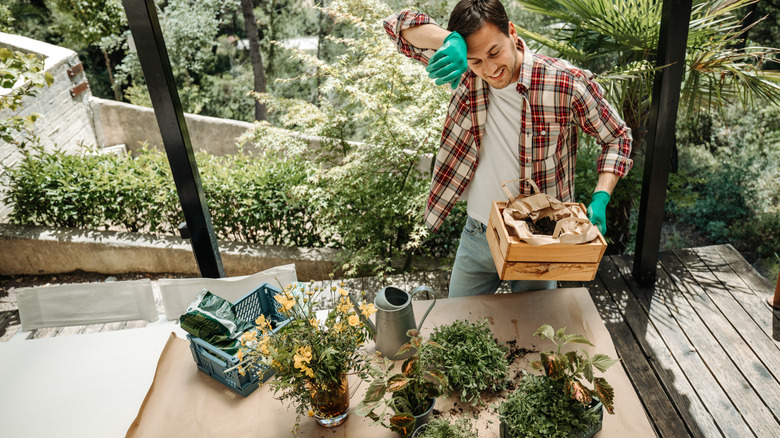
Hanging baskets are a timeless favorite in home gardening. They bring beauty up to eye level, drawing attention to vertical spaces while adding vibrant color, texture, and life to porches, patios, and balconies. Whether you're covering a dull wall, softening a privacy screen, or simply bringing charm to a small outdoor nook, hanging baskets are a low-maintenance way to transform a concrete corner into a lush retreat. With the right plants, they can even help hide unsightly views or add a bit of living art to your outdoor design.
One of the best and most underrated materials to build a hanging planter with is sphagnum moss. This natural liner doesn't just look beautiful with its soft, earthy texture; it also works hard. Sphagnum moss holds up to 20 times its weight in water, giving your plants a steady supply of moisture without constant watering. Its airy structure allows roots to breathe, and its natural antifungal properties help prevent disease. It's also flexible and easy to shape, making it a versatile base for creating unique hanging baskets with healthy, thriving plants.
How to build your own moss basket masterpiece
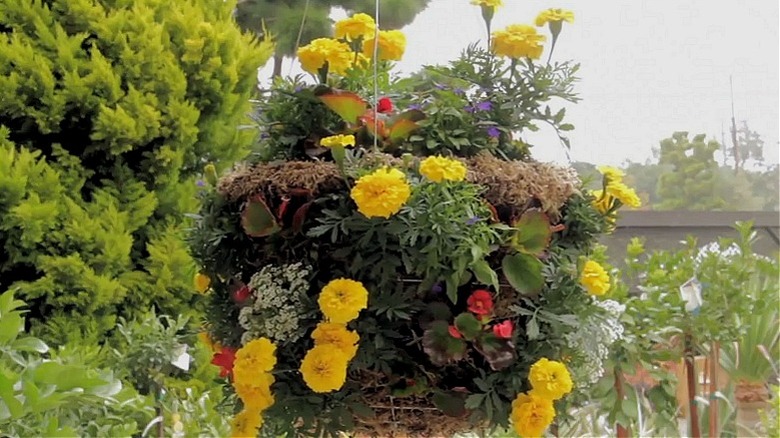
To start your hanging moss planter, gather a wire basket in any shape; a wire or an old hanger to use as a hanging bracket; sphagnum moss; potting soil; and a variety of small, colorful flowers like marigolds, alyssum, begonias, or lobelia. First, soak the sphagnum moss thoroughly in water until it's saturated like a sponge, then wring it out well. Line the bottom of the basket with a one-inch-thick layer of moss, pressing it into place and slightly overlapping the pieces to create even coverage. Work your way up the sides to the rim, snugly tucking in the moss. Once the moss is neatly packed and even, trim the outer edges for a tidy, clean look.
Start planting along the sides of the basket. Carefully remove excess soil from plants and wrap the roots in moss to help them stay intact. Use your hand to make a small pocket between the basket's wires and insert the wrapped plant, gently pushing it through until the leaves and flowers peek out the side and the roots are visible inside. Continue planting around the sides, leaving room for growth. Then fill the inside of the basket with potting soil, stopping about one inch below the rim.
Plant a few matching flowers on top, leaving the center open to serve as a water well that directs moisture to both the roots and the mossy sides. While many flowers thrive in hanging baskets, shade-loving flowers are ideal if your space lacks direct sunlight. Hang your basket in your preferred location, and within a week, you'll see your living display begin to flourish. To protect your hard work, consider using deterrents to keep squirrels away.