

Wild Turkeys: What To Do If You Spot One In Your Yard
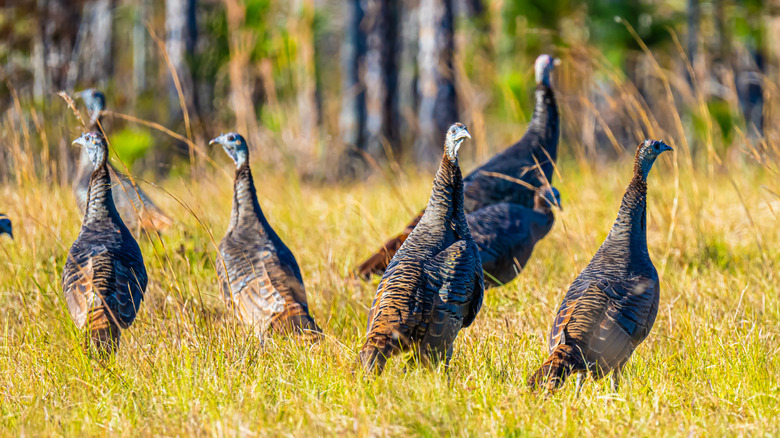
Many gardeners take steps to make their gardens more inviting for birds, whether they are birders or appreciate the many benefits of birds as garden helpers. There are native plants you can grow, water features to add, and even bird feeder upgrades to attract ground-feeding birds. However, there are some birds you may not be thrilled to see in your yard or garden. Wild turkeys are beautiful birds, but they're also larger than the average songbird, which can be intimidating for some people (and messy). Being larger, there's also a general increase in the risk of accidental damage as they wander about your yard and garden.
The good news is that if the wild turkeys aren't causing any harm, then you don't actually need to do anything. They're native to the U.S., and they're likely to leave your garden to forage elsewhere after a while. Avoid feeding them directly, as habituated wild turkeys, particularly young males, can become more aggressive. Instead, enjoy watching them from a distance. However, if turkeys are causing problems in your yard, there are steps you can take to encourage them to move on and reduce the chances of them coming back.
How to shoo off wild turkeys
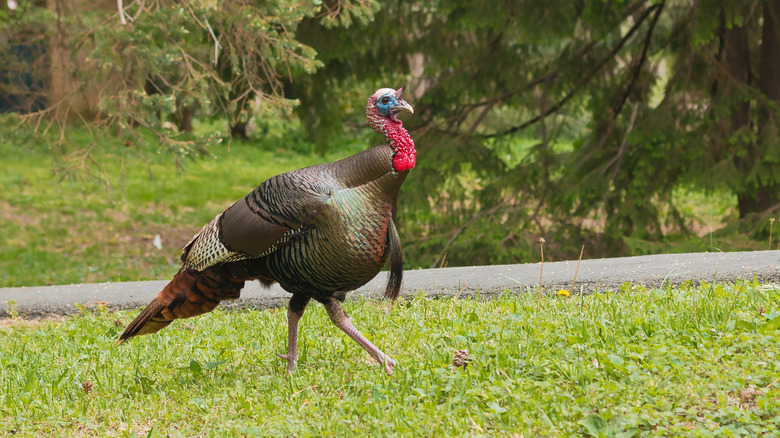
If you're having wild turkey trouble and can't wait for them to move on, the good news is that they are relatively easy to scare off. They're not domesticated, so they naturally want to avoid humans. Loud noises and lots of motion are easy ways to get rid of them without getting too close. Stomp your feet, wave your arms, yell, or bang pots and pans together. You can also try spraying them gently with water (if it's not too cold out), either from sprinklers or a water hose. After all, you just want to scare them away, not harm them or chill them.
As with any wild animal, it's a good idea to keep your distance. Wild turkeys aren't as dangerous as seeing a bear in your yard, but they do still have talons and beaks. If provoked and unable to get away, a wild turkey could still potentially hurt you. The primary tactic is to exert dominance, and not display what the birds perceive as fear (backing up or turning away). Always face the birds and make yourself as large as you can. They should wander off fairly easily. And again, if they're not tearing up your yard for seed or causing other damage, it's fine to consider them another native, natural visitor just swinging through, and let them be.
Making your yard less attractive to wild turkeys
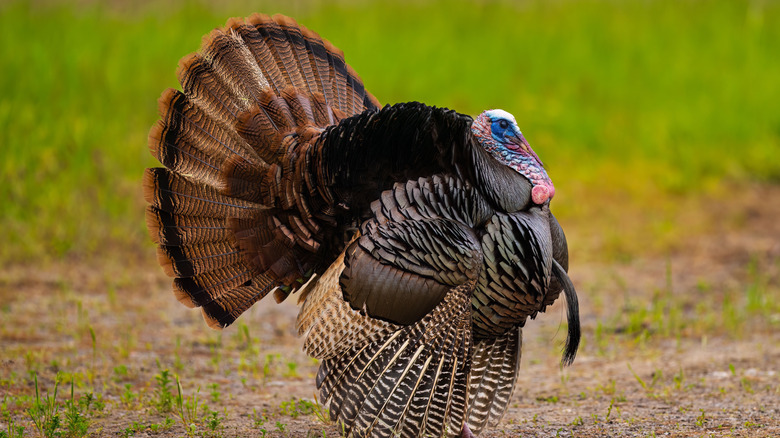
If wild turkeys keep returning, there are a few changes you can make in your yard to discourage them from returning. Wild turkeys can fly, so a fence won't do much to stop them, but removing food sources will. They eat the same seeds, berries, and bugs as many other birds, so unfortunately if you're trying to attract a diverse variety of birds you may need to make some hard choices. Try to stick to feeders that are hanging and avoid ones that birds can easily knock seeds out of, cleaning up spilled seeds off the ground each night. Keep your lawn mowed and dispose of any fallen leaves to remove other food sources, like insects and bugs hiding in leaves or debris piles.
If you're determined to keep food sources in place for other birds to enjoy, you can also make your yard unappealing for wild turkeys to shelter in. Wild turkeys roost in trees and other high places, so if you don't already have trees in your yard, avoid planting them. A sprinkler system, scarecrow, or something shiny that moves or produces lights or sounds can also scare wild turkeys away from roosting in your yard. Spread deterrents out evenly, or turkeys will consider some spots still safe. During late winter and spring, during breeding season, male turkeys wander farther afield and gravitate towards reflective surfaces, like windows or mirrors. They think their reflection is another male turkey and will challenge it relentlessly. Cover anything reflective during these months so they'll keep moving.