

What To Know Before Trying Lawn Aerator Shoes In Your Yard
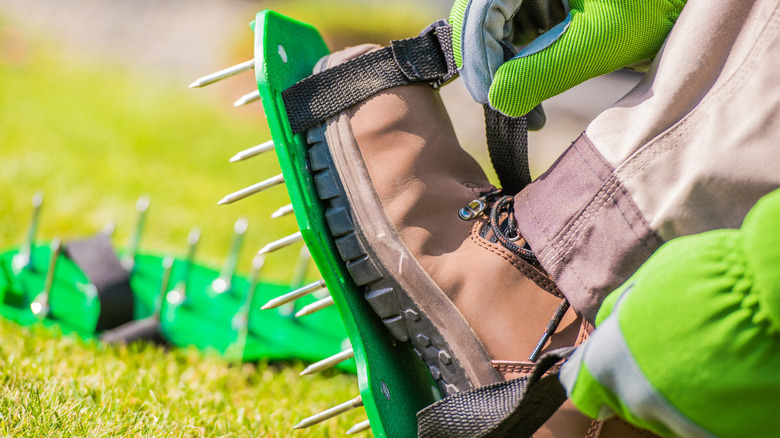
You may have heard the buzz about lawn aerator shoes and wondered how well they actually work. At first glance, these spiked shoes look like a fun way to aerate your yard while getting some steps in. But after a closer look, you might feel like you spent $35 and a few hours with nothing to show for it.
Like all plants, the grass in your lawn needs water, light, nutrients, and oxygen for healthy growth. Lawn aeration is one of the best ways to create a lush and green lawn because it relieves soil compaction and allows air and water to flow to the roots. But not all aeration methods are equal, and some solutions promise more than they deliver. It's easy to end up wasting valuable resources on DIY hacks for your yard, only to find out that they don't actually work. So, are lawn aerator shoes a helpful hack or just a hoax?
Unfortunately, there's no simple yes-or-no answer — it depends on several factors. For small yards with soft soil, lawn aerator shoes and sandals can be quite effective. However, for compacted soil, large yards, or older lawns with thick thatch, aerator shoes won't solve your problems or keep your yard looking its best.
Why lawn aerator shoes don't always work
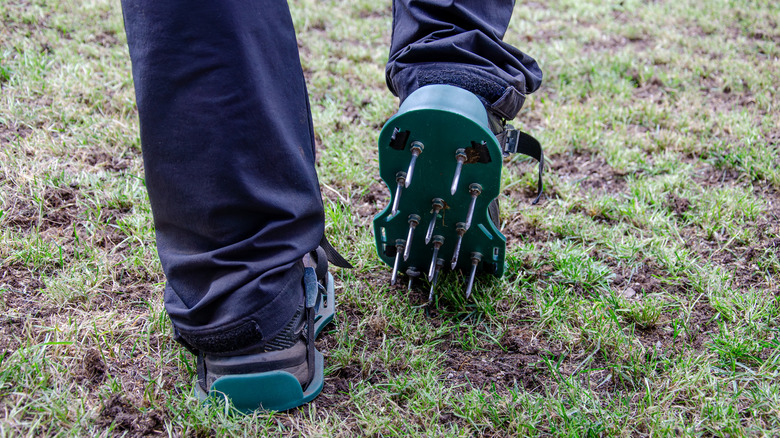
A lush, green lawn doesn't just happen by accident. Lawns are a lot of hard work, and several factors go into determining how well your grass grows. Because lawns endure heavy use from kids, pets, and mowers, their soil can easily become compacted over time. If you have naturally heavy clay soil, then the problem gets even worse. In fact, soil compaction could be why your grass is growing in patchy or uneven.
Heavy clay soils compact easily, creating a dense surface beneath your grass that even water struggles to penetrate. In this case, lawn aerator shoes aren't going to be much help. They just can't penetrate the soil enough to make a difference. That's why lawn care professionals rely on heavy-duty aerator machines for compacted soil.
The size of your lawn is another reason why aerator shoes can be an ineffective solution. If your lawn is less than 1,000 square feet, you may be able to make a difference with spiked shoes, but if it's any larger than that, it just takes too long to make it worth your time. To make matters worse, lawn professionals consider any type of spiked aeration a short-term solution, and that includes aerator shoes.
The best long-term aeration solution for your yard
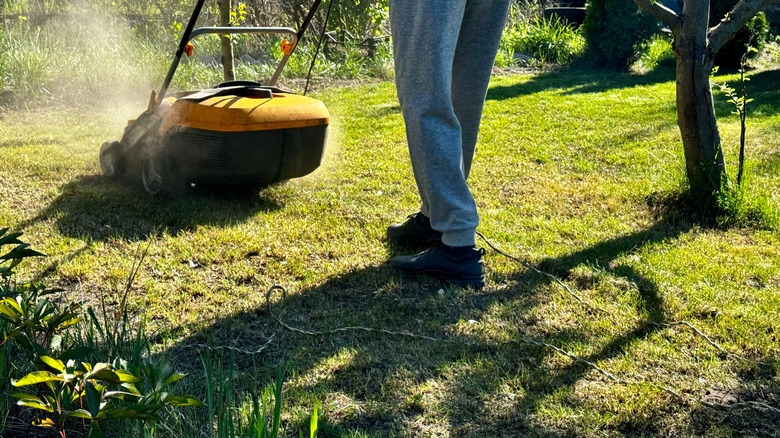
When choosing an aeration method, one of the biggest debates is between spiked and core aeration. While there are some powered versions of spiked aerators, most of them are pull-behind attachments for your lawn mower or riding garden tractor. They can often be weighted to penetrate deeper, but all operate similarly — pushing metal spikes into the ground to let air and water reach the roots.
Unfortunately, with spiked aeration, this space usually fills back in, sometimes almost immediately, so it's not a good long-term solution. The best method is to use a core aerator, which operates in a similar manner but removes a plug of soil and turf. Though core aeration causes more initial disturbance, top-dressing afterward with compost or sand relieves compaction and improves long-term soil health.
No matter which aeration method you choose, aerating your lawn is much more complicated than it appears. Improper aeration can lead to other problems, and it could be one of the ways you're ruining your lawn. Before aerating, consider factors such as thatch buildup, timing, soil type, and the overall health of your lawn. Do some research before you literally — or figuratively — jump in with both feet.