

How To Keep Your Bird Feeder Safe During The Harsh Winter Months
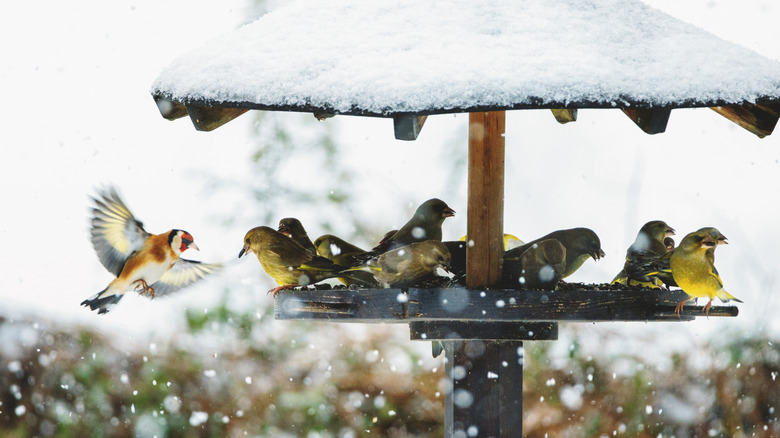
Winter can a bit rough on birds, especially in regions where snow covers many of the potential food sources they might otherwise find on their own. Providing a bird feeder and keeping it full will keep the birds coming to your garden all winter long, but there are extra steps you can take to keep the feeder safe — and healthy — for your feathered friends. One of the best things you can do is one you might not even think about once cold weather hits, and that's keeping the feeder clean, doing so about twice a month. Clean feeders help keep birds safe and healthy. Your bird feeders could be quite popular in winter when you offer up some of the neighborhood birds' favorite treats, but much like kids in kindergarten, those birds could be spreading illnesses to one another, too.
Moisture, whether from rain or snow, could also lead to mold, especially if old seed is left in the bottom of the feeder each time you refill it. Clearing snow and ice from the feeders can help prevent moisture-related issues which can lead to mold or rot. In the case of tray or platform feeders, regularly removing snow or ice also makes it easier for birds to access the birdseed.
Cleaning and other safety tips for winter bird-feeder maintenance
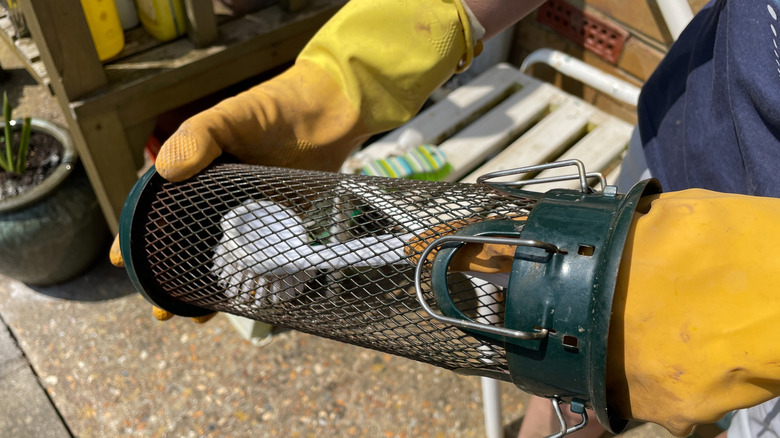
To clean your bird feeders, empty them, and wash them in a solution of 9 parts water to 1 part bleach. Letting the feeders soak in the solution for about 15 minutes is also good practice. Do this every couple of weeks. An old toothbrush is one of the best bird-feeder cleaning tools, helping you scrub out any caked-on debris. Wear rubber gloves while washing the feeders to protect you from germs. Wait until the feeder is completely dry before refilling it. It could be handy to keep an extra feeder on hand to swap them out as needed. Each time you clean a bird feeder, inspect it for any damage such broken, cracked, or splitting parts that could be dangerous to the birds. Upgrade to a new feeder if you find such an issue.
In the area where you hang the feeders, regularly clear out seed debris and bird droppings, if possible, to help the birds and other critters stay healthy. One way to ensure less mess is by making bird-seed blocks to feed your feathered friends. These are sort of like suet cakes — with lots of seeds and nuts, bound together with gelatin. There's less mess because the birds are more deliberate in their seed choices, with less chance of seeds spilling out.
Birds also need to be safe when flying to your feeder, and window strikes can be an issue if feeders aren't in a bird-safe area. Hang your bird feeders either within a few feet of a window, or more than 30 feet from one. Both options help prevent birds from seeing a reflection of open space and getting confused.