

How To Prepare Dahlias And Similar Types Of Tubers For Winter Weather
We may receive a commission on purchases made from links.
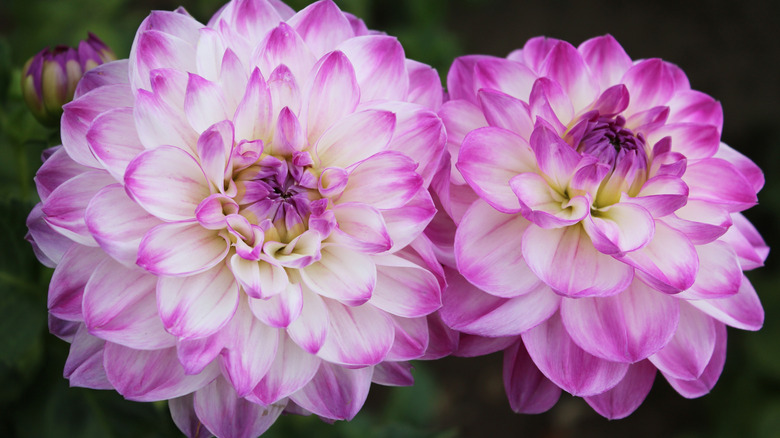
Planting dahlias (Dahlia spp.) is a popular way to add splashes of color to landscaping in yards across the U.S. They are easy to propagate, considered medium to high maintenance, yet provide strikingly colorful blooms (there are about 40 species) throughout summer and early autumn. However, as fall fades to winter, not only do dahlias drop their flowers, but the root (sometimes called a bulb) from which they sprout must be properly prepared to protect it from the upcoming cold weather. How you go about preparing dahlias and similar types of flowering tubers for winter weather depends on where you live, how cold temperatures typically get in your area, and whether you dahlias are planted in containers or in the ground.
If your dahlias are grown in containers, there are a couple of directions you overwinter care can go depending on the size of container. Simply put, containers that can be moved should be moved. Place them in a garage, shed, or similar indoor area, protecting them from freezing temperatures. This is only necessary when freezing weather is on the way. During mild weather conditions, they can be left in place. Regardless of where they are, the containers should be watered twice a week, unless you have wet winters, so they retain plenty of moisture.
Should you be unable to move your containers, or are growing your dahlias in raised beds, follow the same guidelines for in-ground bulbs outlined below. That is, digging them up and storing them before the first freeze, and replanting them in the spring However, keep in mind, tubers in raised beds and containers are more susceptible to cold weather than those actually in the ground due to often shallower soil and the exposed sides of the containers and beds.
Remove dahlias from ground to avoid extreme temperatures
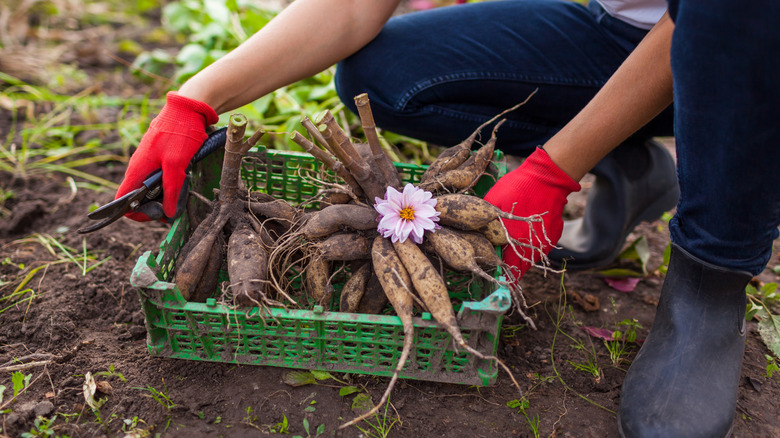
Although dahlias grow throughout the U.S., during the winter they cannot stay in the ground, except in a few regions. Dahlias are tubers, like potatoes, not bulb like irises, so they're susceptible to frost and rot. Essentially USDA hardiness zones 8 or 9 are about it. Climate zones 1 through 7 get too cold, while climate zones 10-13 are too hot, and your tubers will dry out and rot. In those areas, you'll need to dig out your dahlias, storing them indoors over the winter. The process for removing them is pretty much the same in hot and cold regions. How to store them for winter is quite different, as is the timing.
For areas with cold winter weather, begin digging out dahlias a couple weeks after the first frost or mid-November, whichever is earlier. In areas with wet falls and a late frost, dig them out earlier so they don't rot. Mark multiple varieties with flagging tape or ground stakes while still in bloom, to make replanting easier.
When it is time to dig them up, cut away all foliage with pruning shears or a string trimmer. Cut off the stock 6 inches above the soil and remove the tuber with a garden spade like the Spear Head 40-inch garden spade. Rinse them off and air dry out of direct sunlight, before labeling and preparing for storage. Yse a black marker, labeling right on the side of the tuber.
To store dahlias, line a cardboard box or crate with newspaper and add a layer of peat moss, sawdust, or similar material to help the tubers retain moisture. Repeat these layers until you have all your tubers in place. Store the tubers in temperatures between 40 and 50 degrees, keeping them slightly moist, for about 90 days. In warm climates, this may require refrigeration.
Leave dahlias in the ground in mild winter regions
If you live in an area where the soil does not freeze or only freezes an inch or so deep, you can leave dahlias in the ground all winter long. However, this, too, takes a bit of preparation. There is also always the chance of losing your tubers to a freakishly cold snap, excessive moisture and rot, or rodents. Leaving the plants in the ground through winter can also affect the timing of their blooms, as flowers tend to appear earlier on plants that overwintered in the ground.
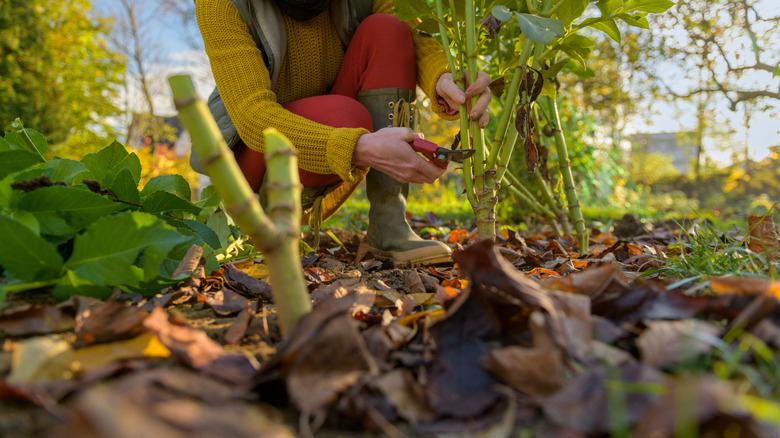
Should you choose to leave your dahlias in the ground, you will need to take steps to keep moisture in and freezing air out. The first step to doing so is to cut the stock off beneath the soil. This should be done around mid-November. Next, cover them with a layer of natural mulch to insulate and trap moisture in the soil. Using fallen pine needles for mulch, composted bark, sawdust, or leaves you collected during fall will serve this purpose well.
In areas that are drier or cooler, use a sheet of plastic as a base layer beneath the mulch. This is unlike preparing trees for frost, when breathable materials like burlap is preferred: The plastic helps retain the moisture. However, only do this if your soil is well-draining. If the ground remains excessively wet, the tubers can rot.
With similar tubers — such as tuberous begonia, geranium, and caladiums — you should follow pretty much the same guidelines as with dahlias. However, it is typically best to lift tuberous begonia, regardless of the area. Additionally, they should be lifted prior to the first frost. Geraniums and caladiums can be left in the ground in the warmer hardiness zones.