

Should You Shovel Your Lawn? What To Know Before The Next Snowstorm
We may receive a commission on purchases made from links.
With the winter season comes somewhat of a respite from the regular lawn care routine. However, even if you've properly winterized your lawn, there are still some tasks you need to attend to throughout the frosty season. This is especially true when freezing weather is on the way. In addition to taking steps to protect your lawn against frost, you may need to deal with accumulated snowfall in the aftermath of a snowstorm. At that point, the question often becomes should you shovel snow from your lawn? The answer is maybe, but probably not.
Most of the time, the best thing to do for your lawn following a snowstorm is nothing at all. In fact, just walking on a snow-covered lawn can cause damage, so in the immediate aftermath of a snowfall, you don't really even want to be on your lawn assessing it, much less shoveling snow, as the pressure can break brittle grass blades and unnecessarily compact the soil. Usually, it is best to sit back and allow the snow to melt.
Keep in mind, the falling and melting of snow throughout the winter is a natural process, and grasses which grow in snow-prone regions have adapted to these conditions. This cyclical process of snowfall and snow melt can actually benefit your lawn in a few different ways. For one, it will help infuse nitrogen and moisture into the soil. Additionally, a blanket of firm snow can provide insulation for your lawn when temperatures dip below freezing for extended periods. In fact, just a few inches of snow keeps the grass and soil underneath at around freezing (32 degrees Fahrenheit), even as the ambient temperature dips below zero.
Sometimes you need to remove snow from your lawn
Typically it's best to leave snow in place and let Mother Nature handle the removal. However, there are times you'll need to take an active role. There are a few different scenarios where this might happen. One is if you skipped raking leaves and grass clippings prior to the snowstorm to prevent snow mold. In this instance, as snow starts melting, excess moisture gets trapped under the leaves and other debris, potentially causing snow mold. Remove wet or mushy snow that is taking a long time to melt.
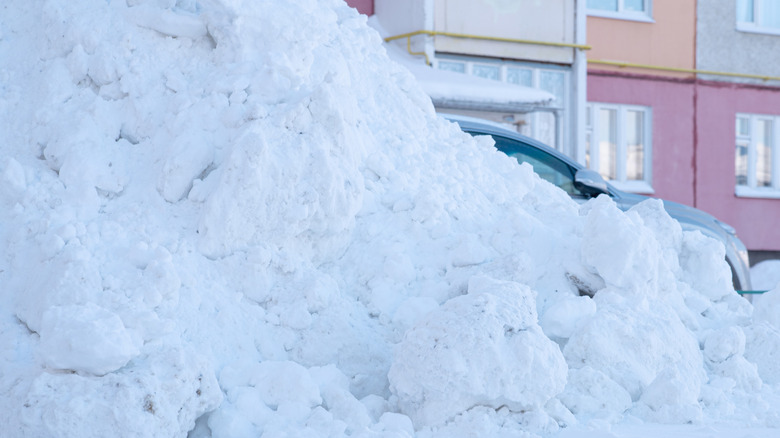
Snowdrifts piled excessively or unevenly on your lawn should also be removed. Huge piles of snow can add significant weight and pressure to the grass and soil beneath. These large piles also tend to melt unevenly, which can hinder air circulation in portions of your yard. The ground can waterlogged, leading to snow mold. So, it is not only best to remove these dense accumulations, but you should also avoid creating such piles when shoveling snow from driveways and sidewalks. Additionally, snow that has been blown into areas where it doesn't melt at the same rate as the snow on the rest of your lawn should be removed.
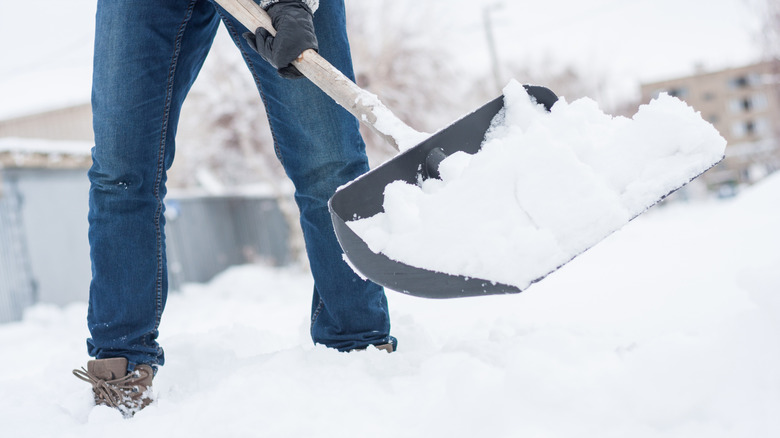
That said, even when it is necessary to remove snow from your lawn, shoveling is typically not the preferred method, as it can damage your lawn if not done carefully. Using a leaf blower is a clever hack to clear light snow. Heavier snow, however, may indeed require a shovel. If so, choose a lightweight model like the True Temper poly snow shovel and be as gentle as possible when you get down near the surface of your lawn. Often you don't need to shovel right to the grass, leaving an inch or two for insulation.