

A Cold Front Is Heading This Way: Here's What It Means For Weather
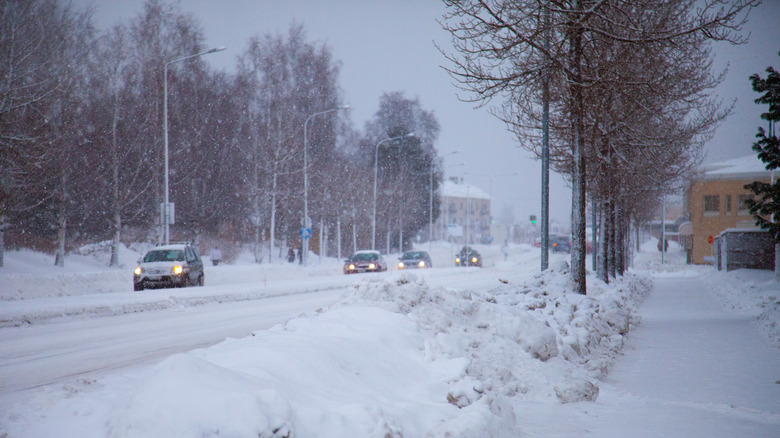
Winter weather can be so beautiful, but there are some definite downsides. Snow and ice can be dangerous and unpredictable, and it can be a pain to keep your walkways clear. It can help to monitor what The Old Farmer's Almanac is saying about December weather, but the best way to deal with and prepare for the unpredictability of the weather is to keep an eye on the weather radars on AccuWeather or the National Weather Service. Currently, the radars are showing a cold front sweeping across the country, from the Northwest across to the Southeast.
A cold front is a wave of cold air. Any warm air in front of it gets pushed forwards then up and over the cold air, so we feel the cold air. When a cold front passes through, you'll see a little bit of warmer weather followed by a sharp temperature drop as the cold air arrives. Depending on how quickly the front is moving, you could have a few days or even a week of mild weather before the cold weather hits. Or you may even experience the entire drop all in one day. Winds change direction and the pressure drops, then increases quickly.
Anytime you have sudden changes in temperature and air pressure, you're likely to see storms. Rain or thunderstorms are common occurrences along fronts in spring and summer, while winter fronts may bring snow, ice, or rain. While storms don't always accompany a cold front, it's important to be prepared for them. Otherwise you might be in for a nasty surprise!
Preparing for a cold front

If you have plenty of time before the cold front arrives, prepare your home and garden for cold weather and potential storms. Seal up drafty windows, protect your trees from frost and remove weak branches, particularly near your home, that might snap off in the high winds. Keep an eye on your phone and local forecasts for any watches, warnings, or advisories nearby. If you only have time to focus on the essentials, make sure you have an emergency preparedness kit in case you lose power. In addition to the typical supplies such as a first aid kit, flashlight, and water, be sure you have plenty of blankets. A battery-powered heater may also be useful, but it's important to get one that is certified safe for indoor use. Carbon monoxide is just as dangerous as the storm itself.
It's crucial to gather your supplies long before the cold front hits. Even if it doesn't create a huge storm, it can still be unsafe or unpleasant to go outside. Even a small amount of ice on the roads can cause wrecks. A power outage may mean stores will be closed and power companies will be swamped trying to restore power. If you do have to leave your home, be as safe as you can be. Dress in layers, covering as much of your body as you can to prevent wind burns and keep your extremities warm. While you should avoid driving if possible, sometimes it can't be avoided. Make sure you have a full tank before the cold front hits, and keep spare supplies inside your car , like the car survival kit Survivorman Les Stroud recommends, in case a storm hits while you're on the road.