

Reasons Why Your Lawn Mower Is Not Starting And How To Troubleshoot The Problem
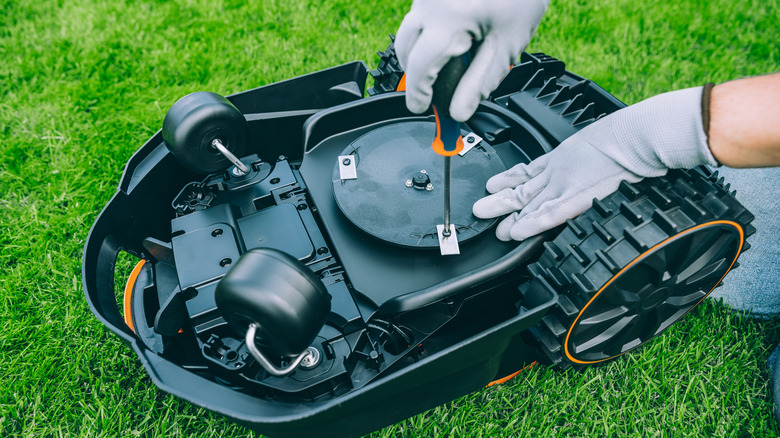
If you're one of the millions of American homeowners who mow their own lawn, you've likely encountered your fair share of operational issues over the years. Though they're quite common, standard lawn mowers are complex machines, and can be very difficult to troubleshoot for the untrained eye. Pulling the rip cord as you've done hundreds of times before, only to be met with radio silence, is enough to make any home landscaper throw in the towel and chalk the whole day up to a loss. Luckily, there are a few quick and easy diagnostic tests that you can run at home that won't require calling in an expert or breaking the bank with a pricey new lawn mower. In most cases, gas mowers have difficulty starting up due to a small number of common issues. Clogged carburetors, stale fuel, and filthy air filters are among the usual suspects, along with minor engine issues such as blown spark plugs.
If your lawn mower refuses to start, check your gas. If it's been sitting in winter storage for a long time, the gas may have turned a dark, cloudy color, and taken on a sour varnish smell. These are signs that the gasoline has gone stale. If you do confirm that your machine is loaded with faulty fuel, siphon the gas out of the tank using a hose and a pump. You'll need to remove any excess gasoline from the carburetor as well, and replace it with freshly pumped petrol. Depending on how long your bad gas has been left sitting, you may need to perform a bit of added maintenance to the carburetor before refueling.
Reboot your carburetor with ease
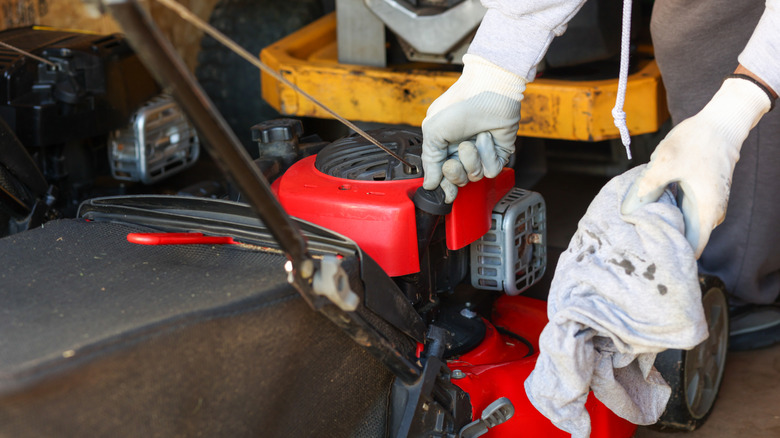
Carburetor issues are extremely common in gas lawn mowers, causing reduced acceleration, poor fuel efficiency, and sometimes even a failure to turn over on the start. The good news is, lawn mower manufacturers are well aware of this defect, so they've taken great care to make the carburetor easily accessible. To get inside, simply pry open the plastic outer shell surrounding the engine and unscrew the component from the fuel line. From there, you can clean out the fuel jets, which look similar to large threaded screws with holes on the sides. Spray them with a bit of WD-40 and hit them with a wire brush, and they should be ready to go. While you're at it, go ahead and inspect your air filter.
Air filters can be cleaned or replaced entirely depending on what shape they're in. If yours is smothered in dirt, you can wash it using warm, soapy water, and place it back inside. If the exterior of the filter has holes in it, or the material has worn thin, it may be worth investing in new ones. Filters come in a variety of shapes, sizes, and materials, so be sure to consult your owner's manual or communicate with a professional before investing in any spare parts. No matter what model you're rocking, the air filter will likely be located on the top or side of the engine. Much like the carburetor, air filters are designed to be easily retrieved, and can be quickly removed with just a few screws.
Additional quick fixes to bear in mind
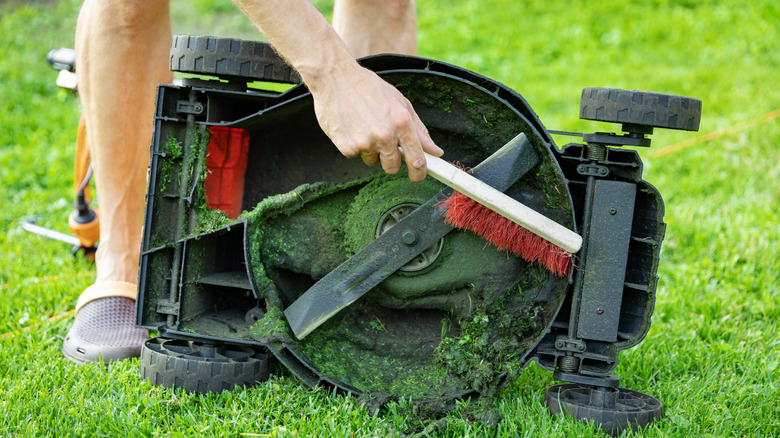
If you've replaced your fuel, cleaned out the jets, and replaced your filter, your lawn mower should run like a dream. Still, there are a few additional last minute steps that might help to get it started in tip top shape. Be sure to inspect any gaskets and fuel lines after reassembling everything, and double check for any damaged seals or cracks in the fluid caps. If everything looks right, begin refueling your mower, and allow roughly 15-20 minutes for the gasoline to cycle through the machine before starting it up again. If your mower has a primer bulb, give that a few taps before yanking the rip cord, just to make sure the fuel is properly cycled.
If you give all of the above a shot and your mower still won't start, you can make a last ditch effort to replace the spark plugs. These will likely be placed behind a rubber boot on the front of your machine. They'll look like long screws slightly protruding from the mower — and if they're burnt out, they'll probably have some noticeable black residue caked on them. Replacing the spark plugs should be quite simple, though you may have to maneuver around some front-end mechanics in order to screw the fresh plugs in.
This basic guide should help you to extend the life of your lawn mower, and fend off a vast majority of common issues. But if even this fails, call a professional.