

Prepare Your Gravel Driveway For Harsh Winter Weather With These Tips
We may receive a commission on purchases made from links.
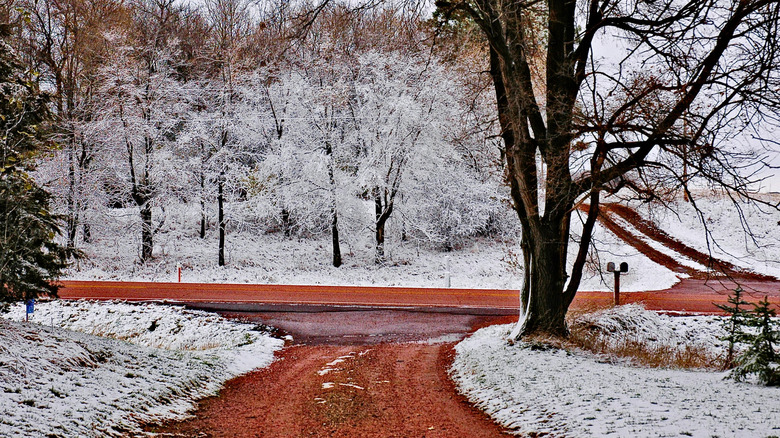
Whenever freezing winter weather is on the way, there is a litany of chores which need to be completed to protect your house and yards While things such as preparing roofs for snow and protecting outdoor plumbing from freezing are typically at the top of the to-do list, it is also important to prepare your gravel driveway for harsh winter weather. Not preparing and maintaining a gravel driveway during winter can actually result in it becoming severely damaged or even unusable. However, keeping it cleaned, leveled, and drained will help your gravel driveway fend off the negative effects of winter weather.
The simplest of these tasks is to keep your gravel driveway clean and clear of any debris or weed growth. While this may not seem like it would have much impact in regards to protecting your driveway in the winter, it actually does. That is because debris, such as a layer of leaves, can trap moisture. Once the temperature drops, these tiny, trapped water droplets will freeze, leading to icy conditions on your driveway. In addition, clearing your driveway of leaves, trash, or other debris will allow you to more clearly spot any trouble areas, such as potholes, drainage issues, or damaged rock.
Make sure your driveway is level and drains well
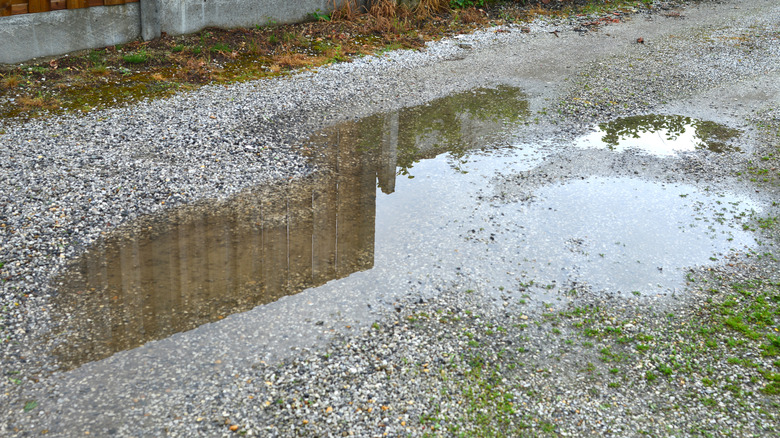
It is critically important your driveway does not have low spots, such as potholes, where water will pool. Instead, it should be leveled to drain well. Otherwise ruts, potholes, and any other feature where water stands can become problematic. Not only do they become safety hazards when they freeze or fill with snow, the damage can rapidly increase, deepening with each thaw. By the end of winter, you could be stuck with a driveway in serious disrepair.
To solve this problem, fill any potholes or low spots. This includes adding gravel to areas where it has devolved to a thin layer of gravel and dirt, as those spots can become a muddy mess when winter rain falls or snow melts. Then, level off and grade the surface, ensuring it has ample grading to allow for good drainage. This grade should have a slight crown in the center of the driveway that gently slopes off to either side.
Once that is done, check anywhere water is supposed to drain and make sure that is clear as well. This includes trenches, ditches, and culverts. If these areas are clogged with debris, it can trap backed-up water on your driveway, and you're back to damage and wear come spring.
Monitor and keep up maintenance through the winter
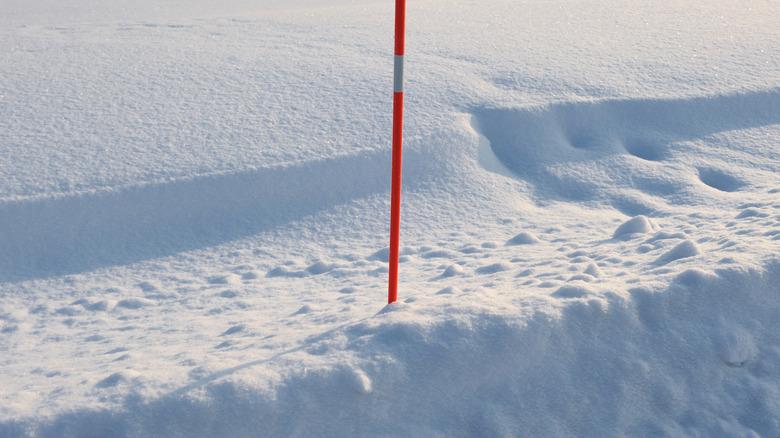
Before snow begins covering the ground, it can be helpful to mark the edges of your gravel driveway, using tall, visible stakes that can withstand the weather, such as the Pro Snow stakes driveway markers. Doing so will not only help you navigate in and out of a snow-covered driveway, but will also allow you to see the area where you need to shovel or plow snow without going into your lawn. You can also make moving in and out of your driveway safer by adding a layer of sand, which will provide additional traction. Sand will also help demarcate the driveway's edges.
Once you have your gravel driveway prepared, it still necessary to monitor and maintain it through the winter. You should remove snow and ice from your gravel driveway as often as possible. If you begin to see low spots or potholes forming, fill them immediately. After a particularly strong snow or rainstorm, check the entirety of your driveway for damage, washouts, ruts, or areas where the gravel may have become thin or washed away. Any damage you find needs to be remedied immediately. If you regularly experience harsh winters, consider a full regrade each spring after the final frost, for maximum protection and prevention.