

Keep Birds Coming To Your Yard All Winter With A Simple Yard Feature
We may receive a commission on purchases made from links.
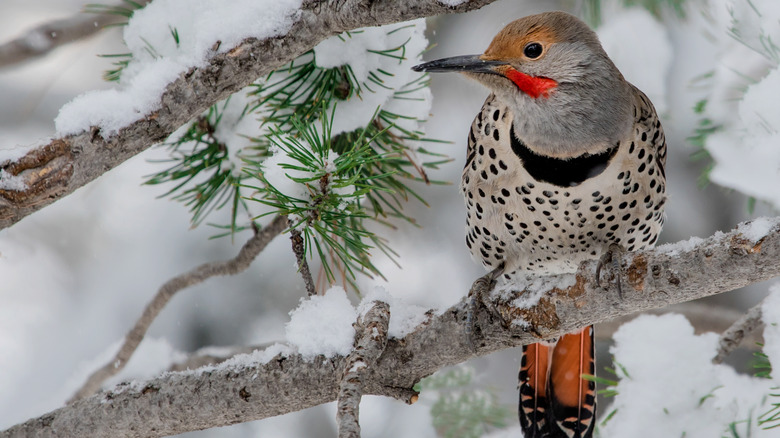
If you've ever wondered why you don't see many birds on some cold winter days, it could be because they're trying to stay warm, too. Birds fluff their feathers up to stay warmer in winter, and some birds even grow up to a whopping 70 percent more feathers after they molt in fall. This is similar to how winter-ready dog breeds such as huskies develop extra-thick layers of fur as winter approaches. But it takes more than fluffing those feathers to stay warm all the time. Birds such as chickadees, woodpeckers, and owls look for spaces within rotting trees to use as overnight shelters.
To help your feathered friends stay warm, which also offers you the chance to see them more often, consider adding roosting boxes to your yard. Having the right features in your yard, such as a bird feeder and certain native plants, will also keep birds coming to your garden all winter long.
Unlike nesting boxes, roost boxes usually have the entry holes in or near the bottom, and they often attract groups of birds that can huddle together on a cold winter's night. Roosting boxes also have perches inside so the birds can sleep comfortably; nesting boxes usually don't have a perch inside. For even more bang for your buck, a transforming model, such as this Convertible Winter Roost and Birdhouse on Amazon, lets you transform the box into a regular birdhouse in spring, then back to a roosting box again in fall. Whether you buy or make one, certain features are helpful to the birds that could use a sheltered space overnight.
Features of a good roosting box for winter birds
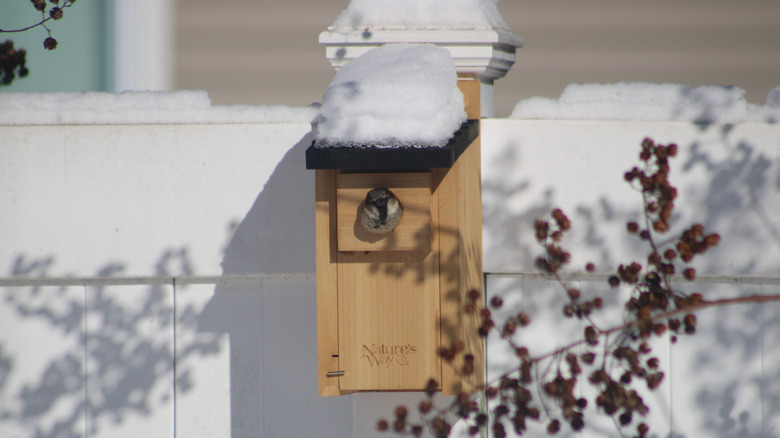
A good roosting box has at least a few perches inside, at staggered heights so groups of birds can huddle together for warmth. It's similar to a birdhouse but with added perches and fewer ventilation holes. Think about the types of birds you want to use the roost box, such as chickadees, titmice, or small woodpecker varieties, and look for — or make — a box with an entry hole about 1.5 inches wide. That size also makes it harder for some of the more aggressive, larger species, such as starlings, to use the box. If you're targeting larger birds, like screech owls or flickers, a 3-inch hole is recommended. Many roost boxes also have an entry hole near the bottom, instead of up high like it usually is on a birdhouse or nesting box; this helps keep warm air in since heat rises.
If you already have bird nesting boxes in your yard, prepare your birdhouses for the cold winter months by adding perches and blocking some of the drainage holes. If possible, flip the front piece upside down so the hole can be near the bottom. For either a roost box or a converted nest box, mount the structure high up on a pole or post. Position the box so it faces south to maximize heat from the winter sun. Adding a sturdy baffle below helps prevent raccoons or cats from being able to climb up to the box.
To help your feathered friends stay hydrated in winter, switch to a dark colored birdbath or add dark stones to the water. Black absorbs heat and may help keep the water from freezing as quickly. A heated birdbath is another option to help keep bird visitors warm in colder climates.