

Transform Your Yard Into A Hummingbird Heaven With A Stunning Purple Flower
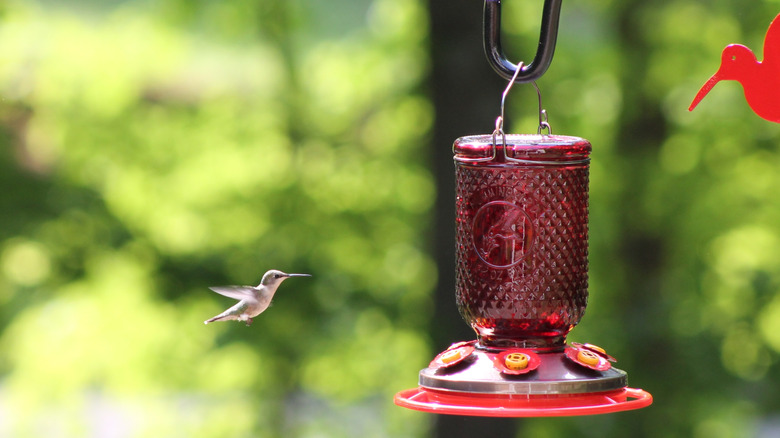
Part of the enjoyment of having a yard with lots of plants and flowers is being visited by a variety of pollinators, from hummingbirds to butterflies. Turning your yard into hummingbird heaven is not hard if you DIY the perfect homemade nectar for hummingbirds with sugar and water, or you plant a variety of stunning plants that attract hummingbirds to your garden.
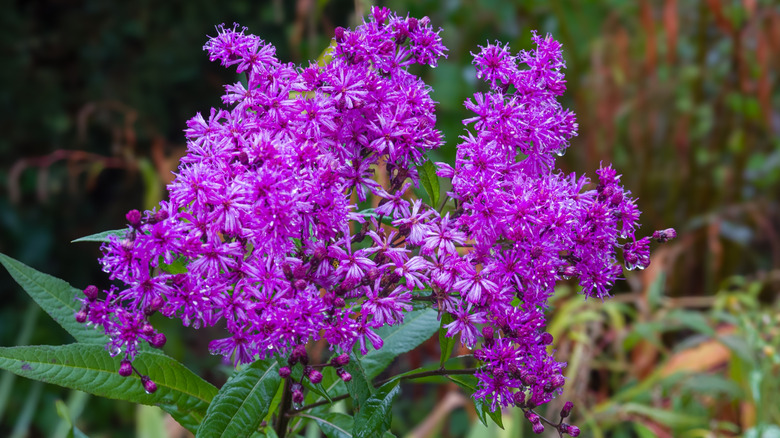
One plant you can add to your garden to up your hummingbird game numbers is Ironweed (Vernonia noveboracensis). Other names for this pretty purple perennial are New York Ironweed or New England Ironweed. It is native to the eastern and southeastern regions of the United States and is found growing wild in wet pastures, meadows, on the banks of streams, and in marshes. If planted in spring, Ironweed produces blooms that will provide plenty of nectar to the hummingbirds from July through early fall.
Because of its compact size, ironweed is a really nice choice for tighter spaces in your garden or along the back of border plants. It is very popular in cottage, wildflower, and rain gardens due to its water-loving nature. The fluffy, bright purple flower has deep green leaves and very thin petals, with each flower head having as many as 30 to 50 flowers on it, making it a major attraction for pollinators. In the fall, the plant has fluffy seed clusters that birds go crazy for. Ironweed is also a deer-resistant plant, so you don't have to worry about grazing if you live in an area with a lot of deer.
How to care for ironweed in your garden
Planting and taking care of ironweed is easy as long as you plant it in a site that gets at least four hours of full sunlight each day, although six to eight hours is even better. Make sure the soil is slightly acidic, rich, and moist, and space the plants no less than 24 inches apart. Don't worry, they will fill in quickly. One of the many good things about ironweed is that it's not susceptible to any serious plant diseases or pest infestations, and its bitter foliage repels most insects (except the occasional flea beetle). Also, patience is a virtue, as it's not uncommon for newly planted ironweed to have no blooms or weak blooms during the first year (especially if the soil is not up to par). You will see tons of blooms in the second year.
Ironweed loves water and moist areas, so you can plant it in poorly draining areas where other plants fail to thrive. The plants need at least one inch of water per week and can easily handle more if it rains. You don't need to add supplemental fertilizer during the growing season, either, but if you want to give your ironweed plants an extra boost of nutrition, add compost around the plants in the spring.
You can follow this eye-catching trick that'll have hummingbirds flocking to your yard by grouping ironweed with several other plants that hummingbirds are known to love, such as cardinal flowers, buttonbush, and irises. Before long, you will indeed create a hummingbird heaven for your feathered friends.