

What To Do If Your Lawn Mower's Grass Collector Isn't Working
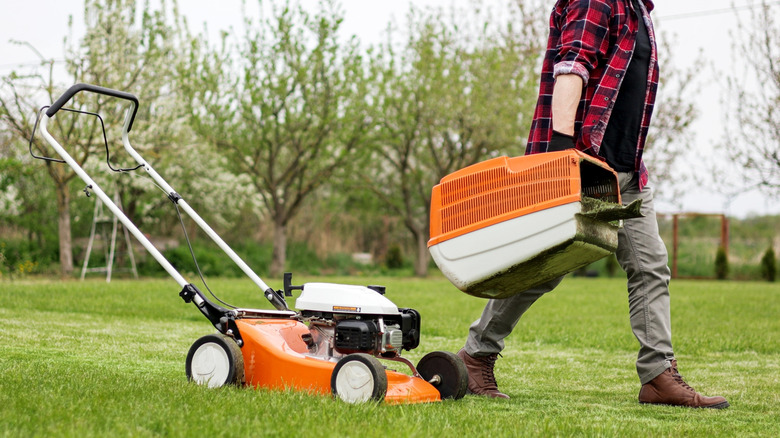
If you're a homeowner who handles your own landscaping, you've probably had your fair share of run-ins with a finicky lawn mower. Maybe you've heard a clogging sound caused by a defective carburetor system, dealt with dull blades that tug at the grass instead of cutting cleanly, or watched your grass collector stubbornly refuse to fill because of poor airflow. The last problem is extremely common with standard push mowers, leaving homeowners scratching their heads as they clear the debris by hand. Of course, dealing with a defective lawn mower can be quite dangerous, so it's imperative to consult a guide or owner's manual before putting your hands anywhere near the blades.
Here's the good news: many grass collector problems are quite easy to fix. In many cases, the issue comes down to something simple: the mower's cutting height. Before you experiment with anything else, check the cutting height and try lowering it into roughly the 2.5-3 inch range recommended for many cool-season lawns, or whatever range your mower manual suggests. If the deck is riding too high, the blades may not generate enough airflow to pull clippings into the bag. This lets grass and other debris gunk up along the cutting deck instead.
In general, the best height setting to mow your lawn is usually about one notch higher than your desired lawn height. Most machines should have a very easy-to-use height adjustment lever located on their side. Before you mow again, clear out any existing clumps from the deck and bag, and try to avoid cutting wet, soggy grass if you can help it. Wet grass is heavy and tends to clump and stick together, causing additional blockages. If your lawn mower was set way too high, lower it in small increments and test as you go, rather than jumping straight to the lowest setting and risking scalping the lawn.
Perform a deep clean if problems persist
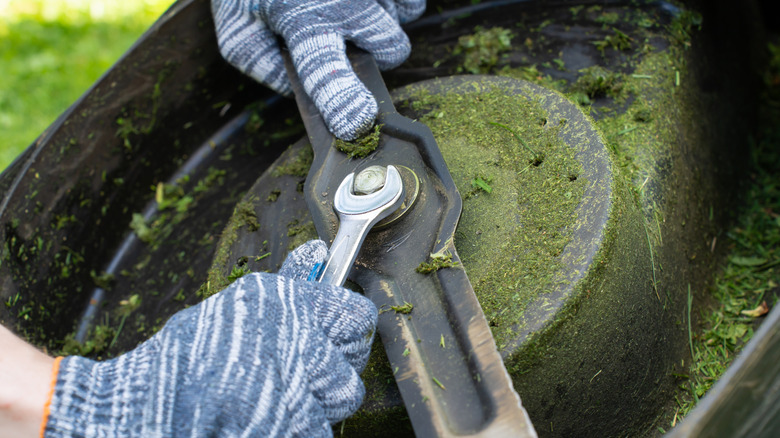
As long as your grass collector has been cleared out and the lawn mower has been lowered to a good height, you should have a solid chance at improving airflow and getting your yard back into shape. Still, this isn't a total catch-all. If you continue to experience grass collection issues, you may need to clean more thoroughly, to ensure that your collector and deck aren't loaded with unseen debris. To pull this off, cut power to the mower by disconnecting the spark plug wire on a gas model, or remove the battery on a cordless one. Once you're sure the machine won't turn back on, begin scrubbing the cutting deck with a stiff brush and some water from a low-pressure hose. Avoid using power washers or other high-pressure machines, as they could damage the lawn mower's internals.
Once you've got the entire deck cleared out, empty out the grass bag and shake it so that any hidden twigs or leaves come loose. Rinse the bag thoroughly with water and let it dry completely before reattaching it. Afterwards, try to cut your grass on a regular schedule to prevent heavy build-up and additional mower issues. When you let the grass grow too long, you raise the risk of clogging the grass collector. It's also worth noting that cutting your grass infrequently can give weeds more chances to spread, so there are plenty of upsides to getting on a well-regimented schedule. Many landscapers suggest that mowing about once a week is enough for most lawns during the growing season, depending on how fast your grass grows. Then, in most regions, you can stop mowing your lawn for the season once growth slows and temperatures drop in the late autumn or early winter.