

How To Protect Birds In Your Yard During A Polar Vortex
We may receive a commission on purchases made from links.
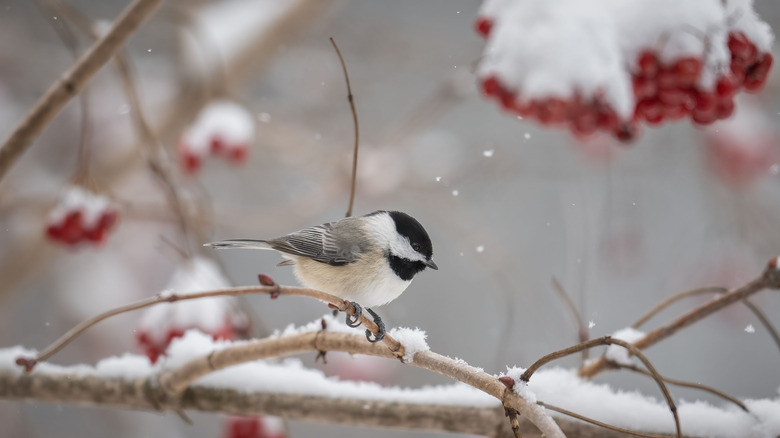
Whenever a polar vortex sends frigid air down across the United States and Canada, safety and comfort are typically tops on everyone's minds. From preparing outdoor plumbing for freezing temperatures to stocking up on food and water, an extreme winter weather forecast sets off a flurry of activity. In the midst of all of this, it's also a good idea to take steps to protect the birds in your yard before a polar vortex. Not surprisingly, they have essentially the same needs in this situation as we do: staying warm, well-fed, and safe.
Even though birds live outdoors, they, like us, need a safe haven to ride out the worst of the winter weather. So it's a good idea to ensure you have adequate shelter for them in your backyard. If you have birdhouses, make sure they are clean and in good repair. Patch up any holes that may allow snow, rain, or wind into the house. Also, position the birdhouse in an area protected from north winds and, if possible, gets plenty of sun. You can also add grass clippings to the bottom of the birdhouse for extra insulation.
Whether you have birdhouses or not, it's a good idea to make sure there is plenty of natural habitat in which birds can take refuge. While trees and shrubs can provide shelter, you can also create areas specifically for that purpose. One way to do this is to use some of the limbs you trim from trees during your winter weather house prepping and create a brush pile in an area that is protected from the wind. If you don't have any brush, you can also use wooden pallets. Just remember to clear them come spring, as those haphazard piles may be what's attracting snakes to your yard.
Helping birds meet their needs during a polar vortex
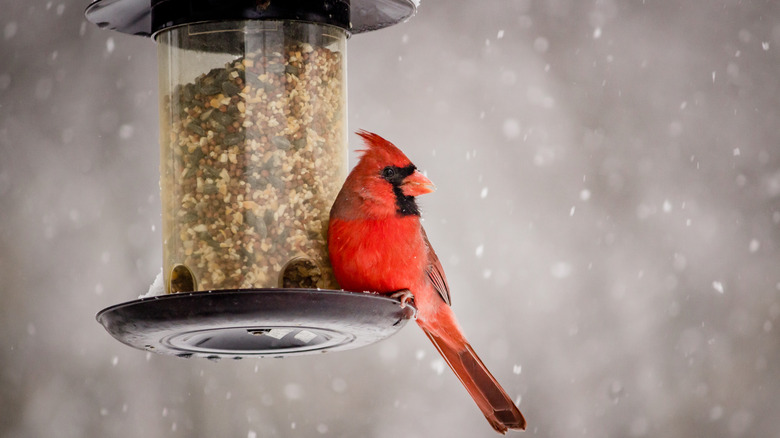
During a polar vortex or other severe winter weather, birds may have difficulty meeting other basic needs, even with adequate shelter. Natural food sources for birds — such as insects, seeds, and berries — are often greatly reduced during the winter season. Additionally, whatever remains is often obscured by snow and ice. Providing them with an alternate food source can literally save their lives during these periods.
If you already have feeders in your yard, be sure to keep them filled, and consider using high-calorie feed. Suet, peanuts, and sunflower seeds to ensure they're getting what they need on frigid days. You should also move your feeders into an area where they are protected from the wind. This will not only help shelter birds while they feed, but will also help keep your birdhouse from swinging in the wind. Keep in mind that birds aren't the only creatures looking for food during these storms: It may be necessary to add protection, like the 16-inch Squirrel Shield plastic baffle, above hanging feeders. This not only helps deter squirrels, but can also offer some protection for birds from rain and snow. If you wish, give squirrels their own feeder away from your bird feeders.
Even though it is cold and even wet, birds still need to stay hydrated. Ensuring they have a steady supply of fresh water is crucial. This can be done with a bird bath or simply by placing bowls of water where they can access them. In order to make sure the water is drinkable even when the temperatures are at or near freezing, either change it frequently or try something like the Gesail bird bath heater.