

The Best Method For Hooking Up Your RV To A Generator
We may receive a commission on purchases made from links.
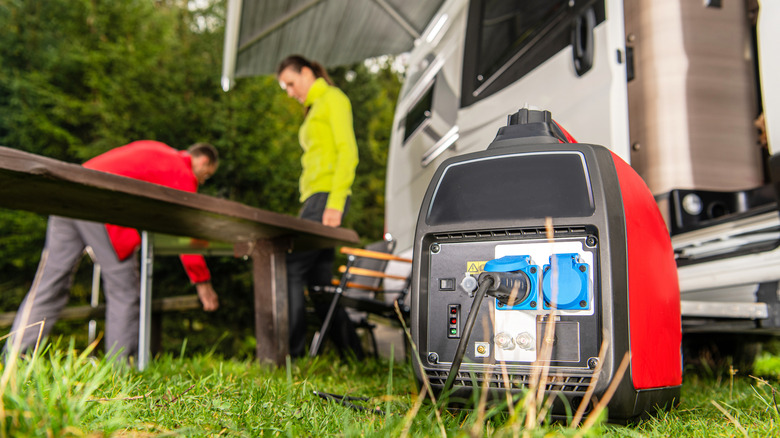
When it comes to RV camping, booking the perfect campsite helps ensure you'll get the amenities you want — but that doesn't always guarantee full hookups. Even some of the best national parks for RV camping are filled with sites that don't offer water or electricity. Regardless of where you stay, if you don't have access to on-site electricity, you will need to provide a source of power. Most often this is done with a solar setup, or portable generator, or both. If you are using a portable generator, it is important to hook it up properly so as to avoid damage to your RV, falling victim to electrical shock, and/or creating a potential fire hazard.
The first step to ensuring a safe connection between your RV and portable generator is choosing the proper generator. The vast majority of RVs have a 30-amp electrical system, although some larger models utilize a 50-amp system. For 30-amp RVs, you need to choose a generator that produces at least 3,500 watts. Larger 50-amp systems require generators that pump out a minimum of 6,000 watts to power two A/C units, and at least 10,000 watts if your RV has three air conditioners. Additionally, make sure your generator has the proper outlet. If it does not, you will need to buy an adapter. It is also strongly recommended to utilize a surge protector like the GearGo RV Surge Protector.
Properly position and check your RV and generator
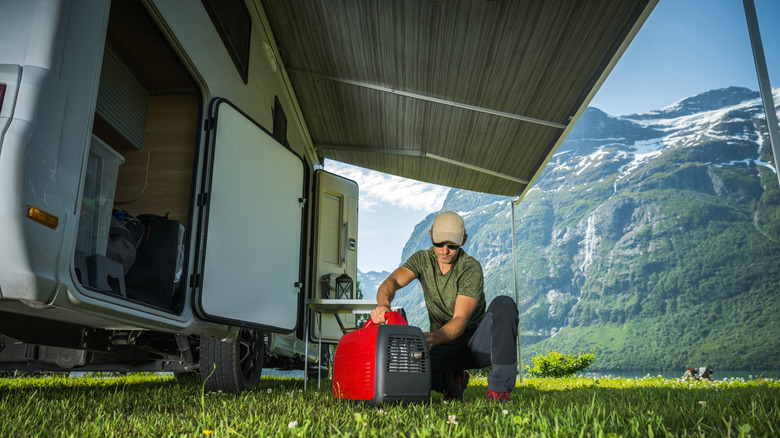
Once you arrive at your campsite, you may be eager to get the fridge cooling and the A/C running. However, before you hook up your generator, there are a few safety steps to take. First, you need to be sure to not just park your RV, but complete the leveling and stabilizing process — especially if you're staying at campsites that offer minimal amenities, where hookups and footing may vary.
As you do this, keep in mind your generator will need to be set on level ground some distance away from your RV. For both noise reduction and safety, 15 feet is usually the recommended distance. If your shore power cord doesn't reach, use an extension cord that is heavy-duty enough to handle the electrical load.
After the RV is set, place your generator in the proper spot. It is always best to set it on concrete or asphalt if possible. If that's not an option, clear away any leaves, pine needles, dead grass, or anything else that could possibly ignite from heat. You also need to make sure the exhaust from the generator is pointing away from your RV, as well as any other campers that may be close by. Finally, check to make sure the air filter is clean and clear and both the fuel and oil levels are adequate. It is always best to start with a full tank of gas, but be sure not to store your gas canister, or any other combustible materials, next to the generator.
Power up and connect your generator
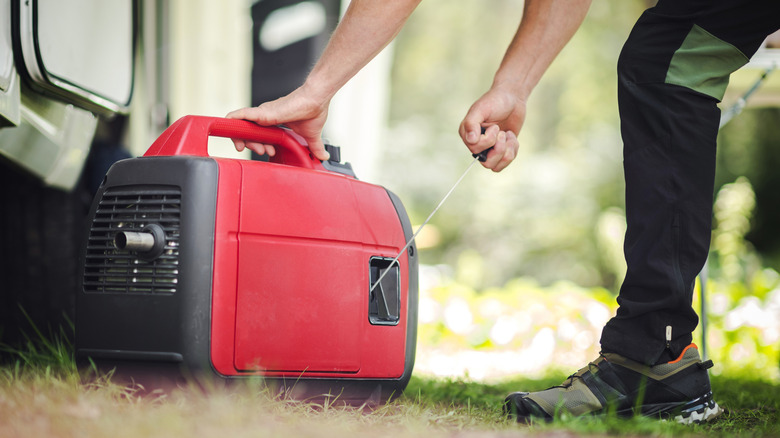
With the pre-checks complete and everything in its proper place, it is time to start your portable generator. Although models vary, most require you to open the fuel valve, turn the switch to "on," and set the choke to the starting position before pulling the cord. Once it starts, move the choke to the run position. It is best to let your generator run for five or more minutes before plugging in the cord to the RV. This reduces the risk of a power surge, which is a common concern when you're camping without electrical hookups and relying entirely on a portable power source.
After your generator has been running for at least five minutes, plug the cord from your RV into the generator. Make sure all of the lights and appliances in your RV are off before connecting. Once connected, turn appliances on one by one, pausing between each to avoid a rapid overload of the generator. Keep in mind, you may not be able to run all the electrical appliances and devices in your RV while hooked up to a portable generator. Start with the critical appliances first. If you notice your generator beginning to struggle as you continue powering things on, you'll know you've reached the limit of what it can support.
When it is time to power down your generator, you will essentially follow this process in reverse. Turn off all the RV appliances, then unplug your power cord from the generator. Then, shut off the generator by turning off the power switch and shutting the fuel valve. This is also the same process you will follow to refuel the generator. Be sure you let the generator cool at least 5 or 10 minutes before adding fuel or storing.