

What To Do When Your Lawn Mower Starts Leaking Gas

Cutting your grass keeps it nice and neat, but what should you do if your helpful tool starts to cause harm instead? A leaking mower can spread gas across your yard, killing your grass. The first step after noticing this is to stop using your mower and move it to a paved area. This stops the spread of gas and gives you a chance to find and fix the source of the issue.
There are several parts that could be causing a leak, so start by shutting the mower off entirely, removing the spark plug, draining the fuel and oil, and giving it a careful inspection. The most common cause is the carburetor, which is attached to the engine and regulates how much air and fuel is used. Start by giving the carburetor a thorough cleaning. If the leak is caused by dirt in the fuel jet or by the float needle, carburetor cleaner may be enough to get rid of the obstruction and fix the leak.
If the problem is more serious than a blockage, you may need to replace one or more parts. Be sure to write down your mower's model number so you can ensure the new parts will fit correctly. Inspect your carburetor for missing, dried, or cracked parts, especially the carburetor bowl gasket and the float needle, which can be easily replaced if damaged. If you can't find any apparent issues or get overwhelmed, don't hesitate to take your mower to a mechanic for help.
How can you prevent leaks?
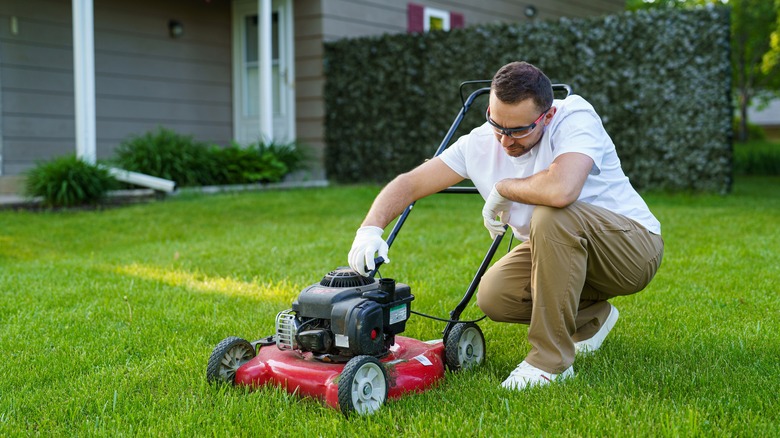
Some leaks are caused by sudden accidents, but others come from the wear and tear of regular use. Before you buy a used lawn mower, make sure it's a model and brand that you can rely on. Inspect it carefully for signs of damage and ask the owner about how it was maintained. If possible, acquire the instruction manual to make maintenance and repairs easier, and take note of what oil you'll need for your equipment, too. Using the wrong oil in an engine can seriously damage it, so you'll need to determine the best oil for your mower and stock up on it.
Regularly cleaning and maintaining your equipment will help prevent blockages and slow down normal degradation, but a care step you might be overlooking is proper storage. Keep it on a flat surface to prevent accidental spills, and store it in a sheltered location. Most mowers are durable enough to handle the occasional rainstorm, but you don't want to leave it exposed to hail or heavy storms. Covering it with a tarp can be useful as well, especially if you don't have a garage. Leaving your fuel in the engine over winter can cause serious problems, and a build-up of ice and snow on it won't help either. Knowing how to store your mower during winter will save you a lot of trouble in the long run, and can help prevent damage that can cause gas leaks.