

How To Prepare Your Outdoor Plumbing And Faucet For Winter Weather
We may receive a commission on purchases made from links.
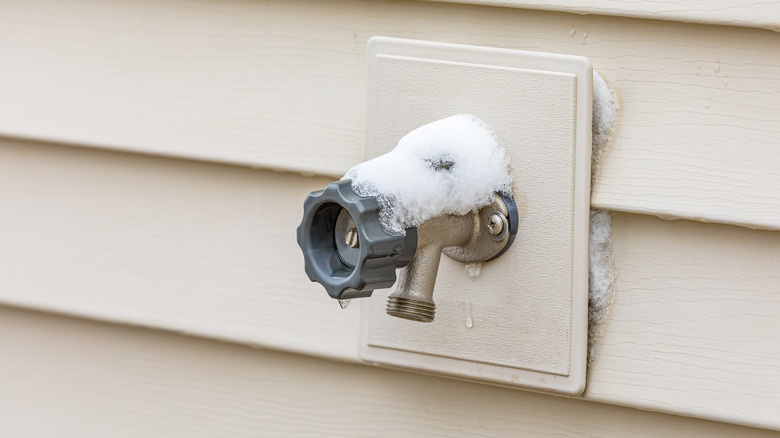
With winter drawing near, the chance freezing weather could be on the way increases by the day. The threat of freezing temperatures will continue throughout the winter season and even into spring across most of the U.S. As part of the National Weather Service's Winter Weather Outlook, the agency lists a timeline for preparing for a winter storm. However, there doesn't have to be a full-fledged winter storm for outdoor plumbing to be damaged by winter weather. Unprotected pipes can freeze in less than 8 hours if temperatures drop below freezing. So, it is important to know how to prepare your outdoor plumbing and faucet for winter weather.
The most important thing you can do to protect your outdoor plumbing and faucet against freezing conditions is to insulate all exposed pipes. This actually applies to all exposed pipes, including those in your attic, crawl spaces, garage, or basement, not just those outside. The easiest and most effective way to insulate pipe is to use foam insulation sleeves. To ensure they stay in place, they can be secured with zip ties or waterproof tape. In areas where temperatures can dip well below freezing, it's a good idea to add a layer insulating tape over the foam.
Insulating your pipes should be a one-time task. The insulation should be left in place all season, but they should be insulated all year. Some people do choose to remove the foam from outdoor pipes for aesthetic reasons and/or to prevent the degradation of the insulation. However, leaving all other pipes insulated not only saves you time with winter prep, but also makes your home more energy efficient throughout the year. If your pipes are already insulated, inspect them and replace any damaged insulation before winter weather arrives.
Other ways to protect your outdoor plumbing in winter
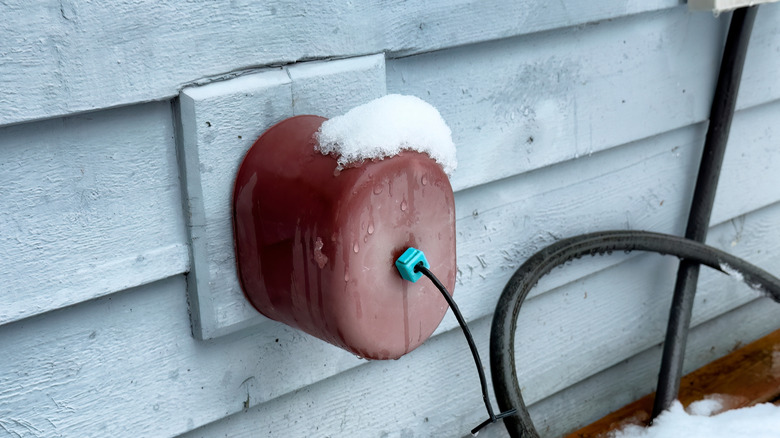
Insulation puts a long-term layer of protection over your pipes and allows them to sustain lower temperatures before freezing. However, when the weather forecasts call for temperatures to fall substantially below freezing and/or remain there for an extended time, there are additional steps you should take. Once you've completed all the necessary tasks to protect your lawn from frost, you should disconnect water hoses and any other appendages from water spouts. Then, cover all the faucets with a hose bib cover like the Thermwell Frost King Faucet Cover.
That will typically allow your pipes to weather most winter conditions. However, the best way to ensure the water in your pipes won't freeze is to make sure there is no water in the pipes. To drain the water from your pipes, it is necessary to cut off the water supply. If you have a separate water supply shut off valve for the outdoor faucets, you can turn off the water to your outdoor pipes while leaving the water on inside your house. Once you turn off the water supply valve, open all the outdoor faucets and leave them open, allowing the water to drain. After the water stops draining out, cover them with a foam hose bib cover.