

How To Choose The Best Type Of Mulch To Use In Your Winter Garden
We may receive a commission on purchases made from links.
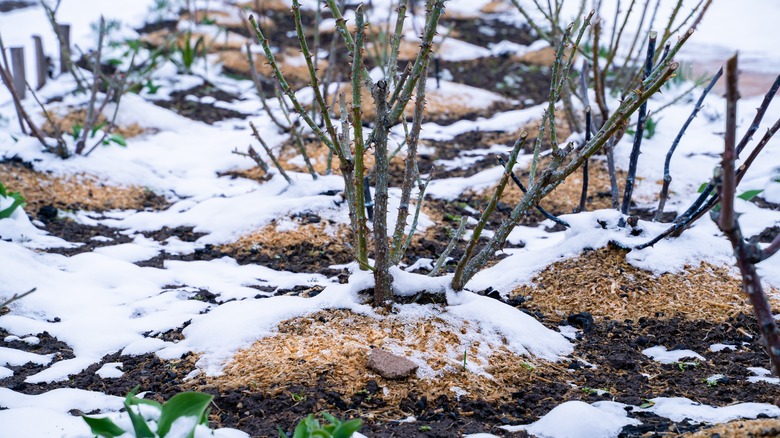
Winter is not necessarily a time associated with gardening. However, whether you are cultivating cold-hardy crops, preparing your garden for the upcoming spring, or wanting to ensure cold-sensitive plants make it through the winter, mulching is a key task performed to protect and feed your winter garden space. When it comes to protecting your plants from snow and winter weather, it is important to know how to choose the best mulch types. In this case, what you want is an easily layered, organic mulch, that doesn't compact too much when wet.
The key to choosing the best mulch for your garden during the winter season is finding a material that is insulating, yet allows ample air flow. The need for mulch to serve as insulation is somewhat self-explanatory, as keeping the plant's root system warm during winter is often key to its survival. However, good airflow is equally important, as fine mulches like leaves or fine sawdust that compact when wet can actually suffocate plants, making them just as deadly as the winter weather.
Many garden experts recommend using a naturally decomposing mulch, known as organic mulch. As the mulch material decomposes, it will add nutrients to the soil. Secondly, unlike plastic sheeting or even whole cardboard, it will not need to be cleared in spring, since the mulch will continue to break down and nourish the soil. Among the materials that fit this bill are straw, leaves, pine needles, bark, wood chips, and rough sawdust. Choosing among these options often comes down to what fits your budget or is readily available: Many of them can be harvested from your lawn. However, if you do not have a ready supply of natural compost materials, you can order commercially available products such as Gardenera premium eucalyptus mulch.
When and how to apply mulch for winter
Timing is key when it comes to applying mulch for winter. While it may seem as if the sooner, the better would apply here, in actuality, mulching too soon can ruin your garden. The reason is your plants need a chance to acclimate to the changing seasons. It's best to wait until your area has experienced a frost or two and plants have a chance to harden off before applying mulch.
Once the timing is right, how you apply it varies based on the plants you have in your garden. For starters, you actually don't want to apply mulch around certain plants that require well-drained soil. Examples include lavender, rosemary, and some ornamental grasses, where root rot can be major issue. Beds containing annuals can be covered with mulch for erosion prevention, unless they are self-sowing plants: that layer of mulch may affect germination come spring. Plants with shallow root systems, like heuchera and strawberry, can also receive a winter mulch coat, especially in areas with significant winter temperature swings.
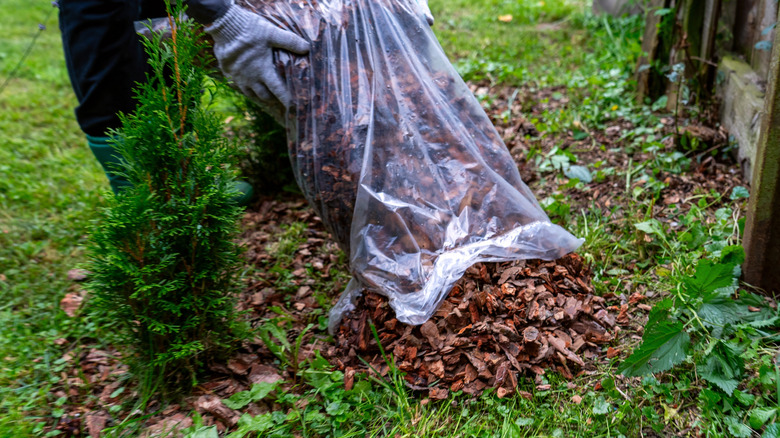
Cold-sensitive plants, shrubs, and trees should have a ring of mulch placed around them, but leave a gap between the base of the plant and the mulch ring, so roots can breathe. For most plants, this gap will be an inch or two. For shrubs you should allow a few inches, and if you are using mulch to protect your trees from frost, that gap should be 6 to 12 inches from the trunk. When applying mulch, material such as shredded leaves that have a fine texture should be layered around 2 to 4 inches deep, to prevent suffocation. Lay down coarser material such as straw or pine needles in 3- to 6-inch layers.