

The Common Watering Mistake To Avoid When Prepping Your Lawn For Winter
We may receive a commission on purchases made from links.
Just as proper watering is key to helping your lawn and garden thrive during a heatwave, so, too, is an essential part of preparing your lawn for frost and freezing conditions. However, overwatering is a common watering mistake to avoid when prepping your lawn for winter, as it can lead to fungus, disease, root rot, and other ailments which can kill your lawn. So, although watering is necessary during winter, as the weather conditions and seasons change, so should your watering habits.
How often and how much water you deliver to your lawn during winter will vary based on the weather conditions and type of grass you have. One of the main reasons for watering less is that the vast majority of grass types go into a dormant state during winter. As a result, they are not growing and their need for water greatly diminishes. However, it is still necessary to water in order to hydrate the roots and keep the soil moist. This will help prevent damage from severe cold weather.
The colder weather, along with the reduced daylight hours, are additional reasons less water is needed during winter. In essence, there is less evaporation, meaning more water actually makes it into the soil from your sprinklers. However, the ground is not able to absorb the water as efficiently as it is during the warmer periods, so it is very easy to overwater if you do not scale back the amount and frequency of your watering. Because of this, the best time of day to water your lawn during winter is the midday hours, which allows adequate time for the grass to dry before nightfall and dropping temperatures arrive.
How much should you water your lawn in winter
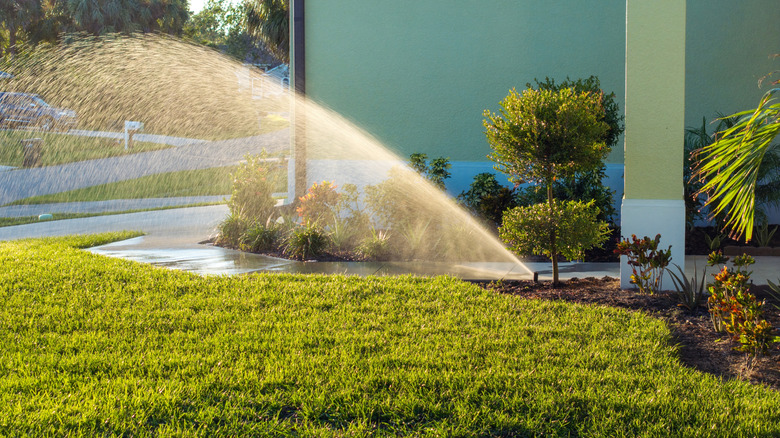
Knowing you need to water your lawn less is one thing. Knowing how much you should water your lawn is quite another. An oversimplistic answer is the amount you water in winter should range from none to some. To clarify, you should never water if there is ice or snow on the ground. Additionally, if the temperature is below 40 degrees Fahrenheit, it is best to refrain from watering. That means some areas of the country may not water at all through the winter and many others may go extended periods of time without needing to water.
Throughout much of the country, the amount of rainfall will typically provide the half inch or so your lawn needs every couple of weeks. However, when there is a dry winter weather forecast or your area is experiencing drought, you need to be prepared to supplement with watering, providing your lawn with a half inch every two weeks. But, this only needs to be done if the soil is drying out. With that in mind, it's a good idea to test your soil with an XLUX Soil Moisture Meter or similar device before turning on the sprinklers.
The exception to these winter lawn watering guidelines applies to those living in the southernmost reaches of the Lower 48. Areas such as South Florida and South Texas often have mild enough winter conditions that the warm season grasses don't go dormant and remain active and growing throughout the winter. Depending on rainfall, you may still need to water your lawn weekly through the winter in these areas.