

Super Costly Fence-Building Mistakes You Really Need To Avoid
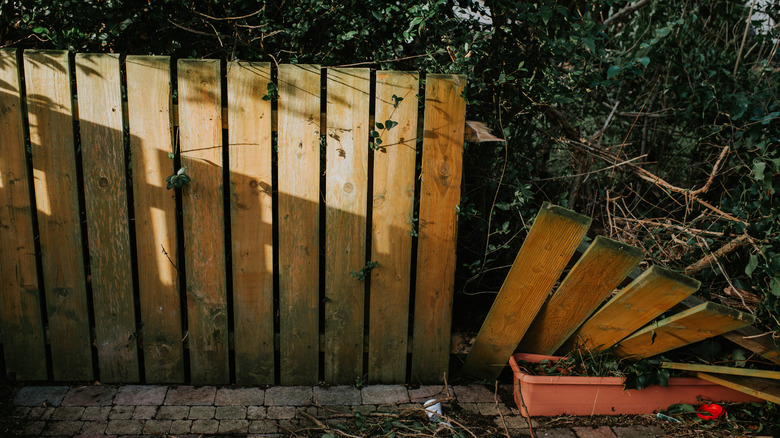
A new fence can often be the difference between an okay garden and one that you absolutely love spending time in. If an old, tired fence has been detracting from all the hard work you've put into your yard, building a new one is probably high on your to-do list. Maybe the fence is sagging, the wood has started to rot irreparably, or it's just not providing you with the privacy you desire from your neighbors. It could even be that you don't have a fence at all in certain areas and that you'd finally like to add one.
Whatever the reason, there are many common fence-building pitfalls that should be avoided at all costs. Some are easy to avoid provided that you know you need to avoid them, like using the appropriate nails for outdoor structures and ensuring that you get your measurements right. Others, however, like matching your fence to your garden's natural slope, or adhering to local building regulations, require some careful thought and planning.
In all cases, making sure you know how to get around them is key to enjoying your new fence. After all, if you're replacing a tired, worn-out structure that's sagging, rotten, and stained from rusty nails, then you'll want to ensure your new one is built in such a way that you avoid these issues in the future.
Failing to define your fence's purpose up front
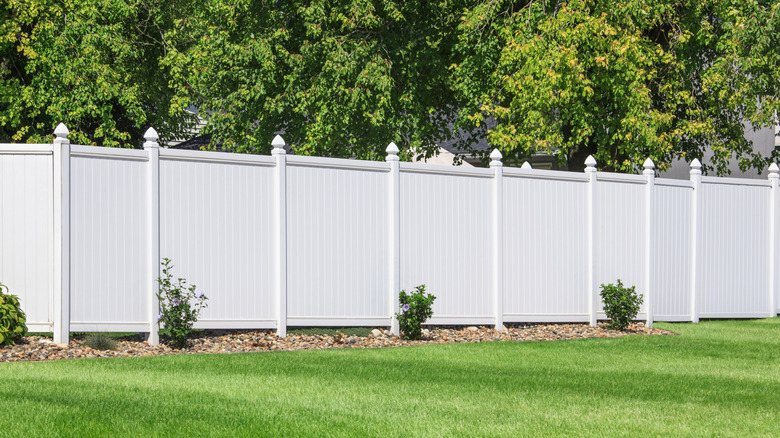
Only by fully understanding the ultimate purpose of your fence can you properly plan its construction and budget accordingly. So, why exactly are you building it? Is it to provide you with privacy from the prying eyes of your neighbors? Or are you hoping to secure your yard from would-be trespassers?
Your reason for building will shape your fence's design from the start. Security fences will need to be constructed to ensure they can't be easily kicked down or scaled, ideally with robust materials like composite or even metal. And if it's privacy that you're after, then you'll need to double check that your chosen fence panels are tall enough to keep your neighbors from nosing over it. More than that, you'll need to check that your budget can actually afford them.
Whether it's the cost of a wooden privacy fence or ultra-secure metal panels, the biggest mistake that budget-conscious homeowners can make when building a fence is not accounting for its purpose and planning for the cost accordingly.
Building your fence next to a hedge
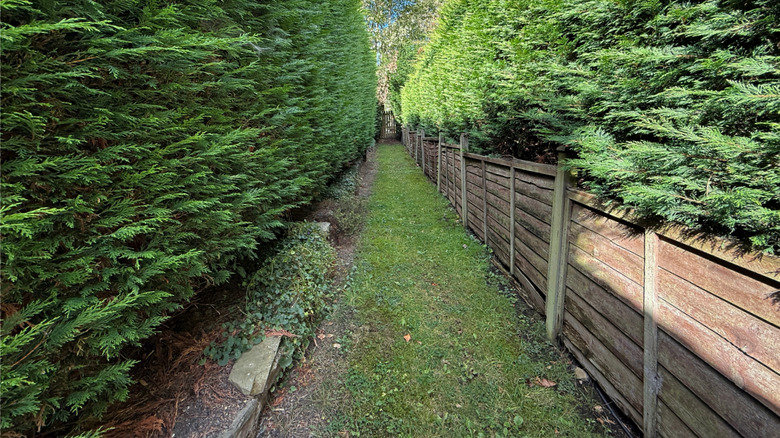
Building a fence next to a hedge can seem like a good idea. In fact, it's recommended in a number of scenarios, helping to improve privacy, reduce noise pollution, and bolster security. However, depending on the fence type, and how easy it is to reach and trim the hedge, it can also lead to a number of frustrating problems.
The thing to remember is that your hedge won't stop growing just because you'd like it to. And as it grows, it won't just shoot upward — it'll likely grow outward, too. In other words, even if your shrubs and hedges are small when you build your fence, when they eventually — and inevitably — grow, they'll begin to cause undue stress on your panels. This can easily lead to your structure sagging as the hedge pushes it outwards, causing wooden panels to warp, or worse, splinter and crack. What's more, if the fence is on the outside, it could easily start to encroach on your neighbor's property, leading to uncomfortable conversations and, most likely, the need to remove and rebuild your lovely fence.
Installing a gate incorrectly
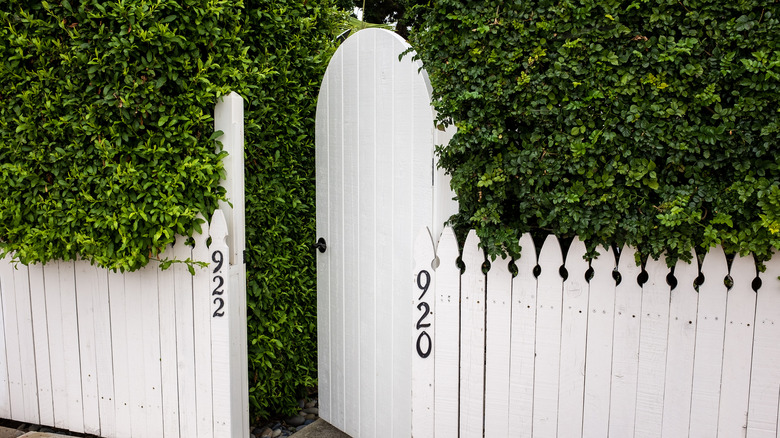
If you need to install a gate, then it's important to take extra care. If it's not installed correctly, it can sag, drag on the ground, and fail to close properly — all of which are common faults with gates, and annoying ones at that.
There are a few ways to avoid this common fence-building mistake. Start by choosing heavy duty hinges and latches. If you're unsure which are best for your chosen gate, then consult your local hardware store. You should also ensure that the gate posts are sturdy, and before you install them, make sure that there's room for the gate to swing freely. Check the gate's swing path to ensure there are no steps, shrubs, or anything else that might catch or get in the way.
Finally, make sure that you hang your gate on separate, dedicated gate posts. Don't be tempted to fix it directly to the fence. Doing so risks the entire structure sagging, a problem that's only likely to worsen over time.
Not following the appropriate regulations
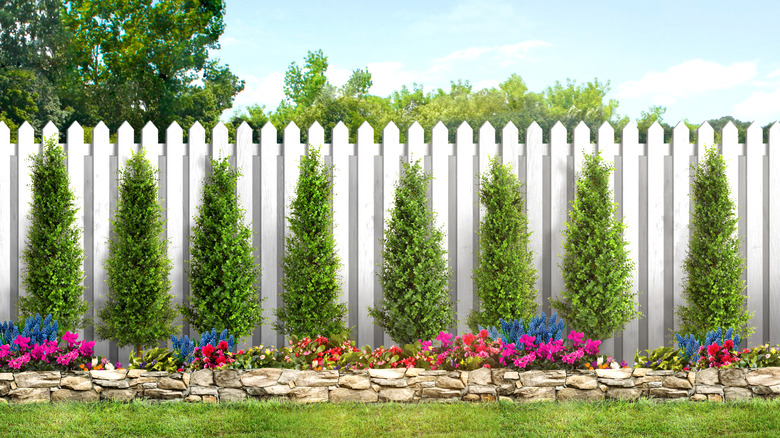
It's easy to fall victim for this next fence-building mistake: assuming you can build whatever you want inside your property lines. Unfortunately, it's not always that simple. Depending on where you live, there are likely to be different rules and regulations that need to be followed when erecting a fence. What's more, if you don't follow local regulations, any neighbors who neither want or like your new fence will have all the ammunition they need to report you to the local authority. If this happens, you'll probably be issued with a notice, which will ask you to either amend the fence to ensure it adheres to regulations, or worse, take it down entirely.
Fence-building regulations in the United States differ depending on where in the country you live. In most cases, you're able to build a fence directly on your property's boundary, although the waters muddy slightly for boundaries shared with public entities. Some states even require neighbors to share half the cost of building and maintaining a boundary fence — and you might still need to notify them, even if you're footing the bill yourself.
Not checking your property's boundaries
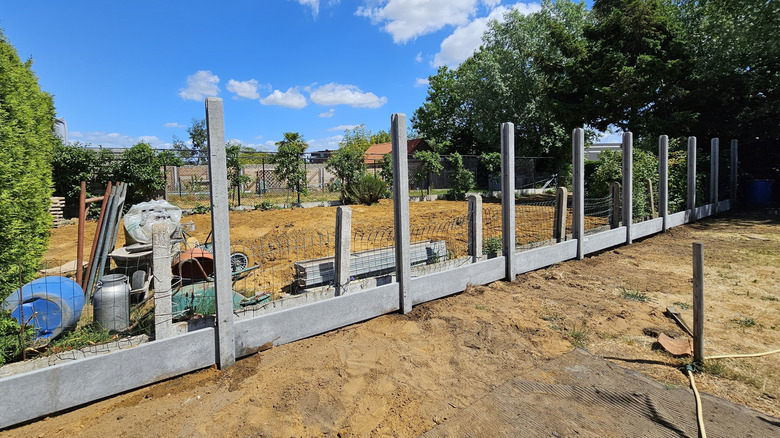
Nobody likes an awkward conversation or dispute with their neighbor; ideally, you'd go about your lives happily, keeping quiet about their noisy dog and waving amicably from behind the wheel as you leave each morning for work. Failing to check that your new fence aligns with your property boundary is a surefire way to disturb that harmony. It's also a costly mistake that can strain both your wallet and your neighborly goodwill.
Just imagine how you would feel if your neighbor erected a fence that encroached on your yard, effectively reducing the amount of garden space you had to enjoy. At best, you'd be annoyed. At worst, you'd be furious. And rightly so! Similarly, imagine how frustrated you'd be with yourself if you found that you'd accidentally cut off your own yard by building the fence too far inside your boundary.
Fortunately, provided that you're diligent, this is an easy mistake to avoid. Double (and even triple) check your property boundary, and ensure that your fence line sticks to it. It's also smart to confirm the boundary with your neighbor so everyone's happy with the build line before work begins. The last thing you want to do is shell out twice in order to rebuild a fence that infringes on your neighbor's land.
Using the wrong number of posts and spacing them incorrectly
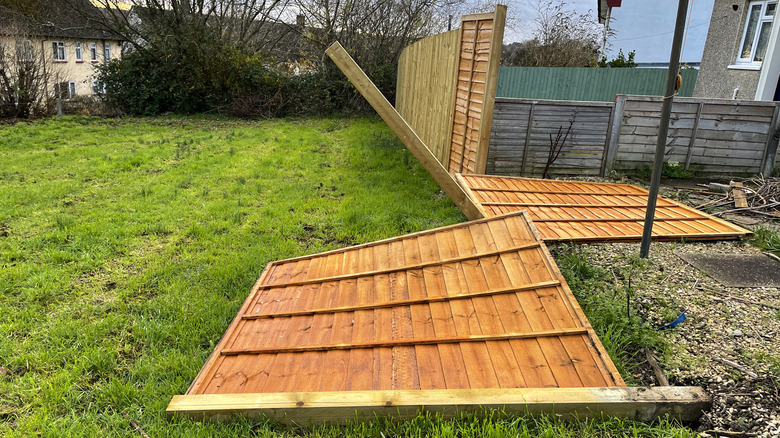
Using the correct number of posts is critical to a fence's long lifespan, especially in areas that experience a lot of wind. Fortunately, if you're buying pre-fabricated fence panels, then knowing how many posts you need is pretty straightforward — just buy enough to ensure that there's one on either side of each panel.
However, if you're making the fence yourself, then a good rule of thumb is that too many posts is always better than too few. Aim for at least one post every eight feet. The reason is simple: support. Fence panels, once erected, can act like sails on a ship, meaning that if they're not properly supported, they can easily be blown down by the wind. Not only is this frustrating, but such damage can be expensive to repair, and your neighbors are unlikely to be pleased should an errant panel find itself blown across their yard.
Finally, before installing your posts, try to be as accurate as possible when you measure and mark the spots for each one. Building your own fence is a great way to save money over hiring a professional, but overlooking small details like this is often where DIY fence builders go wrong. Unevenly spaced fence posts (and those that aren't straight) can make it very clear to your friends and family that a professional had little to do with your fence.
Imprecise measurements
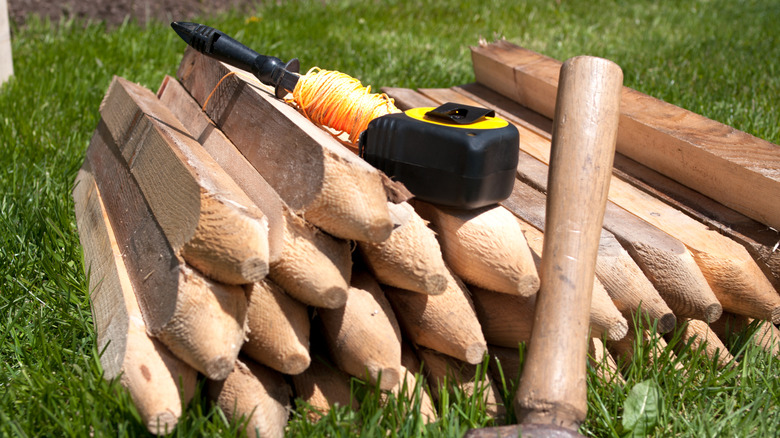
This is critical whether you're building your fence from scratch or installing pre-fabricated panels. Especially on larger structures, half an inch of imprecision here or there can quickly add up to a serious and potentially costly problem when the time comes to install it. Imagine that you get to the end of your yard, only to find that the final panel won't squeeze into the gap because you measured the whole thing wrong.
If your garden has quirks or uneven shapes, a custom-built fence may work better than pre-fabricated panels. And if you can build it yourself, you stand to save a considerable amount versus shelling out for a professional. However, building your own fence is a lot of work, and there's nothing more irritating than discovering you measured the space wrong and that you've therefore built your panels to the wrong size.
To keep your measurements tight, use string and stakes to mark out the fence line, and make sure that the string is both taut and straight. Even a slight sag in the string is likely to leave your measurements out of whack, and the same can be said if it's even slightly off-line.
Digging the wrong-sized post holes
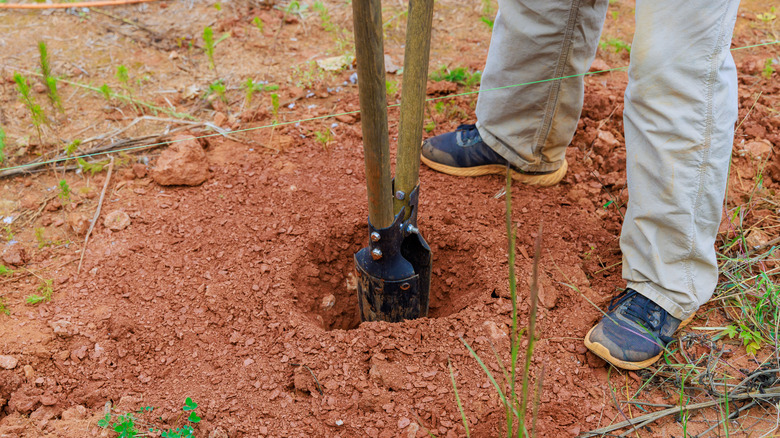
As well as ensuring that you space your posts correctly, it's important that you sink them deep enough into the ground. When fence panels are attached to them, they can act like sails. In other words, while your posts might seem sturdy enough before you mount the rest of the fence, if they aren't set deep enough, they risk being pulled over and out of the ground.
Aim to sink your posts to a depth of at least one-third the height of your fence. For example, if your fence is planned to be three feet in height, then sink your posts at least a foot into the ground, and be sure to use a post hole digger tool to make fence installation easier. If your fence is planned to be eight feet tall, then sinking your posts more than two and a half feet might seem like overkill. If you want to ensure the structure has the longest lifespan possible, it's worth the extra effort.
Finally, when choosing your post-setting method, take into account your garden's soil type. Is it clay or sandy? Soft, sandy soils typically require wider post holes (to accommodate wider posts), and they may need to be filled with concrete to ensure they stay stable. In clay soil, add a layer of gravel at the bottom of each hole to help drainage and prevent rot.
Using postcrete
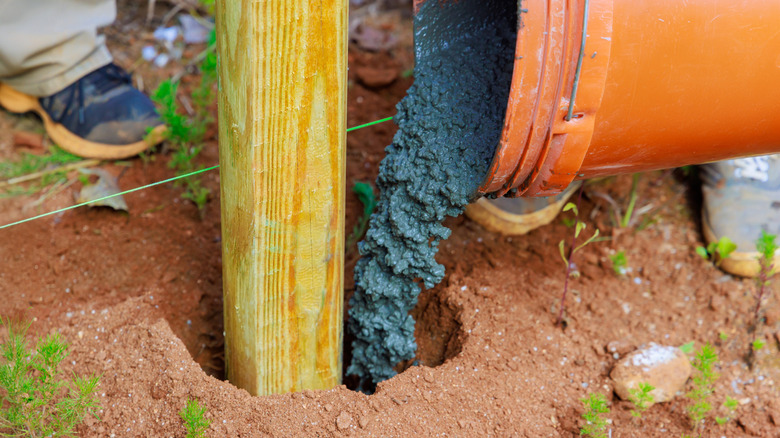
If you're taking on a DIY fence-building project, then you should consider how you'll fix your posts into the ground. One tip that's often recommended to make life easier is to use a dry postcrete mixture, which is poured into each hole and then topped up with water. While this certainly works, some fence-building experts suggest that using regular concrete is the better option, since it's much stronger than dry-mix postcrete.
If longevity is your goal, or there are conditions in your area for which you feel only the strongest solution will do, then this is sound advice to consider. Of course, mixing up concrete is not as easy as using the dry mixture and simply topping it up with water, and it's true that regular concrete takes considerably more time than postcrete to set. However, whereas postcrete is formulated with ingredients that allow it to set very quickly (which is, admittedly, handy), the longer curing process required by traditional concrete gives more time for the chemical reactions that strengthen the mix to take place. This results in a much stronger final product, which you'll certainly be glad of once the ferocious winter winds begin to blow.
Using the wrong nails
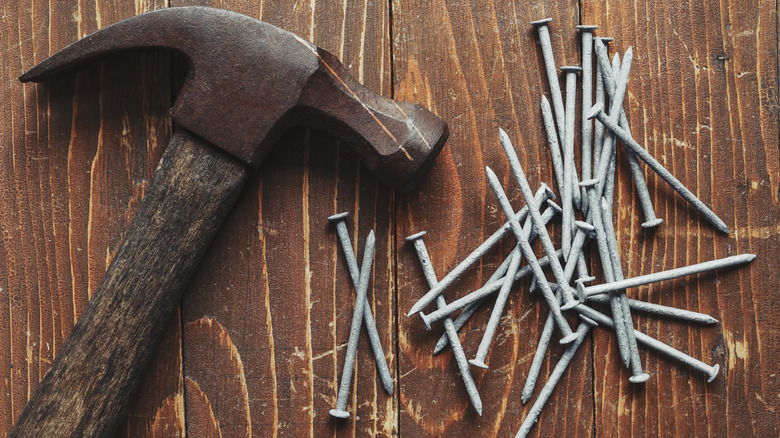
One of the classic "d'oh" moments in DIY fencing is realizing that you used the wrong nails. It might seem trivial. After all, a nail's a nail, right? Not quite. There are several signs that fence panels need replacing, and one of those is the result of using the wrong nails. If they're not made to withstand the harsh realities of a life outdoors, then nails can begin to corrode. In turn, this causes them to weaken, which then compromises the overall integrity of your fence. Rust from corroded nails can also cause wood to decay, and when nails start to rust, they inevitably leak and leave stains on your beautifully painted fence, making you wonder why you ever bothered to build it in the first place.
This all sounds rather problematic, but don't worry. Just be sure to pick up some galvanized nails. These are treated especially to cope with the elements, and take far longer to rust than their non-galvanized siblings. Strengthened by the galvanization process and finished with a corrosion-resistant zinc coating, these types of nails are self-healing, meaning they retain their corrosion-resistance even when dented or scratched. In other words, they are by far the superior choice when constructing a new fence, saving you both money and heartache in the long-term.
Using inappropriate materials

One of the most important things to consider when installing a fence is the material that it's made with. It matters for several reasons. One is the amount of maintenance you're willing to do. Experts recommend wooden fences be re-treated every couple of years, and while that doesn't sound like a lot, if you have a large fence, then you might need to spend a substantial amount of time re-treating your panels whenever those two years are up.
Cost is another key factor. If you have your eye on a composite fence, it's probably because this material requires much less maintenance than wood and is incredibly robust against the weather — definite pros if you value durability. However, the cost of composite compared to wooden fencing can be significantly higher, which is important to bear in mind.
Finally, if you're hoping to incorporate some beautiful climbing plants to your fence in order to add vertical depth to your garden, then metal might just be your best bet. Heavier climbers often need sturdier panels to support their weight, especially plants like Wisteria (Wisteria spp.), which can cause damage to more pliable materials like wood. Plants like these tend to hold moisture against the panels, and their strong, woody roots like to push between the slats, potentially causing breakages with less sturdy materials.
Not accounting for grade changes and uneven terrain
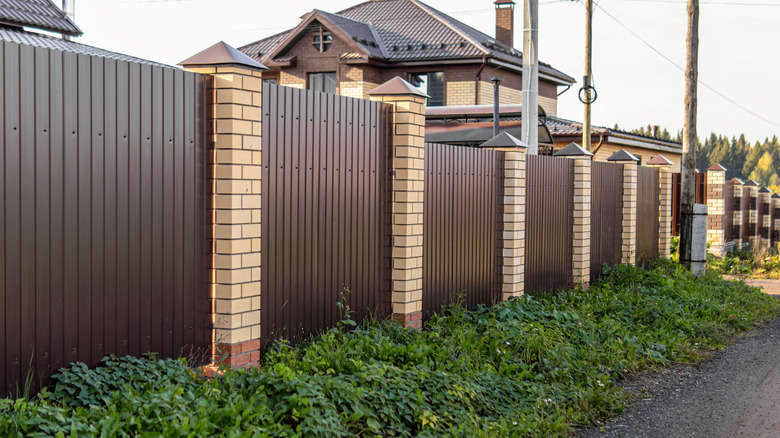
If you have an uneven garden, or a yard that slopes up or down, then you probably already know it's likely to cause issues. The trouble, especially if you're building your fence yourself, is knowing how to work with the terrain. More troublesome still is that not accounting for it can lead to an uneven finish and even gaps at the bottom, which aren't ideal if you're hoping to keep your neighbor's dog from interfering with your flower beds.
There are two main ways to tackle a slope when building a fence. Racking is the first, and requires you to angle your fence to match the slope, ensuring a single, clean line along the top of the panels. The second method, known as stepping, is pretty much what its name suggests. It involves creating a stair-stepped pattern, which either rises or falls with your garden's gradient. Both are viable options, each promising a clean, professional finish.