

The Top-Rated California State Park That's Home To The Largest Surviving Redwood Forest
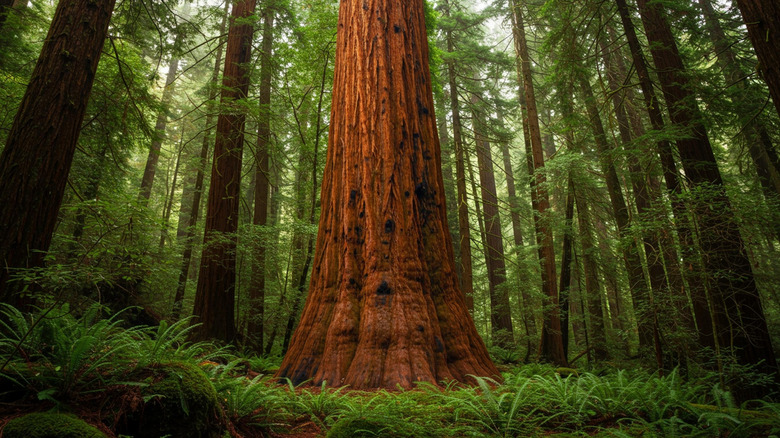
Towering redwood trees are among the most iconic natural features of Northern California. So, it is no surprise that there is a good deal of public land dedicated to protecting them. Redwoods National Park, along with three state parks co-managed by the National Park Service, form a massive amount of protected forest known as the Redwood National and State Parks, where visitors can hike to some of the tallest redwood trees. However, California's top-rated state park is not part of this conglomerate, although it is also intended to protect redwood forests. That park, Humboldt Redwoods State Park, has been named the highest-rated state park in the nation, based on a 2024 analysis of TripAdvisor data (per Fox 5 San Diego). It's home to the largest surviving old-growth redwood forest in the world.
Located a little more than 200 miles up Highway 101 from San Francisco, Humboldt Redwoods State Park is just south of the Redwood National and State Parks. It is California's third-largest state park, covering over 53,000 acres of what was once prime logging land. However, once logging activity ramped up in the area during the early 1900s, it didn't take long for people to realize these trees needed protection. In 1921, the first tract of what would become Humboldt Redwoods State Park was dedicated as the Bolling Memorial Grove. In the 100-plus years since, the park has grown, now featuring 17,000 acres of old-growth coast redwoods, which is the largest remaining old-growth redwood forest on Earth.
Humboldt Redwoods State Park offers plenty of adventures
Visitors to Humboldt Redwoods State Park will find no shortage of outdoor adventures, the vast majority of which involve the massive redwood trees. There are more than a dozen hikes, ranging in difficulty from easy to strenuous, several of which wind through the famous trees. For example, the Founder's Grove Nature Loop takes hikers past a 362-foot fallen redwood known as the Dyerville Giant. There are also opportunities for visitors to tour the tree-laden land with mountain bikes or on horseback.
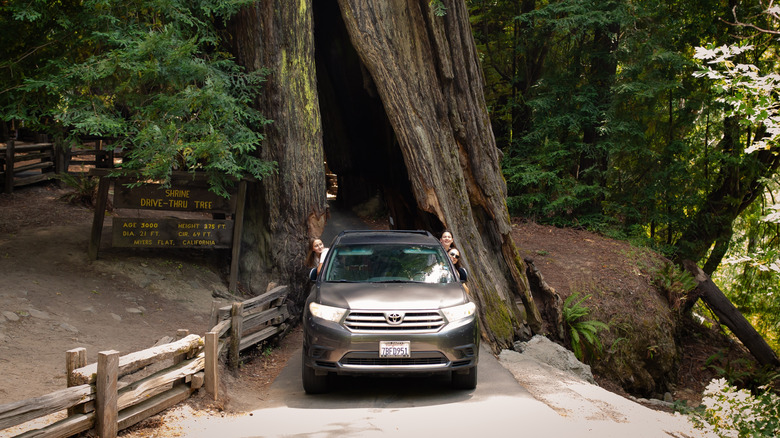
One of the more unique adventures within Humboldt Redwoods State Park doesn't even require getting out of the car. The Avenue of Giants is a 31-mile stretch of roadway winding through the park that runs parallel to Highway 101. Drivers are treated to stunning views of some of the world's largest trees, in one case even driving straight through one. Stop at any of the eight auto tour stops along the way to take photos and read interpretive panels.
There are also a number of outdoor activities visitors can enjoy with the towering trees providing a scenic backdrop. The Eel River, which runs through the park before emptying into the Pacific Ocean, is one of California's largest and is a renowned fishery for many species, most notably salmon and steelhead. The river provides excellent opportunities for anglers, as well as swimmers, paddlers, and boaters. Those who do partake in watersports or hike along the Eel River, however, should beware of the swift current, varying water level, and potential for being caught in a flash flood with heavy rainfall.
Camping in Humboldt Redwoods State Park
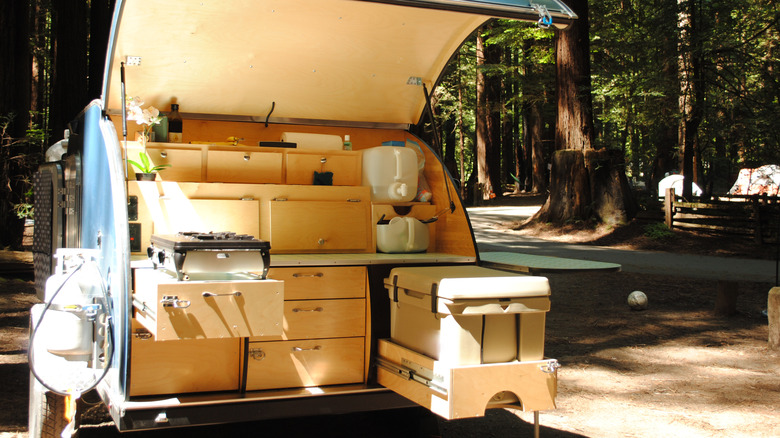
Those who want to spend even more time exploring these old growth trees can also overnight in Humboldt Redwoods State Park. The park features three separate campgrounds, which combine to offer more than 250 campsites. Additionally, there is a horse camp and a pair of group camps. In spring and summer, campers can also book one of five environmental camps, which are walk-in tent camping sites with minimal amenities.
As far as traditional campsites are concerned, Albee Creek Campground has 40 sites, Burlington Campground offers 57, and the largest, Hidden Springs Campground, features 154 sites. Although RVs up to 24 feet are allowed at these campgrounds, there are no hookups or sewer dump stations, so RVers need to be prepared for the popular trend known as dry camping. Drinking water, toilets, and showers are available within the campgrounds. Those looking for a primitive or wild camping experience can opt for one of the five trail campsites in the park instead.
For group campers, the Williams Grove Group Camp can hold up to 60 people, and both RVs and tents can be used. The Marin Garden Club Group Camp can accommodate 40 people, but only tents are allowed. Both group sites are furnished with fire rings, picnic tables, and toilets. The Cuneo Creek Horse Camp has five family and two group campsites. Each of these has corrals and access to fire rings, picnic tables, treated water, toilets, and showers. Whichever type of campsite you choose, keep in mind, bears are in the area. So, be sure to store food in a bear keg or similar bear-proof container.