

DIY A Private Greenhouse For Your Tomatoes With A Kitchen Staple

Tomatoes are some of the best plants to grow in a greenhouse because this setup lets you keep them consistently warm for months at a time. The controlled temperature inside a greenhouse makes it possible to plant and harvest tomatoes when frost blankets your yard, lengthening your growing season and potentially increasing the size of your harvest. Though a full-size greenhouse is a good investment for many gardeners, you don't need to build a large glass structure to create this type of growing environment for your tomatoes. If you're growing tomato plants in cages, consider using plastic wrap to surround them with nurturing warmth. You may already have some of this clingy film in your kitchen. Even if you don't, it's an inexpensive addition to your gardening supplies.
Though you can stretch plastic wrap over an entire raised bed to create a hothouse, making a private greenhouse for each tomato plant is the simplest option if you have cages at hand. Tomato cages are designed to prevent the plants from flopping onto the soil below, a problem that raises the risk of fruit rot and soil-borne diseases.
Whether you have wire tomato cages from the local garden center or teepee-shaped tomato-cage alternatives to support your plants, they can serve as frames for little greenhouses with plastic-wrap walls. In addition to giving your tomato plants the warmth and humidity they crave, this thin plastic film also protects them from wind and pests. If you don't have enough plastic wrap to make greenhouses from all of your tomato cages, clear plastic bags can also get the job done.
How to make tomato-cage greenhouse with plastic wrap
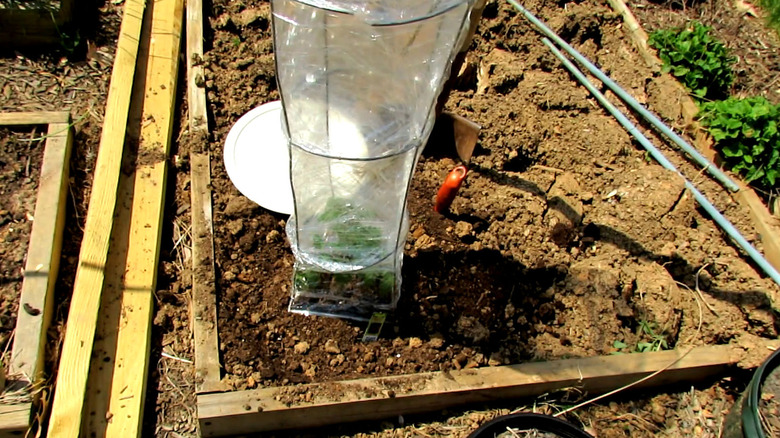
If you've ever turned a plastic cup into a seed-starting greenhouse, you've already mastered the basics of making a tomato-cage greenhouse. Creating a warm, humid atmosphere inside the cage involves winding sheets of clear plastic wrap around the outside of the structure, covering gaps as you go along. Plastic wrap's ability to stretch and cling to itself makes it easy to seal spaces where warm air could escape and insects could enter. You'll also need to seal gaps near the bottom of the cage. Putting mulch or compost on top of the wrap's lowermost edge is one way to do it. Use two layers of plastic wrap on the exterior of each cage to achieve the ideal wall thickness.
As far as the top area of each cage, it depends on your community's climate and weather patterns. If your growing zone experiences frost for much of the year, seal the top of the cage throughout early spring to protect the seedling inside from damage. If milder temperatures are the norm, you may want to leave the top open and cover it with a plate in the rare event that temperatures get chilly. The plate will keep cold air out and seal in some extra warmth. No matter where you live, open the top when outdoor temperatures exceed 70 degrees Fahrenheit to prevent your tomato plants from overheating. The air inside the greenhouse you've created can be 8 degrees warmer than the air outside, and tomato plants start showing signs of heat stress when the air temperature reaches 85 degrees Fahrenheit.