

How To Grow An Avocado Tree From The Pit
We may receive a commission on purchases made from links.
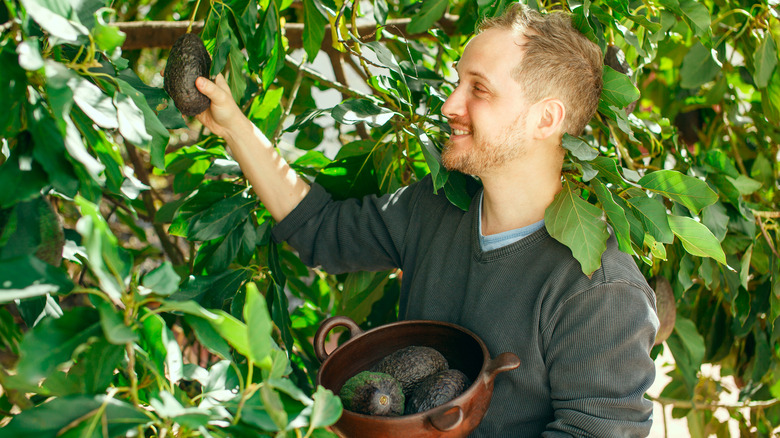
Over the past several decades, avocados have become one of the most popular fruits in the U.S., with Americans consuming close to 3 billion pounds of them each year. Although the vast majority, some 90%, of the avocados eaten in the States, are brought in from Mexico, it is possible to grow them here. In fact, you can actually grow them in your own yard. You don't even need to buy seeds. You can easily grow avocados from the pits of the ones you eat.
The pit of an avocado, that brown ball you find inside the fruit, is actually the seed pod. So when you repurpose avocado skins for garden compost, you can upcycle this seed to grow an avocado tree that could eventually provide you with a homegrown supply of fruit. With that in mind, before you eat your next avocado, gather up the supplies you will need to get the process started. However, you will need a towel, knife, and, of course, avocados, for either.
There are actually two methods you can use to germinate the seed. One method requires a glass jar and toothpicks, while the other calls for paper towels and a zippered storage bag or container with a lid. Once the materials are gathered, slice your avocados in half with an OXO Avocado Slicer or small paring knife, making sure not to cut into the seed pit as you do so. Next, remove the pit from the avocado and gently wash away any remaining avocado flesh. A washcloth or soft nylon brush can help with this task. Although the brown skin can be left on the seed, some suggest removing it to aid with germination. If you choose to do so, use your fingernail to lift and peel the skin.
How to germinate and plant your avocado seed
Now that the seed pit is removed, cleaned, and ready to go, you need to pick a germination method. To use the zipper bag and lidded container method, wrap the seed in a wet paper towel or cloth and seal it in the bag or container. Check it every few days. Once the root has emerged and grown about an inch, it is ready to be transferred to a jar of water or a pot of soil for continued growth.
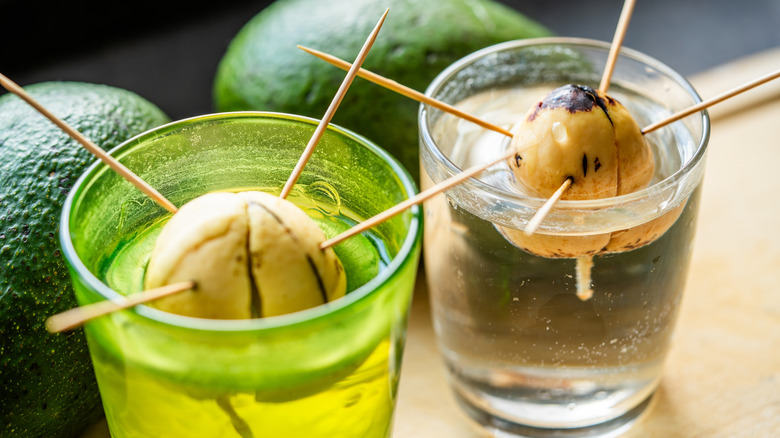
To do the glass jar method, press toothpicks into the sides of the seed at equal intervals, angled slightly upwards. Then, place the pit over the opening of the glass jar, with the toothpicks resting on the lip. Fill the jar with water until about 1 centimeter of the pit is underwater. Be sure the bottom of the seed, the side that is flatter, is submerged in the water.
Your sprouted seed can be transferred to a pot with potting soil and compost after the roots have extended an inch or so. Or you can leave it in the water until the actual tree has grown upwards of a foot. In either case, when you transplant, leave the top of the seed level with the top of the container and fill the pot with soil to cover about half the seed. Given avocados are fruit trees that can grow in pots, you should consider utilizing a sizable pot if that is its final home. If not, you can transplant to your yard once the soil is ready the following spring. Keep in mind that there's no guarantee your avocado plant will yield fruit — some growers say that they get fruit after three years; for others, it takes as long as seven. And if you're not in a tropical, subtropical, or Mediterranean climate, you might never get fruit at all.