

The Common Mistake To Avoid When Treating Brown Spots On Your Lawn
We may receive a commission on purchases made from links.
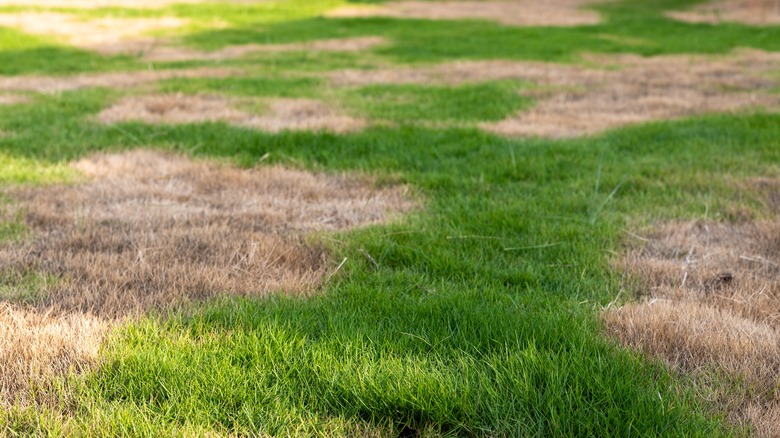
Many Americans spend hours each week maintaining their lawn. Despite their best efforts, they are often faced with serious issues, such as brown spots popping up throughout their otherwise green yard. If you find yourself in this situation, one thing you don't want to do is start some sort of treatment without identifying the actual cause of the problem. Regardless of how anxious you are to rid your yard of these unsightly blemishes, this is a common mistake to avoid when treating brown spots in your yard.
Forging ahead with treatment before identifying the cause is risky because brown spots can be caused by a dozen or more factors. There is no single cure-all for these many issues, which can range from insects or fungus to dog urine. At best, utilizing the wrong curative method will not solve the problem. At worst, it can exacerbate the issue. So, identifying why your grass is growing in patchy and/or brown spots are appearing on your lawn should be your first step to correcting the problem. To ensure you get an accurate diagnosis, it's best to have a lawn care expert or county extension agent analyze soil and grass samples. From that, they will be able to tell you if it is caused by a specific fungus, disease, or nutrient deficiency.
Preventing brown spots from occurring in your yard
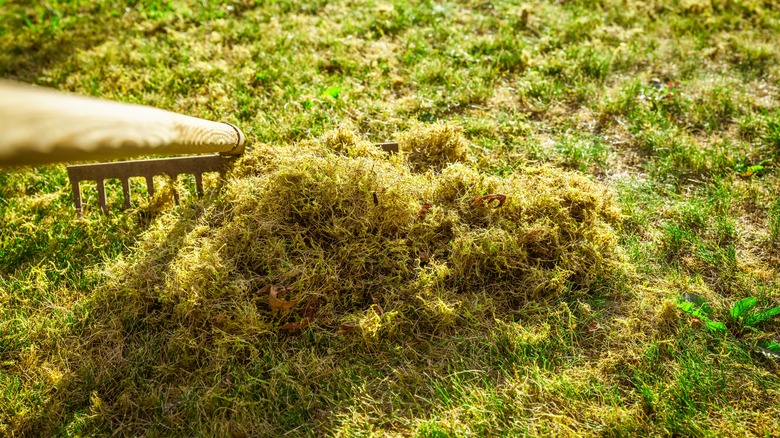
Of course, it's always best to take preventive measures. So, whether you just got rid of brown spots in your yard or have yet to encounter them, there are steps you can take to help prevent them from occurring. Some of the best measures are aspects of what should already be considered good lawn care practices. Keeping mower blades sharp will prevent tearing the grass, which, in turn, tends to fend off fungus. Following the one-third rule and never cutting your grass too short will prevent scalping, which is another way brown spots get started. It is also important to regularly dethatch your lawn and follow a good watering schedule.
There are several ways in which soil can contribute to the problem as well. A lack of nutrients, as well as overfertilizing, can be a big problem, so routinely check your soil with a RapiTest Soil Test Kit or similar product and amend as necessary. It is also important to regularly aerate your lawn to prevent the soil from becoming too compact. If you see any signs that grubs are present in the soil beneath your lawn, you should take action and treat your yard immediately, as they can cause brown spots and many other lawn issues.
If you are a pet owner, you should take time to hose down areas where they urinate or train them to only go in a designated spot. Additionally, only fuel your mower on a sidewalk or driveway, because if gasoline spills on your lawn, it can kill the grass in that area and lead to the formation of brown spots. Should a spill occur, rinse the area with a garden hose for at least 20 minutes to prevent damage to your lawn.