

The Trick To Stop Garden Labels From Smudging Is Hiding In Your Bathroom Cabinet
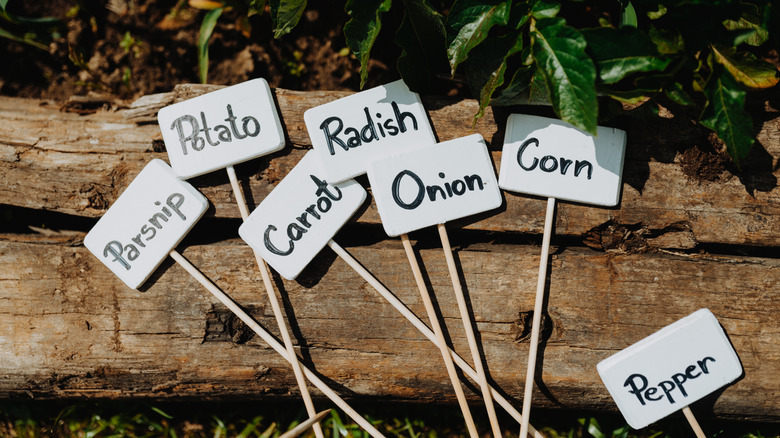
Repurposing household items as garden decor is an easy way to stretch your budget, and the finished products can be both fun and functional. For example, you can make plant labels from bamboo toothbrushes or wooden popsicle sticks that are headed for the trash bin. To help these labels look tidy and last as long as possible, consider sealing them with clear nail polish. This tough and inexpensive product may already be in your bathroom cabinet or cosmetics organizer, ready to keep letters you've written in marker from smearing so much that they become illegible. Transparent nail polish may also protect these labels from other types of wear and tear, helping your garden look inviting while reminding you what's planted where.
In addition to discouraging permanent marker and pen ink from smudging, see-through nail polish can guard against fading, a common side effect of time spent basking in the sun's ultraviolet rays. The polish can also shield the label's other materials from damage, preventing wood sticks from rotting and plastic tags from warping. This sealant won't last forever and may chip over time, but it should still extend the life of your labels. Wait until any ink you've used on the labels has dried before applying the polish, and make sure the polish is no longer tacky when putting your little plant signs in your garden.
Other ways to use nail polish in your garden
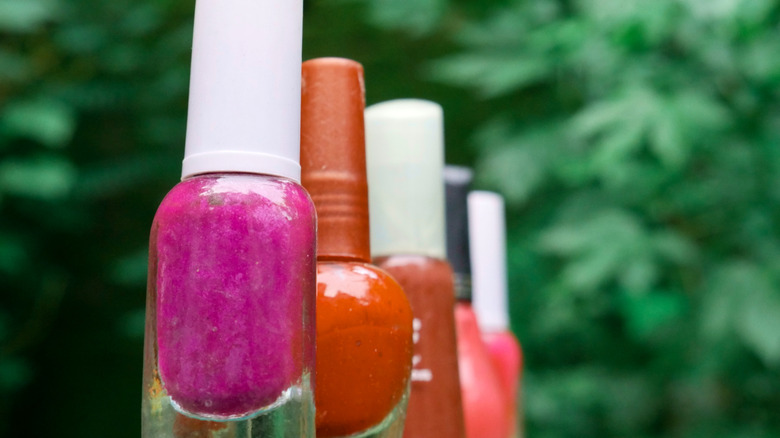
Don't overlook the possibilities of colored polish, either. Try using different hues to color-code various categories of plants — perhaps herbs, vegetables, and flowers. Alternatively, you could highlight different planting dates or watering requirements with this type of system. If you're particularly dexterous, you might use colored polish to paint the names of your plants on their labels rather than writing this information in smudge-prone ink.
In addition to sealing plant labels, clear nail polish can serve as a protectant for other items in your garden. Since it discourages the ends of strings from fraying, paint it on the twine suspending a crow-deterring DIY wind chime from a tree branch or the rope pieces tethering your tomato plants to stakes. You can also apply it to screws to help keep them tight and rust-free in raised beds and trellises.
When deciding how to use nail polish in your garden, remember that it may contain toxic substances such as toluene and dibutyl phthalate. These compounds can harm your soil or contaminate your crops, so use only small amounts of polish and make sure not to spill it. Also, refrain from applying it to bird feeders, nesting boxes, and other items designed for wildlife that shouldn't ingest it.