

A Beautiful Fruit-Bearing Tree That'll Have Robins Flocking To Your Yard
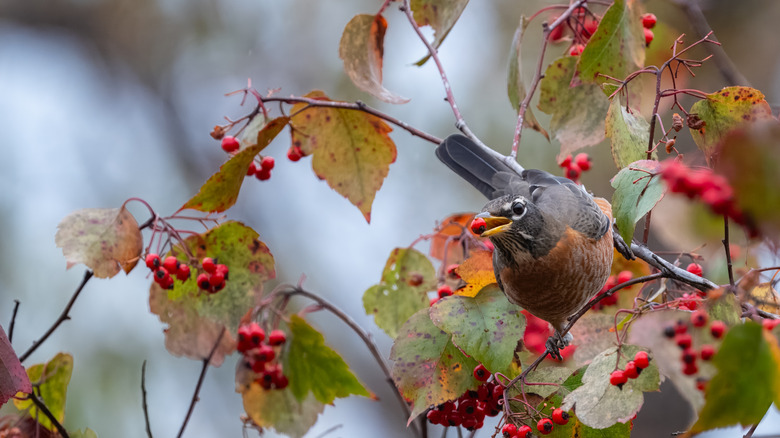
Robins are America's quintessential backyard bird. They're also the main character in the saying "early bird gets the worm," because this big-bellied, worm-monger is often spotted plucking unsuspecting wigglers from gardens and lawns. However, worms tend to burrow deeper into the soil during dry and hot seasons, so adding berry bushes and trees to your yard provides robins and other songbirds with sustenance when worms and insects may be scarce.
Serviceberry is a hardy native berried shrub or tree, with more than 30 varieties (only two aren't native to North America). But the Robin isn't a picky eater, so plant a species that suits your climate, and it will not only feed your robins, but also provide stunning flowers, blazing autumn foliage, and silvered branches in the winter. To get the right variety for your area, visit your local native plant nursery and ask for a serviceberry (aka Saskatoon, Juneberry, Shadblow, Shadbush). Most do well in USDA Hardiness zones 4 through 9, but the Saskatoon variety can handle zone 2 temperatures down to negative 40 degrees Fahrenheit.
After its showy white blossoms bloom in spring, serviceberries produce abundant blueberry-like berries in the summer. They are edible for humans too, but the fruit is not as sweet as a blueberry. That makes serviceberries better for cooking down to a berry syrup, jelly, or simple syrup for a cocktail or mocktail. It's also enjoyed as part of a mixed berry pie (alongside all-stars such as huckleberries, blueberries, and raspberries). By planting this and other native plants, you will attract resident robins, and other frugivores (fruit-eaters). Blue jays, Carolina chickadees, American goldfinches, tufted titmice, brown thrashers, and northern cardinals love a good Juneberry gorge.
Growing and caring for serviceberry
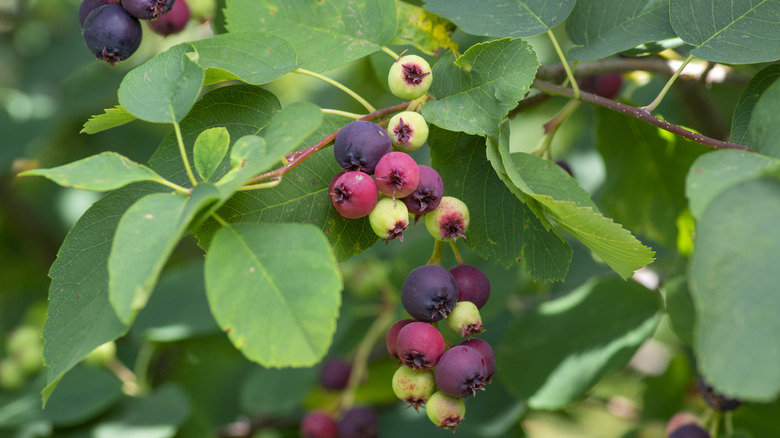
While most serviceberries are native to North America, a little TLC goes a long way for these hardy plants when you plant them in your yard. The best time to plant is early spring or early fall when temperatures are mild, rainfall is likely, and the plant has time to root before extreme heat or cold. Select a partial- to full-sun location where dropped berries won't be a pain or stain any decks, pavers, or concrete. Next, dig a hole twice as big as the root ball, cover it, and make sure the soil is well-draining. You can also add some organic matter to improve drainage. The top of the root ball should be level or just barely above grade. Backfill and give the tree or shrub a good pat to ensure there aren't air pockets below ground. Give the new resident a good drink of water right away, and continue watering deeply once a week for its first year in your yard or garden.
Adding mulch around the base of your serviceberries is a great way to help the soil stay moist. You can also start pruning any dead or damaged branches. After a couple of years, you can begin to shape your service berries to encourage more fruiting and trim waterspouts or suckers that pop up from the base of the tree. While they can be pruned for your preferred size, serviceberries can grow anywhere from 10 to 25 feet tall and wide. Native plants might take longer to mature, but we recommend them over fast-growing trees that are usually non-native, exotic, or invasive.