

What To Know Before Using Sunflower Seeds To Kill Weeds In Your Garden
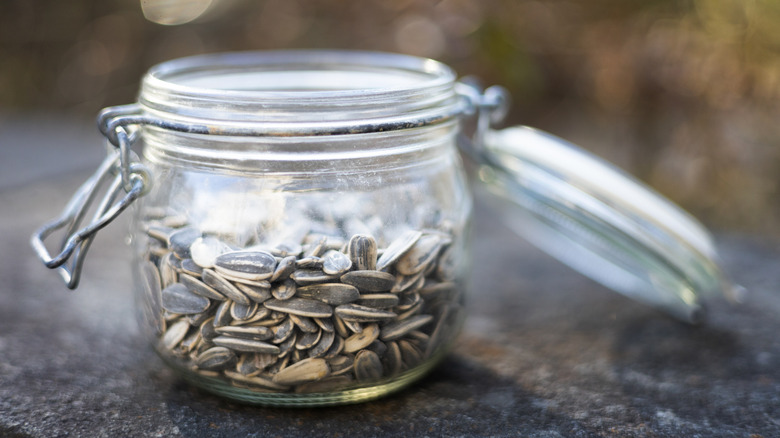
Bright yellow sunflowers don't just make a visual statement in your yard; they also have a noticeable effect on plants and animals. There's evidence that sunflowers help remove pollutants from garden soil, and their seeds attract a wide variety of birds. Sunflower seeds are even used to reduce weed populations in gardens. That's because they're allelopathic, releasing substances that curb the growth of nearby plants. In fact, every inch of a sunflower, including the roots and petals, contains compounds that can hamper the development of other plants.
Sunflowers don't work like commercial herbicides, though. In other words, you can't scatter sunflower seeds on mature weeds and expect to see quick results. Instead, the seeds are more likely to prevent new weeds from emerging, according to Dr. Kevin M. Folta, a professor of horticultural sciences at the University of Florida and host of the Talking Biotech podcast.
"The residues of the plant itself have been used to control weeds, mostly by suppressing germination," Folta told Outdoor Guide in an exclusive interview. Folta says the allelopathic substances can also stunt the growth of plants that have managed to sprout. However, not all sunflowers are equally effective. According to Folta, a sunflower's ability to outcompete weeds is tied to its genetics. "The amount of suppression depends on the type of sunflower. Some of the more domesticated varieties have lost much of this allelopathic property," he says. So, sunflower varieties with lots of allelopathic compounds hold the most promise for weed control. Others may only hinder the development of their most vulnerable neighbors, or they might not make much of an impact at all.
Unlocking sunflowers' benefits in your garden
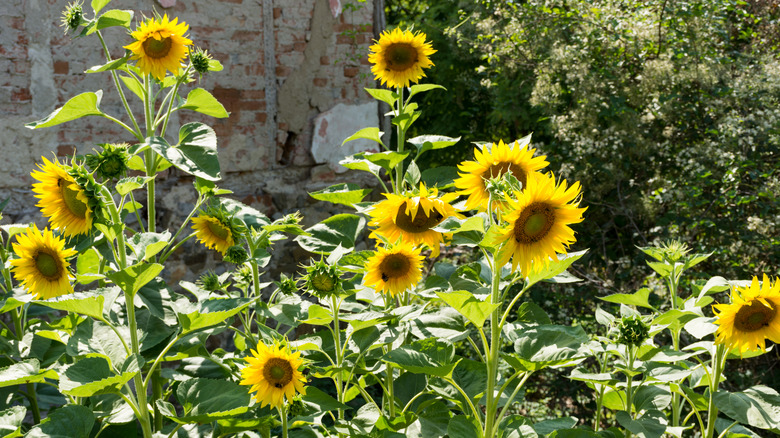
In addition to wreaking havoc on weeds, allelopathic substances can also damage plants you want in your yard. That's why gardeners "have to be careful where they plant sunflowers," says Dr. Kevin M. Folta. "Like any weed control strategy, if it kills weeds, it could also affect sensitive crops." For example, potatoes make poor companions for sunflowers because they're very sensitive to the plants' allelopathic compounds.
Just as some sunflowers are less allelopathic than others, some neighboring plants are less bothered by sunflowers' toxins. Roses and lemon balm don't mind these substances, so they're good choices for growing near sunflowers. If you're growing a vegetable garden beside sunflowers, consider filling it with corn and squash plants, which tend to handle the toxins quite well. Be mindful of where you place bird feeders, too, as sunflower seed hulls your feathered friends drop could suppress the growth of nearby plants.
When it comes to weed control, Folta recommends covering a stretch of fallow land with sunflower plants. This takes advantage of the weed-fighting substances in sunflowers' roots and other parts, not just their seeds. "It will limit the amount of weeds on that space that season, which will decrease the seed load for the next season," he says. Or, experiment on your yard's weeds. According to a 2022 article in Applied Sciences, a solution made by soaking dried sunflower leaves in water limited the growth of lettuce, which researchers used as a stand-in for fast-growing weeds in the lab. You could test this by making a similar solution and applying it to a weedy corner of your garden.