

Winter Is Almost Here - How To Choose The Best Fertilizer To Protect Your Lawn
We may receive a commission on purchases made from links.
Fertilizing during fall is one of the best ways to prepare your lawn for winter. However, to properly protect your lawn from frost, freezes, and the overall colder conditions presented by winter weather, you not only need to fertilize at the right time, but also use the right fertilizer. When it comes to choosing the best fertilizer to protect your lawn over the winter, you should consider factors such as the nutritional makeup of the mix, release time, and method of application, as well as the type of grass you have, your geographic region, and the soil composition of your lawn.
The first thing you must do before you begin perusing the fertilizer section at the hardware store is determine what type of grass — cool or warm season — you have growing in your lawn. This is important because both types of grass have different growing seasons and, thus, require different types of fertilizers to prepare for winter. Using the wrong fertilizer can actually ruin your lawn. Some of the more common cool season grasses include Kentucky bluegrass, tall fescue, creeping fescue, and perennial ryegrass. Examples of warm season grasses are Bermuda, centipede, St. Augustine, and zoysia.
As a general rule, cool season grasses are grown in the northern parts of the US, while warm season grasses are found in the southern portions. However, there are some areas in the mid-section of the country in which either type can be grown. If you are unsure which type you have, you can attempt to match the characteristics using online resources or have a lawn care expert assess your lawn.
How much nitrogen you need depends on your grass type
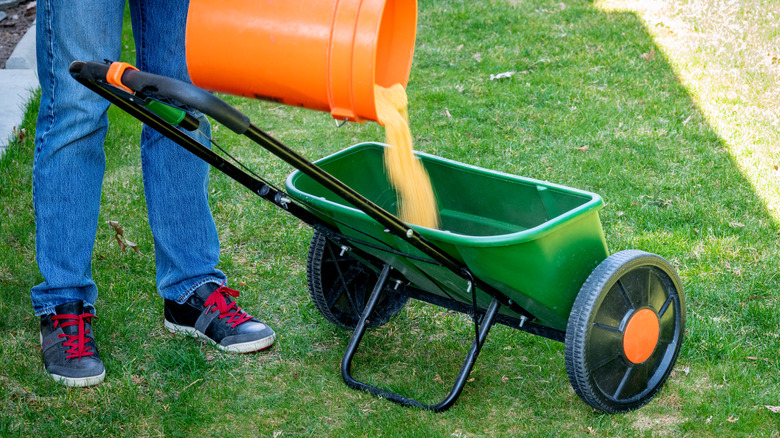
The overriding factor in directing your choice of late fall lawn fertilizer will be the nitrogen content of the fertilizer mix. While some fertilizer mixes have various other organic elements added in, the main three that are listed on every bag are nitrogen, phosphorous, and potassium. These are expressed as the N-P-K value of the bag. Nitrogen is the nutrient which is added to stimulate growth. With that in mind, the amount of nitrogen in the fertilizer you apply during late fall will be based on the type of grass you have, where you live, and how late in the fall you choose to fertilize.
Because cool season grasses are growing during fall, they do best with a high-nitrogen fertilizer that time of year. The exception to this is if you wait too long to add fertilizer, as encouraging new growth too late in the year can prevent your lawn from entering dormancy early enough to protect itself from freezing temperatures. For most areas where cool season grass is grown, the best time to apply fertilizer rangers from mid to late October.
The concept of not adding nitrogen as grass prepares for dormancy also applies to warm season grasses. Because autumn is when these grass types are slowing growth in preparation to go dormant, fall fertilizer for warm season grass should have little or no nitrogen. This is particularly true when fertilizing late in the fall, which is typically recommended for Southern lawns.
Release rate matters when choosing a fall fertilizer
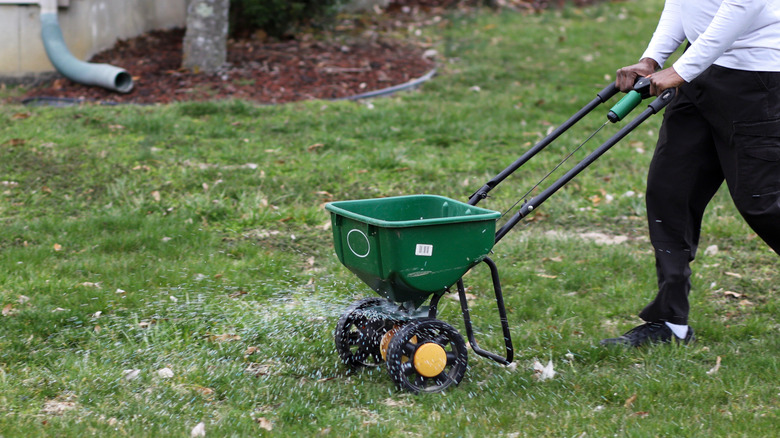
Another thing to consider when reaching for a bag of fall fertilizer is the release rate of the nutrients. Slow-release formulas will continue to leech nutrients into the soil over a long period of time. Quick- or fast-release fertilizers are formulated so that their nutrients are absorbed immediately. Each has their pros and cons. Slow-release versions will feed lawns over the course of a season, while fast-release will give them a quick shot of nutrients immediately. However, fast-release fertilizer can also burn grass leaves and roots if not applied properly.
Most often a slow-release, high nitrogen formula is recommended for fall applications on cool season lawns. However, if you are applying fertilizer to these lawns late in the fall, you might want to opt for a quick-release version. Warm season lawns should typically utilize a slow-release, low- or no-nitrogen version. As a rule of thumb, it is not recommended to add nitrogen to warm season lawns after August. The exception is if a soil sample indicates a nitrogen deficiency or you happen to live in the extreme southern latitudes of the United States, where lawns remain green and growing year around. In this instance, a quick release, higher nitrogen formula may be used.
One last consideration is whether the fertilizer has any additives, such as weed control. Products such as Scott's Turf Builder WinterGuard Fall Weed & Feed are designed to not only add the required nutrients for lawns over the winter, but also suppress the emergence of weeds the following spring. If you choose to use one of these combination products, it is essential to choose one that is formulated for the type of grass you have. Otherwise, the results can be disastrous.