

Common Problems You Might Run Into When Growing A Christmas Cactus Outdoors
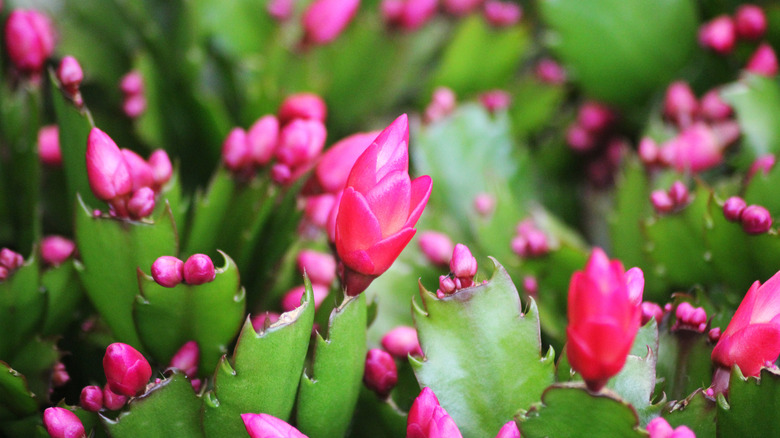
For many gardeners in the United States, winter is not a typical time to expect blooms in their garden. In fact, fall and winter months are considered a time to sow seeds and prepare soil for spring rather than cultivate blooms. However, there is a species of cactus that is known to bring a hint of color to gardens in the southern parts of the nation. Christmas cactus (Schlumbergera) is native to the Brazilian rainforest and is best known for its winter blooms. Though cultivators should know, there are some important considerations when nurturing the plant outdoors.
While plants like Heather (Calluna vulgaris) are excellent additions to a garden due to their ability to produce ground cover, the Christmas cactus is best known for its blooms. Growing from a bulb, the hibiscus is best suited for zones 10-11 of the U.S. Department of Agriculture hardiness zones. These zones are typical for Cacti as they're characterized by their dry and relatively warm nature. Cacti are also well known as hardy and easy-to-grow plants, as they need limited water and can withstand some of nature's more extreme conditions. Importantly, unlike other plants of this variety, the Christmas cactus has some very specific needs when planted outdoors.
To yield blooms you need to be calculated with your planting strategy
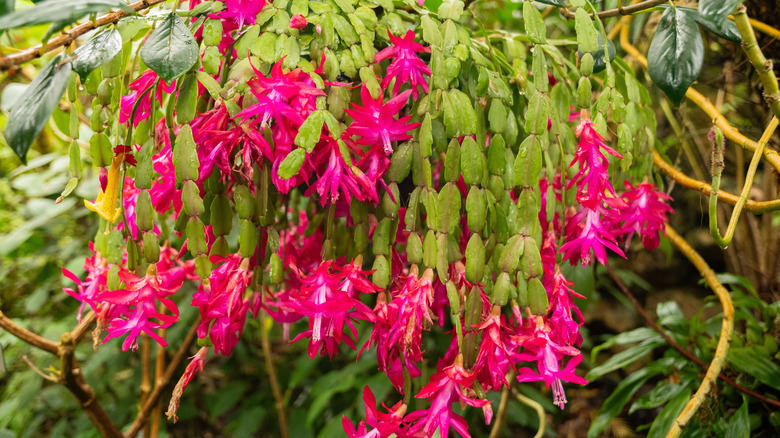
An important part of Christmas cactus blooms is the need for limited sunlight. It requires 13 hours of darkness, which gives the hibiscus its name, as it often blooms near the holiday season. Ensuring that your cactus gets the needed darkness is important, but temperature is also a factor. To yield blooms, experts say the plant needs a period of dormancy, where root systems spread. To achieve this, the plant must be in cool temperatures, around 50-60 degrees Fahrenheit. Because of both of these factors, planting the cactus outside in a pot will allow one to move it to ideal sun and temperature conditions.
Along with environmental factors like temperature and sunlight, the plant is also prey to several pests that can affect its growth. One such insect is the Mealybug, which is an armored, scaly bug that steals important nutrients from the plant. One easy and low-maintenance way to prevent these invasions is by utilizing Neem Oil. This oil is toxic to insects while not affecting the plant.
Watering is the final important aspect of growth, with cacti typically requiring low amounts of hydration. In this respect, Christmas cactus is a slight outlier, as there is such a thing as under-watering it. The Farmer's Almanac advises watering the plant roughly once every 2-3 weeks. This being said, ensuring a higher moisture soil during blooms is important as more nutrients will be needed.