

Clever Hacks To Banish Pests From Your Patio

We may receive a commission on purchases made from links.
Nothing makes enjoying your carefully curated patio space more difficult than the presence of pests. Depending on where you live, there are several that could present themselves on, around, or even beneath your outdoor living space. These range from annoying and potentially dangerous bugs like mosquitoes, ants, and wasps, to insects that feed on your beautiful patio plants, and rodents that burrow beneath your feet.
This range of possible pests necessitates an array of specific solutions to banish them once and for all from your patio. And while it can be tricky to know where to start — especially if you have more than one pest to deal with — there are some clever and surprisingly simple hacks that can help you reassert control over your outdoor space.
You may need to rethink how you light your patio after sundown, or add naturally pest-repellent herbs and flowers to your planting scheme. For certain insects, it's possible to designate your patio as a no-fly zone with the use of certain chemicals and essential oils. If you're worried about rodents, then ensuring your patio is well-swept and that potential access points are sealed off can help prevent them from making a happy home for themselves.
Clean to keep ants and other insects away

This first hack is more about preventing the invasion of pests than it is about banishing them from your patio, and it's quite simple. Keeping your patio clean, sweeping up food crumbs, and wiping away any sticky sauces or drinks that are likely to spill when dining outdoors, are all key to keeping a number of pests away.
Sure, a few crumbs here and there might not seem like the end of the world. But if left unchecked, they're sure to attract little critters like ants, flies, cockroaches, and even rodents, for whom these tiny morsels represent an easy, significant meal. With this in mind, make a point of regularly cleaning your patio, especially if you regularly eat on it.
It's also important to keep your patio swept clear of any natural detritus, especially leaves, which are commonplace in the fall. Fallen leaves, if allowed to build up, provide a haven for insects and rodents, who are sure to appreciate the natural shelter that piles of leaves provide as the weather begins to turn.
Repel mosquitoes with citronella

Citronella candles and torches are two of the most time-honored repellents for insects like mosquitoes. They use the essential oil taken from the citronella grass plant (Cymbopogon nardus), emitting a smell that's pleasant to us humans, but which can cause irritation to mosquitoes. More than that, it can actually disrupt their sensory receptors, thus rendering them less able to find and hone in on you! There are various, specially-made citronella candles available: A big one like the 28-ounce, triple wick citronella candle in a bucket from Tiki will give great coverage on a patio. You can also use citronella-infused oil in lamps, or disperse it with a spray.
Alternatively, if you have borders around your patio and live in a warm part of the country, why not consider planting citronella? As one of a number of plants that naturally repel pests from your garden, it has the added benefit of lacing the air around your patio with its wonderful natural scent. It's easy to grow and low-maintenance in the right conditions(USDA zones 10-12). Just bear in mind that citronella is toxic to pets, including cats and dogs. If you have pets, then opt for a candle or oil-burning lamp, and ensure you keep it out of their reach.
Pest-proof your lighting scheme

You may already know that insects navigate using lights, but what you may not know is that they are more drawn to some than others. Bright lights, that is, those with shorter wavelengths, are more likely to attract bugs like moths, mayflies, and beetles. Conversely, orange and yellow lights, whose wavelengths are longer, are much less attractive. Why? Quite simply, because the insects can't see them as easily.
So, while it can be tempting to use a couple of high-powered bulbs to shine a bright light on your patio proceedings after sundown, it pays to think about where you use them. If they're used in a corner as a spotlight — away from human traffic — then any pests they attract are unlikely to present a problem. But if you use them to light up your dining table, those flying bugs will quickly become a nuisance. Instead, opt for warm yellow or orange lights. Not only does this help to solve your pest problem, but it also helps to reduce light pollution in your outdoor space. Just note that "warm," in this case, refers to the color, and not the temperature. Bulbs that emit actual heat — like halogen and incandescent bulbs — will attract bugs, regardless of the color, like moths to a flame.
Consider mosquito-repelling herbs
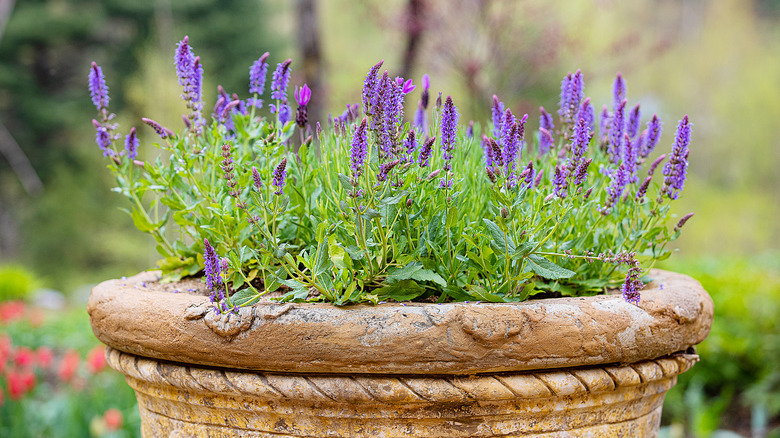
If you've always wanted to grow your own herbs to supplement your cooking but never quite got around to planting them, then perhaps knowing that they could help solve your pest problem will encourage you to finally do so. The benefit of adopting this approach is that, not only will you deter pests from your patio, but you'll get to enjoy their wonderful aroma each time you sit outside.
As for which herbs to plant, start with basil (Ocimum basilicum). As well as deterring whiteflies, carrot flies, and asparagus beetles, it's also one of a number of plants that can keep mosquitoes away from your patio. A nifty trick with basil is to occasionally (and lightly) touch the leaves. This light disturbance releases the plant's oils, the smell of which is precisely what those pesky pests hate.
Another plant that deters pests while adding significant visual and fragrant appeal to your patio is lavender (Lavandula spp). This may come as a surprise. While enticing and utterly relaxing to us humans, the smell of lavender in the evening air is actually a fantastic natural deterrent for an array of pests, including mosquitoes, moths, rodents, and even deer.
Other herbs to consider include mint (Mentha spp.), rosemary (Rosemarinus spp.), and sage (Salvia spp.). Like lavender, not only will these herbs add a glorious herbaceous scent to your patio, they'll also help keep away a variety of pests including mosquitoes, fleas, gnats, ants, moths, and house flies.
Use hydrogen peroxide

There are a number of surprising uses for hydrogen peroxide in your garden, one of which is helping to pest-proof your patio. If your carefully curated potted plants are suffering from an invasion of species like aphids, mites, mealy bugs, and fungus gnats, diluted hydrogen peroxide can help to prevent, control, and even eradicate their presence.
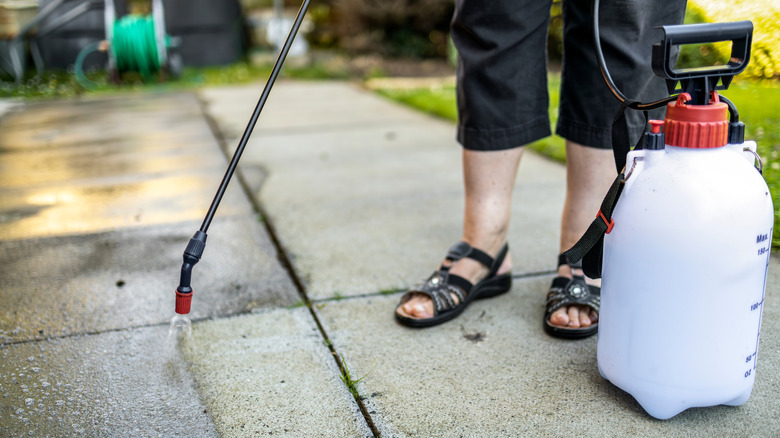
The first thing to do is mix together a solution comprising one cup of 3% hydrogen peroxide and one cup of water. Decant this into a spray bottle, then use it to soak affected plants, ensuring that you get both sides of the leaves. If you're concerned about damaging your plants, try testing the solution on a single leaf first (wear old or protective clothing as H2O2 can bleach it out).
It's not only your plants that can benefit from a spray of hydrogen peroxide: It's also believed that this staple household chemical can be used to prevent mosquitoes from transgressing the boundaries of your patio. While more scientific research is required to verify the method's effectiveness, several pest control specialists advise its use, recommending a 1:2 ratio mix of 3% peroxide and water, and spraying it around your patio perimeter.
Deter deer with plants or soap

While deer near your garden can be a beautiful sight to behold, if allowed to travel undeterred over your lawn and patio, they can quickly cause untold damage. Not only are their hooves likely to tear up your beautifully manicured lawn, but any plants around your patio are also likely to represent an easy meal.
To keep them away from your patio, consider installing strong-scented plants or those with tactile attributes, like fuzzy leaves, that are known to deter deer. Naturally aromatic plants like lavender and sage are good options, especially if you enjoy their aromas yourself. Planting these alongside species like butterfly bush (Buddleja) or lamb's ear (Stachys byzantina) can further bolster your patio's protection, since both of these plants feature the kind of fuzzy foliage deer simply detest.
Finally, if you're looking for a belt-and-braces approach to deer deterrence, then consider complementing the above planting suggestions with a few bars of Irish Spring soap. Whether you choose to grate it and sprinkle it around your borders, hang it in mesh bags, or mount it on stakes between your plants, the bar of soap hack to deter deer is simple and surprisingly effective.
Spray your space with mouthwash
This common household product could just be your salvation if you're struggling to cope with pests like mosquitoes and gnats. One reason may be because the alcohol present in most mouthwashes repels the biting bugs. Alcohol evaporates quickly, so it would need to be reapplied frequently if that's the case.
In reality, you'll need to do more than simply splash a bottle of Listerine around the edges of your patio — not least because you'll end up spending a small fortune on mouthwash if you hope to cover a larger space with it. Instead, consider making a mixture of equal parts mouthwash, epsom salt, and stale beer. While more scientific research is required to verify mouthwash's viability as a mosquito repellent, anecdotal evidence seems to suggest that this particular solution can be an effective deterrent when sprayed around the boundaries of your patio. Some folks even pour mouthwash over themselves in lieu of more traditional insect repellents.
Diffuse essential oils to deter insects

Depending on which pests are causing your problem, there are several essential oils that can be used to effectively proof against their presence. This is because their potent smell — those that we humans absolutely love — is often repellent, and even damaging to some critters. Cedar oil, for example, apparently dries out the exoskeletons of some bugs and arachnids like ticks and cockroaches, disorients certain pests, and even kills the larvae of several insects. In other words, by using an essential oil diffuser like the Skeeter Screen patio egg, not only can you create a calming outdoor sanctuary for yourself and your family, but you can also banish a number of pests from intruding on those rare moments of peace and tranquillity.
As for which oil you should use, it depends on which pest is your problem. For example, if you've started to find ticks, then consider essential oils like rose geranium, juniper, rosewood, thyme, grapefruit, or oregano. If fleas are finding their way in, then oil from cedarwood, citronella, lavender, and pine can all be effective. There are also several soothing essential oil cents that repel mosquitoes, including citronella, eucalyptus, peppermint, lemon, basil, thyme, lavender, and lemongrass.
Seal off entry points for rodents
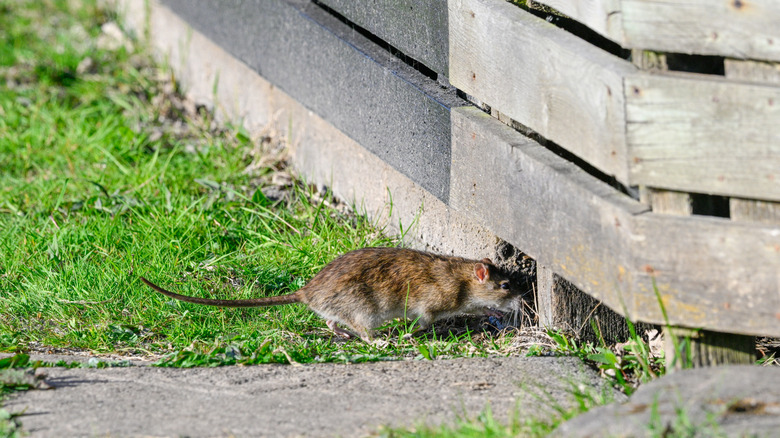
Of all the pests featured on this list, there are perhaps none less desirable than rodents. Not only are certain rodents known to carry diseases, but a number of species, like chipmunks and Norway rats, can actually cause damage to your home if allowed to burrow beneath it or gnaw on the boards. More than that, it's hard to enjoy a meal in the sunshine when there's something scratching around beneath your decking.
In order to ensure rodents don't make a home for themselves under your patio, try to seal off any potential access points. Smaller holes can be filled with steel wool, with caulk used to keep the wool in place. If you notice larger holes around your patio that steel wool won't easily fill, consider alternatives like metal sheets or rodent-proof mesh. Just ensure that the holes in your chosen mesh aren't too big — mice can squeeze through holes as small as a quarter of an inch across, so a tight weave is key.
Finally, while it can be tempting to seal off any potential access points with spray foam, it's strongly recommended that you don't. Unlike steel wool and mesh, rodents like rats can easily chew through foam, and if it's preventing them from getting to a cozy new nesting site, it's unlikely to do so for long. If you do use spray foam, check it regularly for breaches and re-seal.
Consider an alternative mulch material

Having beautifully planted flower beds and borders around your patio can significantly enhance your enjoyment of your outdoor space. However, if you mulch them, depending on the material used, you could also be inviting unwelcome guests to make themselves at home. This is because the natural moisture and nutrients present in organic mulch materials like wood bark make a fantastic environment for certain insects. These include ants, pine bark beetles, and termites, the last of which can begin to wreak havoc on other wooden structures — your beautiful pergola included. Mulches like straw, wood chips, and leaves can also make a particularly welcoming home for mice, who appreciate the protection and ease of burrowing that such materials afford.
If you need to mulch flower beds near your patio, try inorganic alternatives like gravel. Gravel is especially useful against mice, creating a barrier that mice simply don't like treading on. It also provides less in the way of moisture and nutrients for other insects, and may even deter slugs and snails from crawling over it, although this largely depends on how tasty your chosen flowers are. If you do use bark or other organic mulch, only use as much as you need and avoid making it too deep. Shallow mulch layers are less tempting as hiding places for those pesky rodents.
Drain standing water to prevent mosquitoes from laying eggs
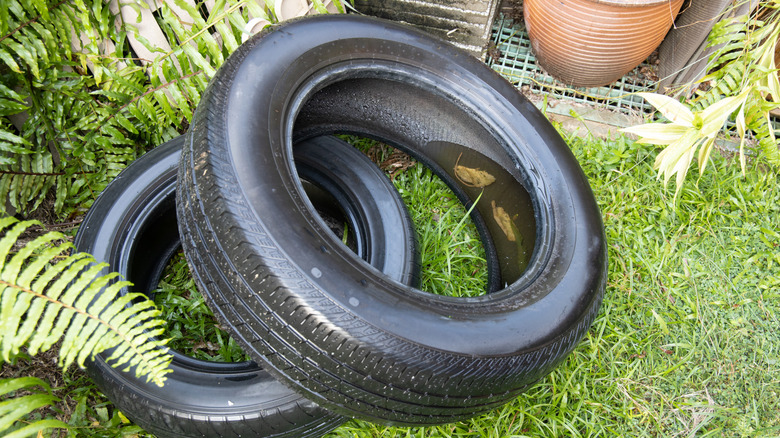
As already covered in this guide, there are several ways to keep mosquitoes at bay on your patio. Many plants emit natural aromas that these annoying insects hate, and there are plenty of essential oils that can help turn the local atmosphere against them. However, if you have mosquitoes, the most effective way to eradicate the problem is to identify where they're laying their eggs. As the old adage goes, prevention is better than cure.
In the case of mosquitoes, that means finding, then draining or covering any bodies of standing water. Standing water is almost guaranteed to attract mosquitoes, who are not particularly fussy about the water's quality. In fact, provided that it's present, they'll gladly lay their eggs in it, leading to a perpetual and growing mosquito problem.
Is there a tire swing nearby that collects water whenever it rains? How about a neglected bird bath, or a landscaped pond that's not connected to a filter? How recently did you clear the leaves out of your gutter? All of these are common places for water to gather in your garden, and all can provide easy access for mosquitoes seeking somewhere to lay their eggs. In fact, some municipalities, like New York City, even have regulations against standing water on private property, and hefty fines to go with them.
Try to regularly refresh the water in your bird bath, and make a point of upending that tire swing to remove any rainwater. In fact, you should be fully cleaning your birdbath every week or so. Consider adding a filter to your pond if you don't already have one, and if you have a rainwater butt, ensure it has a lid. Finally, you'll be amazed at how much organic matter can build up in your gutters and cause rainwater to collect, so if you haven't already, clean them!
Blow mosquitoes off-course with an outdoor fan

Mosquitoes, being cold blooded and not especially strong flyers, tend to favor warm and still conditions. This makes patios sheltered from the wind — be it naturally, or with a pergola — ideal hunting grounds for these irritating blood suckers, especially in the summer. Fortunately, thanks to those same characteristics, they can easily be discouraged from entering your patio altogether with the simple installation of an outdoor fan like the Tornado 16-inch waterproof outdoor oscillating wall-mounted fan.
By installing a patio fan, not only can you create enough of a breeze that they'll be unable to fly properly, but you can cool the air to a temperature that, even without the breeze, is too uncomfortable for them to cope with. As for which type of fan to use, consider an oscillating or box fan (be sure it's rated for outdoor use). Both types produce large volumes of moving air, and they do so over a wider area than smaller tabletop fans, thus making more of your space undesirable to mosquitoes.