

Don't Forget This Fall Lawn Care Task For A Cleaner Look And Fewer Weeds Next Spring
We may receive a commission on purchases made from links.
As crisper air settles across the country during fall, it serves as a reminder that a reprieve from regular lawn care duties is on the horizon. However, as long as the temperatures remain warm enough for grass to grow, you should continue to mow. Additionally, you want to continue to edge your lawn each time you mow right up until you put your lawn mower in winter storage. Taking care of this fall lawn care task will give your lawn a cleaner look now and result in fewer weeds next spring. So there are good reasons to do this task properly.
While edging your lawn any time of year will result in cleaner look for your yard, in fall there are a few additional benefits. For one, the exposed areas along borders created by edging will stay barren throughout the winter, as both grass and weeds go dormant. This will save you time in spring, so you don't have to reestablish borders and edges once spring arrives. Secondly, the weeds prevented from spreading by edging can be virtually eliminated next spring, as edging kills these plants by removing the roots. Given winter is a period of dormancy, they weeds won't have a chance to re-establish themselves before spring. You also won't have grass growing into flowerbeds come spring.
Edging during fall has other positive impacts throughout the winter. Edging improves drainage, which can prevent standing water on walkways on rainy winter days. This means fewer soggy shoes, and less ice if it freezes. When clearing snow is necessary, these clean edges can also help you keep track of where your lawn begins and reduce the odds of damaging your grass with snow removal equipment.
The best way to edge your lawn during fall
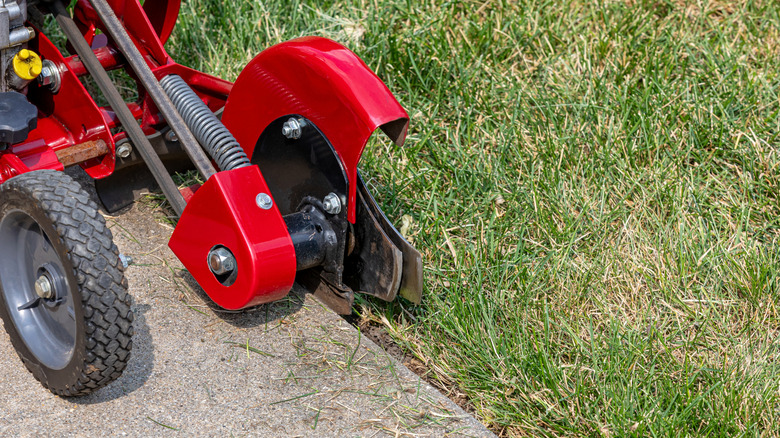
Edging your lawn in autumn follows pretty much the same practices as other times of year. However, fall is the time to re-establish whatever edges may have diminished or eroded during the summer. As you approach your last edging session of the year, evaluate the edges throughout your yard, walkways, and driveway. If you feel the edging needs to be adjusted, mark the preferred path with paint or string instead of simply following the existing edge.
Once you know where you want to edge, select the right tool for the job. There are a variety of hand and power tools. Manual tools, including half-moon edgers like the Ames sawtooth border edger with T-grip and Walansee wheel rotary edger, can be physically taxing, and challenging to use accurately. However, when used properly they can offer much more control than power edgers. Half-moon edger tools are ideal for creating new edges on small lawns. Power edgers, both gas and electric, take less effort and typically complete the task in much less time. Some people also use their string trimmers as edgers, although doing so can use up lots of string and shorten the life of your trimmer.
After choosing a tool, make sure your lines are marked and all debris is cleared out of the edging path. Then, begin by scoring your edge. You can do this by either making a shallow cut or simply moving the edging tool so that it leaves an indention along the length of your marked line. With that done, go back over the scored line, this time cutting to a depth of 2 to 3 inches to ensure the roots of grass and weeds along the line are completely cut. Finally, clean up the grass strips and clippings. Finally, whichever tool you use, remember to clean, sanitize, and winterize it before stashing it for the season.