

For Better Water Drainage In Your Outdoor Space, Try This Landscaping Gravel
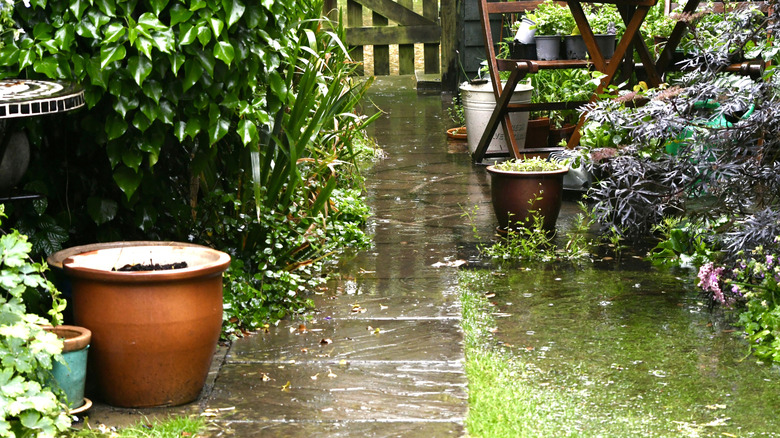
If you've ever dealt with puddles forming after a summer downpour or soggy soil that never seems to dry, you know how frustrating poor drainage can be. One simple — and stylish — fix: landscape gravel. This humble material is a true drainage powerhouse. Thanks to its natural permeability, gravel lets water flow through instead of collecting on the surface, helping to prevent erosion, water pooling, and the headaches that come with them. It's a low-maintenance alternative to turf or solid surfaces, requiring no watering, mowing, or fertilizing, and it works in just about any space. Whether you're designing a sprawling backyard or a cozy patio nook, this easy landscape blends form and function beautifully – especially when gravel is used correctly.
Gravel's design potential is just as impressive as its practicality. It can form charming garden paths, create defined borders for flower beds, or become the foundation for a serene fire pit area. Replace a traditional lawn with eco-friendly gravel for a modern, drought-conscious upgrade or lay it around a pool deck for a natural, non-slip surface. Use it under a pergola for a tidy, mud-free lounge space or along a driveway for a durable, quick-draining solution. Installation is faster than with pavers or poured concrete, and with a wide range of colors and sizes, gravel can match any outdoor aesthetic — from rustic retreat to modern oasis. For optimal drainage and design impact, river rock is the gravel of choice.
Why river rock is worth the work
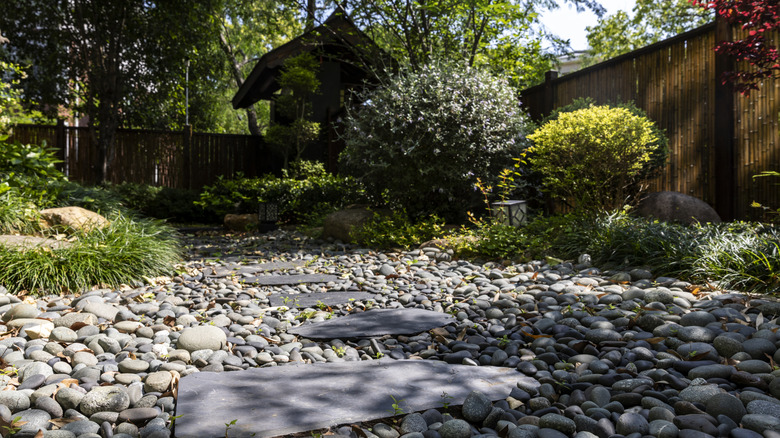
River rock might require more effort to install, but as long as you know what to expect before using gravel on your next landscaping project, its drainage benefits and visual appeal can make that investment worthwhile. Its naturally smooth, rounded stones allow water to flow freely, reducing pooling and runoff issues that can damage your yard or foundation. This makes river rock an excellent choice for dry creek beds, French drains, rain gardens, or decorative swales where both form and function matter. While it tends to shift more easily than crushed stone, using filter fabric and proper edging can keep it in place. The upfront work — hauling, spreading, and arranging the stones — pays off in a long-lasting, low-maintenance surface that not only handles water efficiently but also enhances your landscape's overall beauty.
While river rock generally costs more than crushed stone, think of it as a functional design upgrade. It's an investment in a permanent landscape feature that blends with gardens, complements pathways, and boosts curb appeal. You'll also want to make sure you consider any safety concerns when using landscape gravel in your yard. The extra effort pays off in durability and longevity. Unlike organic mulches, river rock won't break down, wash away quickly, or require frequent replacement. For properties in areas with heavy rainfall, improved drainage can prevent erosion and flooding — potentially saving thousands in repair costs. When viewed through that lens, the higher cost and labor are small trade-offs for a solution that's as attractive as it is practical.