

If Your Plants Look Burnt, This Common Landscaping Feature May Be The Culprit
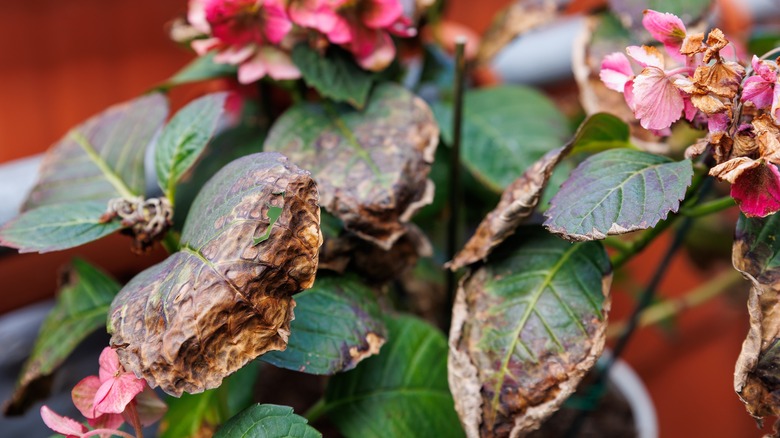
Many gardeners are choosing to chuck their lawns to save on water usage, quit the constant mowing, and create more biodiversity for pollinators and other wildlife. Others simply like the aesthetics of French-inspired landscaping, which is full of clean gravel paths and rock walls. Whatever your reasons, creating a garden on a foundation of rocks or gravel can be a beautiful garden upgrade. These areas are suited for both shaded parts of the yard, where sun-loving plants struggle to grow, or for hot, south-facing areas where a lush landscape is hard to maintain. But some flowers and plants may feel the burn when they're surrounded by dry rock instead of moist soil.
If you've ever enjoyed a hot stone massage, you know how well rocks absorb and hold heat. Rocky or gravelly areas will take in sun rays all day, store the heat, and re-release it into any plants nearby. This is known as a "heat island effect," and it will quickly dry out and scorch any sensitive plants. Even in shady areas, rocks will warm up, and any bright, shade-loving perennials like hosta and astilbe will fade due to the inability of the substrate to retain moisture and stay cool. Trees and shrubs will also suffer if their roots are mulched with rock, especially if a weed barrier was laid over the soil before it was installed. Around plants that need moist soil, an organic, woody mulch that retains moisture is a far better choice.
Which plants can handle the burn?
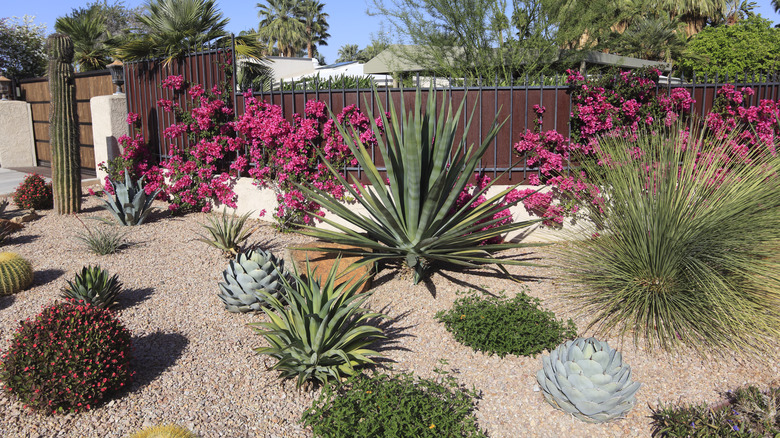
Your rock garden doesn't have to look like a barren desert, and there are many clever grass alternatives for a no-mow garden. Choose from a host of drought-tolerant, warmth-loving plants like succulents, or herbs including thyme and creeping savory — the latter of which is a delicious herb that thrives in rocky soil. Add color to your rockscape with a stunning ground cover like dragon's blood or a bright flowering plant such as verbena, which pollinators love. For very sunny areas, stick with hardier succulents, including hen-and-chicks and sedums, punctuated by tall flowering perennials like coreopsis and dramatic purple agastache. Varieties of cacti and heat-tolerant clumping plants such as red yucca and sage are also durable choices.
Many gardeners choose rock for dry, sloped areas in full sun, and in these cases even the most heat-tolerant plants and flowers may burn up in long periods of dry weather. You may need to up your watering frequency during these times or install a drip irrigation system to keep roots from completely drying out. Ultimately, if your rocks are simply getting your garden too hot, you might still need to replace that gravel with a woody mulch.