

This Striking Tree Adds Bold Color Without Burying Your Yard In Debris
If you're in the market for a tree that brings beauty, shade, and charm to your property without creating a constant mess, the red horse-chestnut (or horsechestnut) tree (Aesculus x carnea) might be exactly what you need. This fast-growing tree variety is beloved by homeowners and landscapers alike thanks to its lush, leafy canopy, striking pink flowers, and relatively mess-free shedding process. The vibrant blooms of the red horse-chestnut add a burst of color, and invite an array of healthy pollinators. In fact, like the Ohio buckeye, it's a nectar-rich blooming tree that fills your yard with hummingbirds. While the colorful display and rapid growth make the tree a slam dunk amongst onlookers, the underrated trait of the red horse-chestnut is its overall lack of excessive litter, compared with traditional horse chestnut trees. Similar deciduous shade trees, like sweetgum or honey locust, produce loads of messy seed pods or fruits which fall to the ground throughout the year and rot when not carefully looked after. Significantly, it's a hybrid cultivar considered much less messy than traditional horse chestnut trees.
The eye-catching sapling checks all the boxes for an idyllic landscape, and serves as a reliable choice for anyone looking to turn their backyard into a relaxing oasis. Even still, all plants come with pros and cons, and like all trees, these are certainly not completely mess-free. So it's important to weigh out a few factors before committing to one plant.
Best practices for a red horse-chestnut tree
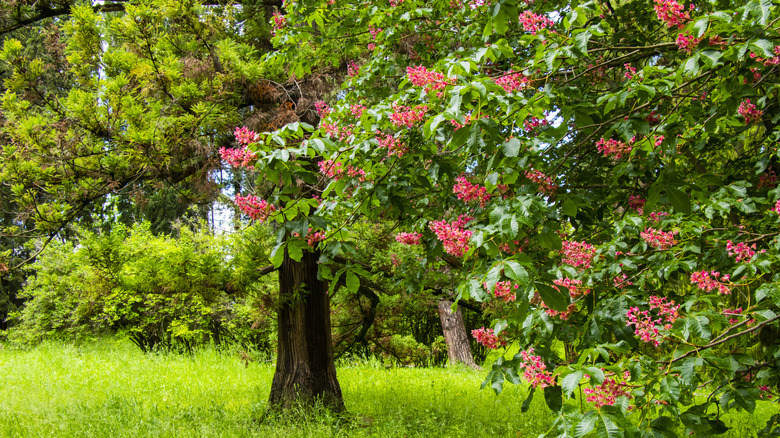
The ornamental appeal of a red horse-chestnut tree is hard to overstate. Vivid pink and red flower spikes add delightful color to your space, while the dense growth prevents prying eyes from invading your privacy. Still, there are some specific pros and cons associated with this tree. The tree is a hybrid, developed in the early 1800s, of the European horse chestnut (Aesculus hippocastanum) and the red buckeye shrub (Aesculus pavia). One big advantage it has over a traditional European horse chestnut is that the seeds are fewer and smaller, making for far less mess in September and October. And while the flowers do drop in spring (as do the leaves before winter of course), overall the tree is much less of a hassle than a black walnut or female ginko. And those blooms can't be beat.
Another advantage is that while A. hippocastanum is considered invasive in several states — due to its rapid growth and aggressive spread — the red horse-chestnut tree has a far lower potential to become invasive. Of course, sure to consult with your city, HOA, or a local arborist before you commit to planting this or any other large, non-native tree in your yard.
A possible downside to these trees are their nuts, which appear similar to rare American chestnuts and common Ozark chinquapins. Horse chestnuts are actually moderately toxic to humans, and can cause intense stomach irritation if ingested (the leaves and bark also carry the same toxins), and comas or death in dogs if they eat too many. If you've got children or pets, you may want to shy away from these trees so no one mistakes the nuts for a late summertime snack.