

A Shade-Loving Flower To Plant During Fall For A Lush Spring Garden
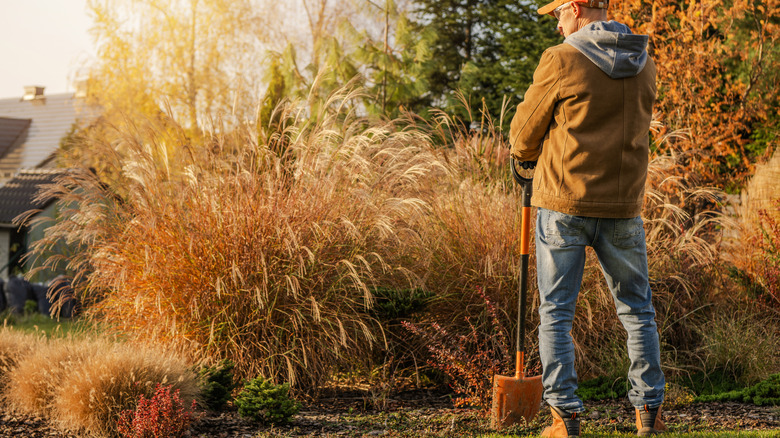
Fall is peaking across the United States. The gorgeous changing leaf colors are at their height right now, and cities across the country are bathed in oranges and reds. While some are traveling to affordable places to enjoy fall foliage, others are looking closer to home and taking advantage of the last weeks of autumn. But for gardeners across the country, this is an underrated yet important time to plan ahead for spring blooms.
Both October and November are ideal times for fall soil additions in the garden. It's an in-between time where the soil isn't frozen over yet, but the summer heat won't harm new plants. Many plants use the winter to grow and strengthen their roots. These last months of the year are also some of the best for planting a native herbaceous perennial that will add both ground cover and lush flowers come spring.
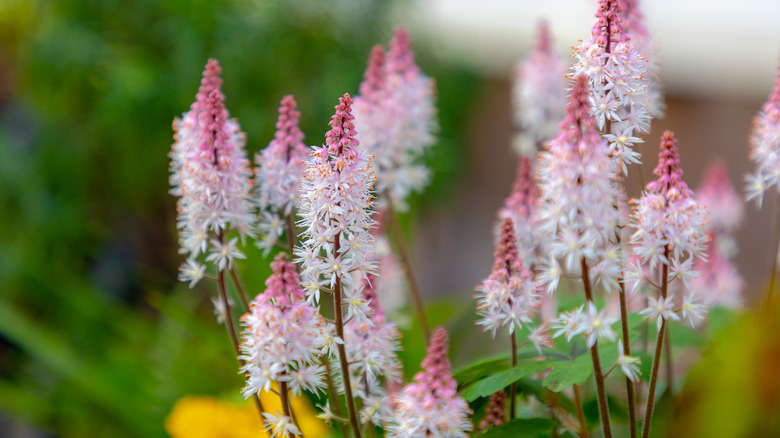
Foamflower (Tiarella cordifolia) can thrives in the shadiest regions of your garden. The native flowering plant is well known for its low-maintenance nature and its small, lacy white or pink blooms — along with heart-shaped leaves that can often be streaked with pops of burgundy. Foamflower is ideal for both beginner and experienced gardeners. This plant is best suited for USDA Hardiness Zones 3 through 8, which covers most of the continental U.S.
How to give your foamflower the best start when planting this fall
One advantage of foamflower is that it doesn't require the care associated with higher maintenance autumnal additions to your garden, like planting a pear tree in your yard in the fall. Planting foamflowers in the fall months will give them ample time to build a root structure and produce blossoms come springtime. However, this does not mean that the perennial is maintenance-free. There are several important notes that any green thumb should take into consideration before planting.
To avoid sun damage, you should plant foamflower in the root structure of large, shady trees or underneath patio and deck awnings — anywhere it can avoid full sun. Once in bloom, foamflower lives up to its name, producing fluffy tufts of blossoms along with lower-lying leaves — which are quite extensive. Due to the plant's widespread growth habit and their underground runners, try to plant your foamflowers in evenly spaced groups of three, especially if you're growing them as a ground cover.
Make sure the soil for your foamflower plants is well-draining, as the plant hates too much moisture. Plus, it can cause root rot. The perennials like acidic or neutral soil. However, note that these instructions are only for nursery plants. Those looking to grow foamflowers from seed should hold off on sowing seed directly into the garden in the fall; instead, nurture the seeds indoors during the winter months. While this is a cost-effective method, you should note that the slow-growing plants probably won't bloom in the first spring.