

How To Know When Your Weed Whacker String Needs Replacing
We may receive a commission on purchases made from links.
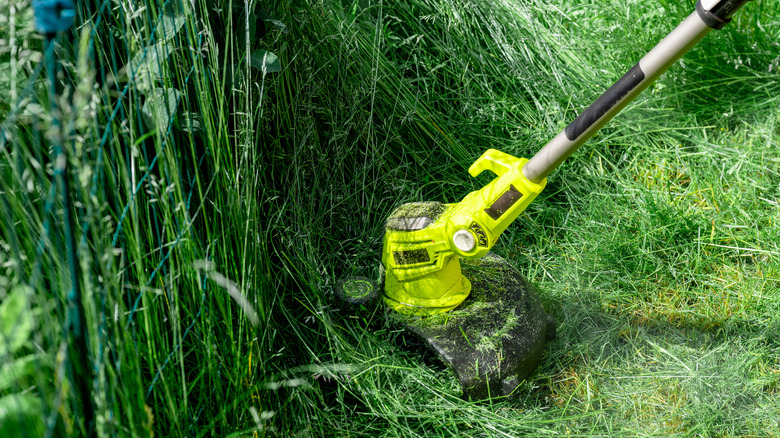
Weed whackers (also called weed eaters or string trimmers) have their challenges: They can fling rocks and throw dirt. They can cause tired arms and sore backs. But used properly, they improve your lawn's aesthetics by reaching areas that mowers can't touch. When you need to cut along certain surfaces, like around curving, stone-lined flower beds or along the edges of your driveway, you don't have to worry about nicking a blade (though you should probably think twice before using a trimmer for edging your lawn). That's because weed whackers trim grass with a nylon line that feeds out as it wears down. Usually all you have to do is tap the bottom of the machine's spool against a hard surface for it to send out a little more line and cut the used, frayed bit off. Depending on the size of your property or the amount of lawn mower obstacles in your yard, you might go through yards of string each summer.
For the most part, you know you need more string when you run out. There are two types of weed whackers: Single line and double line trimmers. The former uses a single length of nylon line wrapped around a spool, while the latter has slots for two separate lines spinning at the same time. The double line trimmers provide better, cleaner cuts, but require a little more attention and maintenance. In either case, you eventually run out of string. There are other warning signs when it's time to change the line, including tangles, poor performance, and, sometimes, following extreme weather exposure. These are less common, but worth knowing about.
When to change your line and when not to
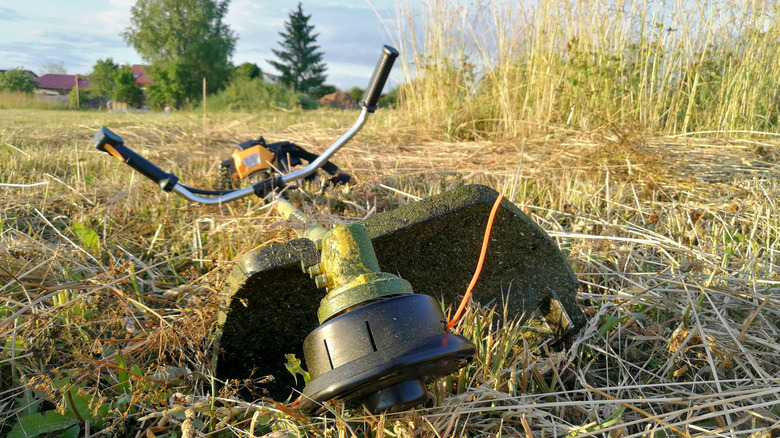
If your string is frayed, you don't need to change the line yet. The string is bound to get frayed as it slaps against cobbles, fences, driveways, and tree stumps. Built into the shield of your trimmer are two converging blades designed to cut frayed ends as you tap the spool to get more line. If for some reason it's not cutting, simply cut the frayed bit by hand. You should change the string before it wears down to nubs. When the string isn't long enough to reach into the spool's notches, it's time for a new string.
It's always a good idea to keep extra preloaded spools (you can buy them pre-loaded from Stihl or other dealers) or a roll of new string on hand. When it comes to storage, keep both machine and string indoors. Nylon is susceptible to UV radiation: If the sun is beating down on it all day, the line won't hold up. If the line's color has faded, it means its UV protection is gone and the string will get increasingly brittle. Some folks soak their string in water to keep it from becoming brittle. If you're in the market for a new trimmer altogether, do your research before considering a battery-powered whacker.
Weed whackers aren't for everyone. Spool feeders can get tangled, snagged, and even backlash (feed out too much line so it can't cut grass). If you find that too frustrating, avoid using a spool-fed weed eater, and opt for stringless trimmers and edgers like the Also Go electric stringless weed wacker. You can also decide on a brush cutter instead of a string trimmer if you're sick of changing the line.