

The Bright Blue Perennial To Plant During Fall For Beautiful Spring Blooms
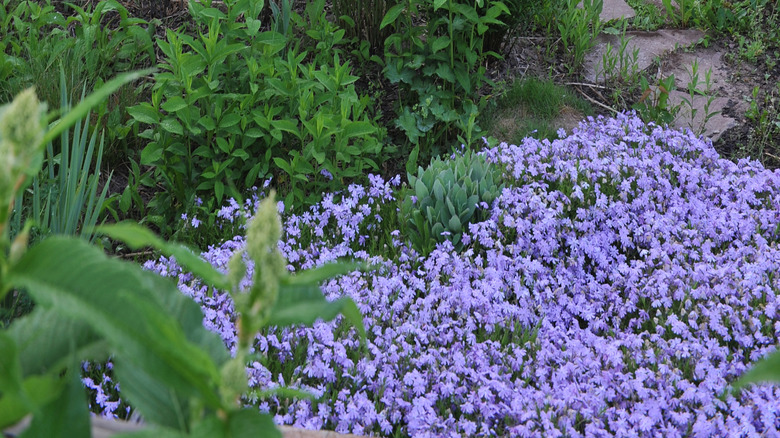
Gentian might have cornered the market on beautiful and vivid blue flowers, but there's another rising star you should be aware of. Bluestars (Amsonia spp.) are native U.S. perennials that bring color and interest to gardens in every season. During fall, the foliage turns a bright yellow or deep golden color that makes for a striking seasonal garden border.
The main highlight of these plants is the flowers that appear in late spring to early summer. Their small, star-shaped flowers grow in clusters. The buds are a deep blue color, but after blooming, they take on a softer shade. If you're in the process of purchasing plants for your fall garden, consider adding bluestar seeds for lovely spring blossoms.
Amsonia plants grow in clumps that typically reach 3 to 4 feet tall and wide. They will self-seed in fall, but since plants don't flower until they're at least two years old, they tend to spread slowly. This slow growth makes them perfect for garden borders. While they're beautiful on their own, they also pair well with native wildflowers. Bees, butterflies, and hummingbirds all love bluestars, so consider pairing them with some other bright and easy-to-grow pollinator-friendly flowers like goldenrod, nasturtium, and marigold.
Adding bluestar plants to your garden

Amsonia plants are typically hardy in USDA zones 5 through 9. Outside of this range, you'll need a large pot if you want to grow them in a container, as they have a long taproot. Otherwise, amsonia plants are generally easy to care for. You can grow bluestars easily from seed or by planting young seedlings. Older plants are difficult to transplant because their deep taproots must be handled with care. Plant your amsonia in early to mid-fall, before the first frosts of the year arrive. If you miss that window, they can also be planted in spring, after the ground thaws.
Bluestar plants need rich, moist soil with plenty of organic matter in order to thrive, but they can survive in other soil types. They can be grown in full sun to partial shade. Avoid planting them in full shade, as the stems can become weak if they don't get enough sun. After the flowers have faded, you can leave the foliage in place to enjoy the fall color or cut it back. Bees will sometimes use the plants as shelter during winter, so it's recommended to leave at least a foot of stem until early spring. During winter, add a layer of mulch around the base to insulate roots and protect the plants against snow.