

The Sweet-Smelling Flower That'll Bring More Pollinators To Your Yard
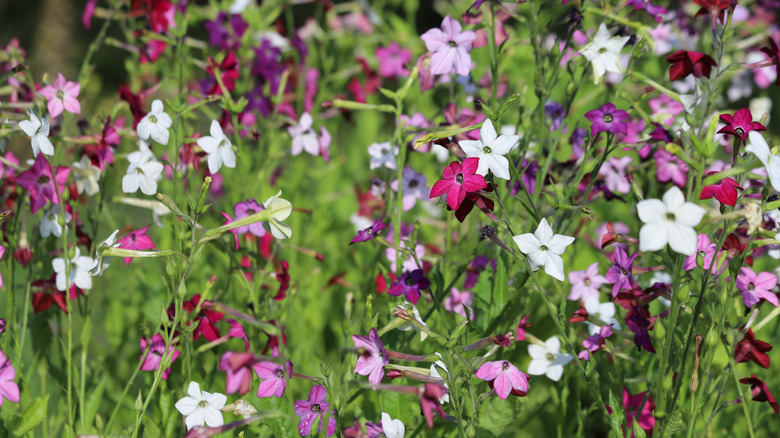
Anyone who has ever attempted to grow any kind of ornamental garden, vegetable garden, or fruit orchard understands the importance of pollinators. Animal pollinators are so important, in fact, that most of the earth's flowering plants and over a quarter of our crops depend on them for reproduction. While that paints an enormous picture, the fact remains that you, as an individual, can do a lot to have a more pollinator-friendly garden. And one of the best ways is to plant ornamental/flowering tobacco (Nicotiana). There are over 60 species of flowering tobacco, all fragrant and appealing to pollinators.
Despite being a member of the tobacco family of plants, flowering tobacco is a far cry from the types of leaves used to create smoking tobacco for pipes and cigars. As its name suggests, flowering tobacco is a type of medium-sized plant that is known primarily for its large, waxy, deep green leaves. An annual that needs to be resown every year, flowering tobacco can grow upwards of 5 feet tall if allowed to do so. However, it is the flowers that draw in pollinators.
The five-petaled, tubular flowers come in vibrant shades of pink, purple, white, red, or light green that are jasmine scented and incredibly attractive to common pollinators like bees and butterflies. However, hummingbirds are especially fond of flowering tobacco. So, if you live in USDA Hardiness Zones 10-13 and have been looking for a plant that attracts hummingbirds, then you should plant flowering tobacco. However, there are some precautions that need to be followed.
The downsides to planting flowering tobacco
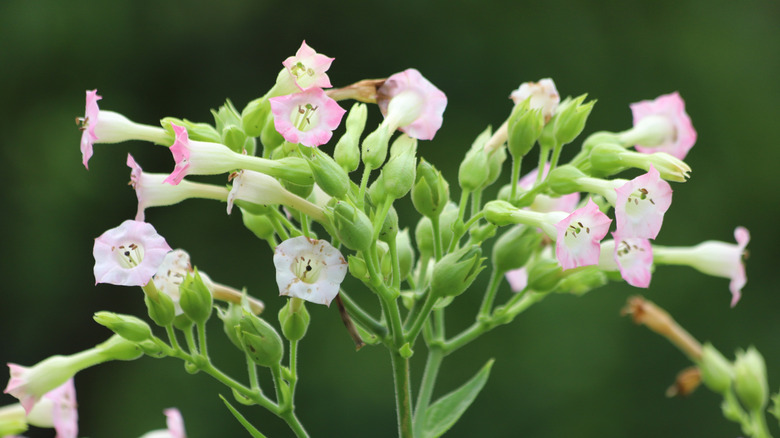
The reason you need to be careful about planting flowering tobacco is that some varieties are considered to be invasive species. One example is Nicotiana glauca (tree tobacco). Tree tobacco originates in South America and does not naturally grow on the North American continent. As such, when grown in semi-arid regions in the USA, like California, for example, it has the potential to outcompete native plants, which can lead to widespread ecological issues.
That said, it is far from illegal to grow flowering tobacco. You just need to make sure you are doing so responsibly. Apart from being potentially invasive, all types of flowering tobacco are highly toxic if ingested. So, if you're a gardener with small children, keep flowering tobacco in an area that they can be kept well away from. The same goes for dogs. Flowering tobaccos are among the most toxic and dangerous plants for dogs. So you might want to think twice before planting it in your yard.
That said, if neither of those apply to you, it is worth knowing that flowering tobacco is very easy to care for. It requires full sun and loves well-drained, loose soil. The plants don't need a lot of watering, except for long periods of hot weather. It should be planted in the fall for the best summer blooms, which typically last from July to mid-September. Oh, and all the pollinators in your yard will love it.