

Must-Know Campsite Cooking Tips We've Learned From The Stars Of Les Stroud's Wild Harvest
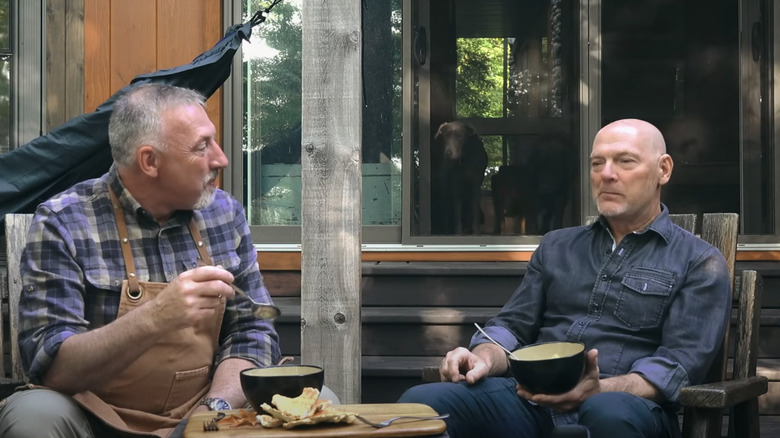
Cooking while camping can be challenging and rewarding at the same time. Keeping a few key tips in mind will help you stay on track, such as avoiding the common camping mistake of feeding wildlife. It's always worth learning from the experts, and the stars of "Les Stroud's Wild Harvest" definitely know a thing or two about campsite cooking. Chef Paul Rogalski shares his must-know tips during the program that combine his incredible culinary ability with practical expertise. From planning ahead to being versatile with ingredients, Rogalski makes outdoor cooking more attainable for even amateur campers.
One of Chef Rogalski's best cooking tips is to come prepared with your kit of tools. He recommends bringing essentials like a wok, cutting board, and metal bowls when cooking outdoors. He points out that a wok can be used over an open fire, which makes it ideal for campers. He also explains what he looks for in a butcher knife, which he considers essential for detailed meat work. You want to find a knife that feels good when you hold it so that you have the most control. Using a poor-quality knife can easily lead to injury while campsite cooking.
The importance of preparation for outdoor cooking
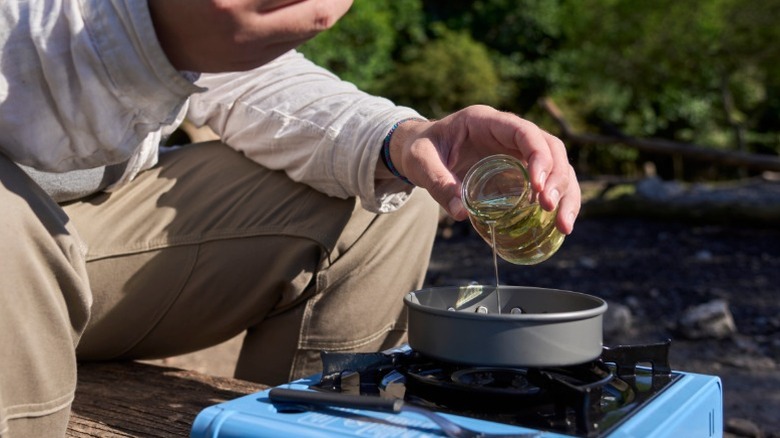
Chef Rogalski thinks it is essential to do your prep work before coming out to cook. For campsite cooking, this means doing some prep at home or chopping ingredients early at the site before things heat up. Rogalski notes that this prep helps him build flavor whether cooking indoors or out—making it an ideal tip for amateur campers. You want to be as prepared as possible before cooking, especially when you are dealing with camp stoves or campfires, which can have variable heat. When you have all the ingredients ready to go, you can pay more attention to the actual cooking.
His preparation also extends to the way he packs ingredients and supplies for his cooking adventures. Utilizing several metal containers that stack neatly, Chef Rogalski brings along everything from flour to panko breadcrumbs. By bringing extra ingredients, he assures himself that he has everything he needs to not disrupt his time. Campers should also come prepared to avoid missing key ingredients. Think about some other household staples you should keep on hand while cooking outdoors, like salt and lime for cleaning cutting boards and flavoring food. Rogalski even calls salt one of the most important ingredients.
Utilizing what you have on hand for the best campsite meals
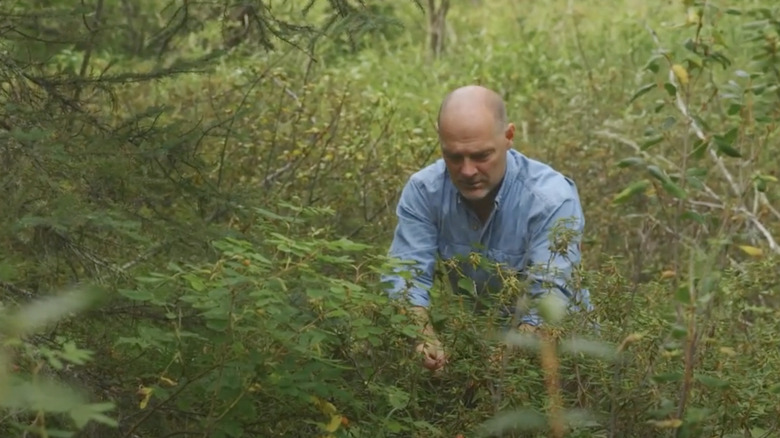
Even if you're not as resourceful as Les Stroud and Chef Paul Rogalski, you can learn from their foraging skills featured on "Wild Harvest". They both really point out the benefits of using what you have at your fingertips to make amazing food. For example, Chef Rogalski harvests tree sap from a Douglas fir to use in caramel and even catnip, a mint family herb, for a unique addition to a meal. Take a page out of their book the next time you cook outdoors. However, remember the dangerous shortcomings of plant identification apps while foraging and think twice before eating anything unfamiliar. Stroud recommends using books and firsthand knowledge from other experienced foragers.
Using what you have also extends to tools. If you are outdoors cooking at a campsite, miles away from a store or your home, you have to learn to think outside the box. Chef Rogalski shared his ingenuity when he used a piece of firewood to mash currants in a pan. Creativity is key when you lack your usual tools, making "use what you have" a must-know rule of campsite cooking.