

Why You Should Steer Clear Of Ryobi Tools For Commercial Landscaping Projects
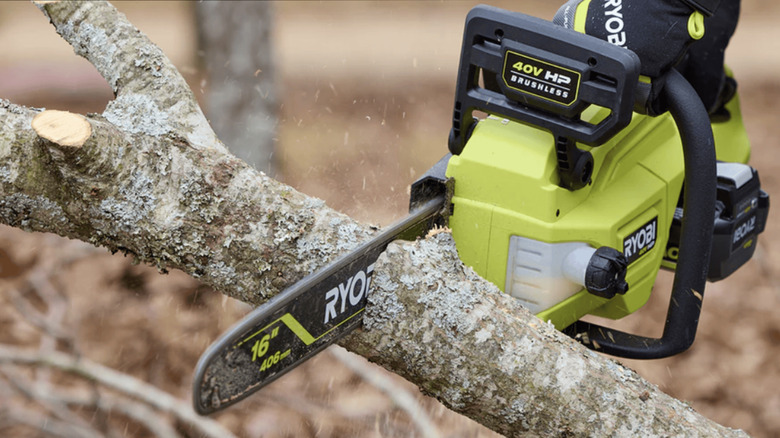
If you're the kind of DIYer that finds themself on a first-name basis with your local Home Depot employees, you're probably well acquainted with the Ryobi tool brand. The brand has delivered a wide array of hand and power tools over the years, helping homeowners, landscapers, and DIYers of all stripes with projects large and small. Even though the brand has become a tried and trusted name to many, you're still not likely to see professional landscapers hitting the hedges with any Ryobi lawn care tools, especially on large commercial properties. This is no mistake, as Ryobi, traditionally, hasn't been the brand of choice for larger commercial projects. Though some homeowners swear by the brand and its neon green casing, others feel the tools simply don't have the durability, lifespan, or ergonomics to handle professional landscaping jobs. Furthermore, Ryobi's warranty packages often focus more on household users more than commercial users, meaning the brand doesn't always recommend using their items in such a capacity. Ryobi's handheld tools specifically boast a 3 year household warranty, but only 30 days for commercial use or as rentals.
Since Ryobi is such a big name in modern power tools, now seems like as good a time as any to unpack their preferred use case, power limitations, and alternative brands you can pivot to when you're ready to take your landscaping work to the next level. If you're simply looking to mow your lawn, trim your hedges, or hang some shelves, it should be noted that Ryobi tools will surely get the job done. But, if you're looking to expand your handyman repertoire into a professional enterprise, or scale your yard work hobby into something a bit more substantial, it may be time to make the switch.
The limitations of Ryobi tools
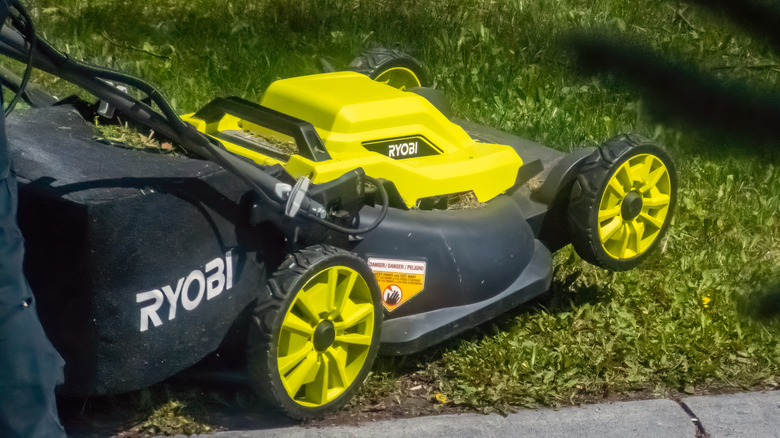
If you've worked with Ryobi tools, you may feel that they cut grass, drill holes, or blow leaves just as well as any of the leading brands. While this may seem true to the casual user, Ryobi tools don't always have the specs to handle a commercial stress test. The Ryobi 40-volt brushless 21" mower, for instance, touts an 8Ah battery suitable for up to ½ acre of cutting power on a single charge. The comparable brushless lawn mower model from Makita, on the other hand, boasts a dual battery system and a self-propelled motor, which advertises up to 1 ⅕ acre of mowing capacity per charge. Since the Makita model is self-propelled instead of manual, it also stands to reason that the average landscaper will cover more ground in less time, and complete the job with less fatigue.
Obviously, none of this is a problem if you're cutting less than an acre per use. If you're looking to go door-to-door cleaning up the whole neighborhood though, you can see why Ryobi's electric walk behind push mower may not cut it. The brand's leaf blowers have similar drawbacks. The 18V 250 CFM model, for instance, advertises 10-12 minutes of active run-time per charge, unless you opt for a larger-than-usual battery amperage. Even with a 6Ah battery — the largest compatible model — you'll be maxing out at 37 minutes of active use. Stihl's BGA 100 series electric leaf blower, by comparison, offers up to an hour and a half of active use, when paired with an AP 300 S battery, and a whopping 8 ½ hours if you use the AR 3000 battery backpack. Stihl also points out it is intended as a professional tool.
Choosing the brand that's right for you
If you are looking to upgrade from a Ryobi tool to something a little more powerful, you may be daunted by the myriad options at your disposal. Many of the preferred commercial brands come with a hefty price tag, making them a risky investment for anyone other than a seasoned construction worker or lawn specialist. The previously mentioned Makita lawn mower runs upwards of $1,300, and that's before you add on any extra bells and whistles such as additional batteries. Other trusted brands for power tools and landscaping equipment include DeWalt, Milwaukee, John Deere, Honda, and Stihl. It should be noted that many of these brands are owned by the same parent companies, and manufactured side-by-side (Milwaukee and Ryobi are both owned by Techtronic Industries TTI out of Hong Kong). Stihl is particularly lauded for its quality and performance, though they refuse to sell their products in big box stores. The brand touts itself as the "the number one selling brand of gas and battery-powered handheld outdoor power equipment among landscape and tree care professionals" according to the official website.
Whatever brand name you choose to handle your large-scale or commercial construction and landscaping, be sure to consult an expert before you restock your entire shed. Everyone has their own personal favorite, and it might take a bit of exploring before you officially commit to one. Some construction pros even prefer to have multiple different brands on hand, in order to squeeze the most value out of their tool suite. And of course, if you aren't ready to put up the money for expensive commercial tools, you can always rely on Ryobi to handle the smaller jobs, or replace them one-by-one as they wear out (if they do).