

Why Fall Is A Great Time To Plant A Pomegranate Tree In Your Yard

We may receive a commission on purchases made from links.
Whether it's for their nutritious fruit, aesthetically pleasing appearance, or low-maintenance qualities, pomegranate trees (and smaller bushes!) are a popular choice for planting in much of the Southern and Southwestern United States. Although they are a type of fruit tree you can grow in pots indoors, when planted outside they can reach heights up to 20 feet, allowing them to create natural shade in your yard as well. Since they are extremely drought tolerant, they are an ideal addition to yards in areas where it is difficult to grow water-loving trees. Those who are considering should know that fall is a great time to plant a pomegranate tree in your yard.
Although spring is the season most commonly associated with planting fruits and vegetables, when it comes to pomegranate trees, autumn is actually an ideal time. This is not to say potted stock pomegranate trees can't be planted in the spring — they certainly can be. However, to cut back on spring gardening tasks, there's no need to wait until next spring to plant. These trees will also do well when planted during fall.
The great success of fall planting is a result of a few different factors. For one, the soil temperature is still warm from summer heating. This allows the roots to grow quickly and become established before the onset of winter weather. Additionally, the cooler air temps and uptick in rain that usually accompany autumn result in less stressful conditions for the newly planted tree.
How to plant and care for your pomegranate tree
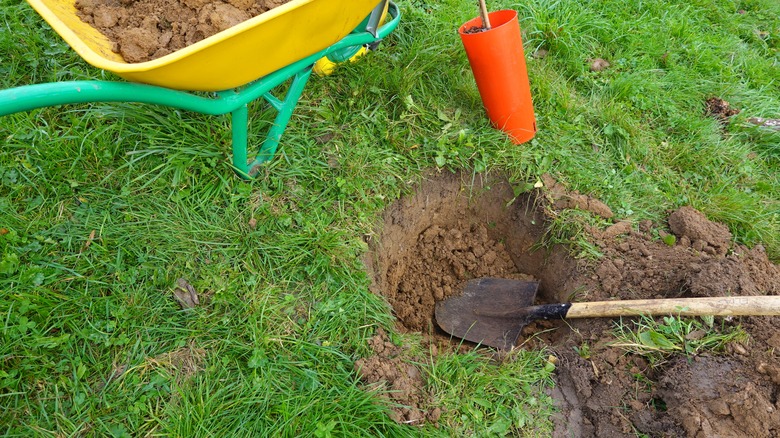
Planting pomegranate trees is a relatively simple task. Likewise, once they become established, they are fairly easy to maintain. The first step is to pick a good site, which will not only allow the tree to grow to its full potential, but will also help reduce the amount of care it requires through its lifetime. The best location for a pomegranate tree is an area in your yard that receives plenty of sunlight throughout the day and has well-draining soil. You also want to make sure there is plenty of empty space, some 10 to 15 feet, around the tree.
Once the location is selected, dig a hole that is twice the width and the same exact depth as the root ball. Be sure the hole is sloped upwards at the sides, not flat across the bottom. Moisten the soil in the freshly dug area, then loosen the roots in the root ball, fanning them out evenly. Next, place the root ball in the hole and backfill. Tamp the soil to push out air pockets, then liberally water the newly planted tree.
Although pomegranates are drought tolerant, it is a good idea to give them a good, deep watering every now and then. This is especially true for the first couple of years after the tree has been planted, and whenever any severe drought conditions are in effect. Additionally, pomegranate trees do not fare well in cold weather, so you will need to take steps to protect your trees against frost and freezing conditions. Utilizing a frost cloth like the Gardzen plant covers will help protect them from damage in such situations.